


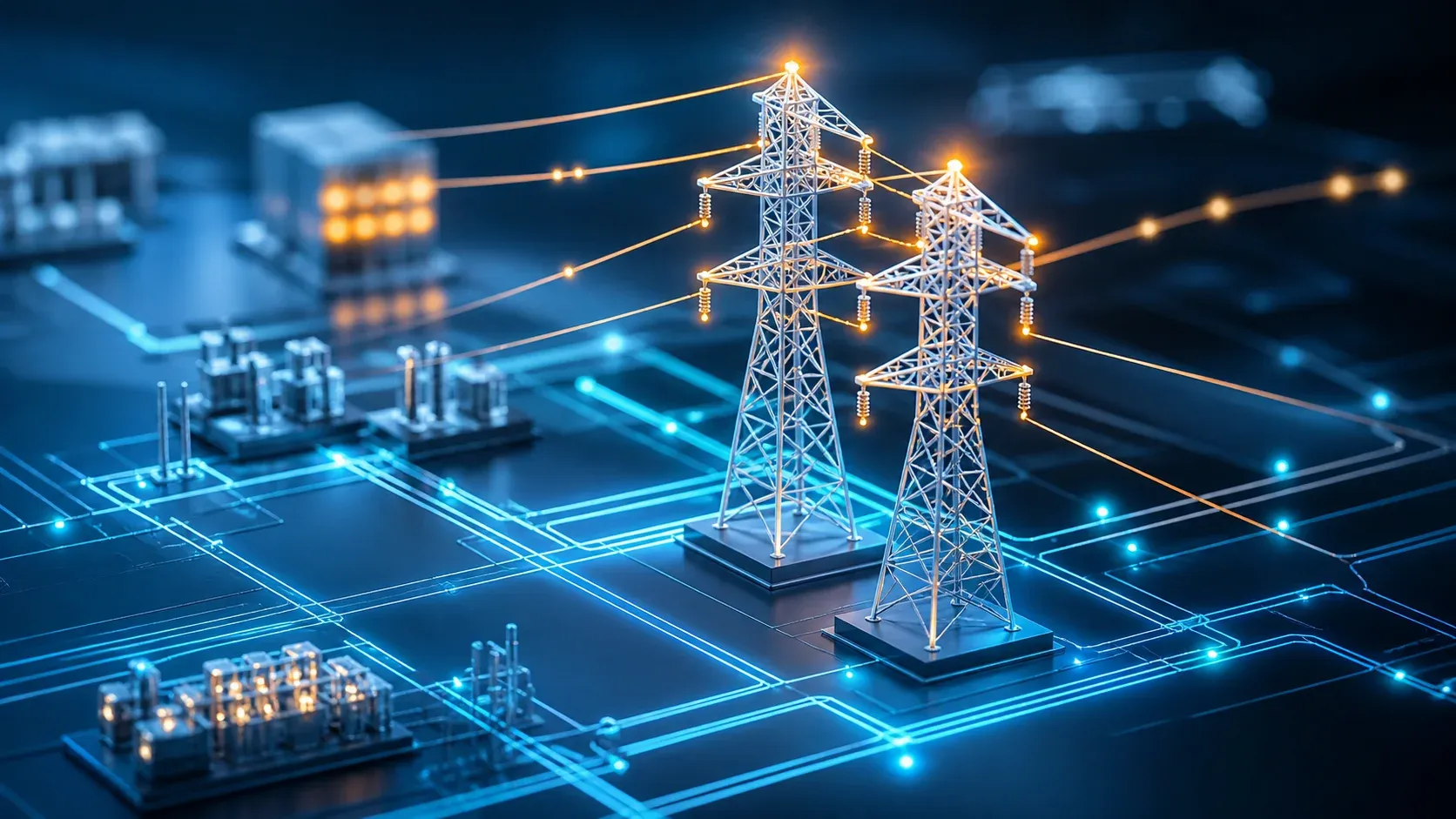
Energy companies are entering a new operating environment.
Grids are becoming more complex. Renewable generation is more variable. Data center demand is rising. Weather events are more disruptive. Aging infrastructure still needs maintenance. Utilities and energy companies need to run assets harder, smarter, and more reliably.
That is why AI and digital twins are becoming core tools for energy asset optimization.
GE Vernova says digital twins have been using AI for years through technologies such as SmartSignal, which applies machine learning to detect early signs of equipment failure. This matters because the energy sector cannot afford to discover asset problems only after equipment fails.
Digital Twins Turn Energy Assets Into Living Models
A digital twin is a virtual representation of a physical asset, process, or system. In the energy sector, that could mean a turbine, transformer, substation, power plant, wind farm, transmission line, or entire grid segment.
The value comes from connecting real operational data to the virtual model. Once that connection exists, operators can monitor performance, simulate scenarios, detect anomalies, and optimize decisions before physical failures occur.
GE Vernova says its SmartSignal Predictive Analytics software uses AI and machine-learning digital twins for energy-sector assets. The company says its Industrial Managed Services team monitors more than 7,000 critical assets worldwide using SmartSignal and has helped customers save more than $1.6 billion.
That is the practical energy-tech story: AI is not only writing reports. It is watching machines.
Predictive Maintenance Is the First Big Use Case
Predictive maintenance is one of the clearest applications.
Instead of servicing equipment only on a fixed schedule or after breakdowns, digital twins can help identify subtle changes in temperature, vibration, pressure, output, or operating patterns. AI models can compare those signals against expected behavior and flag abnormal conditions earlier.
For utilities and energy operators, this can reduce unplanned downtime, improve asset life, lower maintenance costs, and increase safety.
This is especially valuable as power systems become more strained. If demand is rising and grids are tight, unexpected asset failures become more costly.
Grid Complexity Needs Software Orchestration
Digital twins also matter at the grid level.
In February 2026, GE Vernova launched GridOS for Distribution, describing it as a unified solution to help utilities operate the distribution grid as one intelligent system. GE Vernova said Alabama Power was among the utilities adopting the GridOS portfolio to improve reliability amid growing grid complexity.
This is important because distribution grids are no longer passive one-way networks. They now include rooftop solar, battery storage, electric vehicles, distributed energy resources, smart meters, demand response, and rising load from electrification.
Grid operators need better visibility and faster decisions. AI and digital twins can help model how the grid behaves under stress, where constraints may appear, and how to coordinate distributed assets.
AI Data Centers Add Another Layer of Pressure
AI is also increasing electricity demand through data centers.
Reuters reported that Schneider Electric topped first-quarter 2026 revenue expectations as it benefited from demand for data centers powered by artificial intelligence, including power equipment, server racks, and cooling systems.
That demand matters for the energy software market. Data centers require reliable, high-density electricity. Utilities and power providers must plan for large loads, grid upgrades, cooling requirements, and supply constraints.
Schneider Electric says digital twins are emerging as a critical energy technology capability, allowing operators and utilities to model how infrastructure will behave before it is built. The company says digital twins can help simulate scenarios such as fluctuating AI loads, accelerate approvals, reduce risk, and build confidence across the energy ecosystem.
What Energy Companies Can Optimize
AI and digital twins can support many operational functions:
- predictive maintenance
- grid planning
- asset performance management
- outage prevention
- renewable forecasting
- load forecasting
- substation monitoring
- power plant efficiency
- cooling optimization
- worker safety
- scenario planning
- capital project design
- distributed energy coordination
The strongest value appears when digital twins move beyond isolated assets and connect into broader operating systems.
A turbine twin is useful. A grid twin connected to load forecasts, weather, distributed energy resources, and maintenance planning is much more powerful.
The Business Takeaway
AI and digital twins are becoming part of the energy operating stack.
Energy companies need to manage more complexity with fewer margins for error. Digital twins help model the physical system. AI helps detect patterns, recommend actions, and improve decision speed.
For EnergyInsyte readers, the key insight is simple: energy optimization is becoming software-defined.
The companies that can combine physical infrastructure with AI-driven digital intelligence will operate more reliably, plan more confidently, and extract more value from existing assets.
The grid is getting smarter, but only because the old machinery is finally getting a nervous system.
FAQ
What is a digital twin in the energy sector?
A digital twin is a virtual model of an energy asset or system, such as a turbine, substation, power plant, or grid, connected to operational data.
How does AI improve energy asset performance?
AI can detect abnormal patterns, predict failures earlier, optimize maintenance, and support faster operational decisions.
Are digital twins already used in energy operations?
Yes. GE Vernova says its SmartSignal digital twin software monitors more than 7,000 critical assets worldwide and has helped customers save more than $1.6 billion.
Source Pack
- GE Vernova: Future of Digital Twins and GenAI in Energy: use for the connection between AI, digital twins, SmartSignal, and early failure detection.
- GE Vernova SmartSignal Digital Twin Technology: use for GE Vernova’s claim that SmartSignal monitors more than 7,000 critical assets and has helped save customers more than $1.6B.
- GE Vernova GridOS for Distribution launch: use for the February 2026 launch of a unified grid orchestration solution and Alabama Power adoption.
- Schneider Electric: 2026 AI trends: use for digital twins as a critical energy technology capability and their role in modeling infrastructure before construction.
- Schneider Electric: AI in energy and industry: use for Schneider’s positioning around AI in energy management and industrial automation.
- Reuters: Schneider Electric rides AI data centre wave: use for the commercial demand backdrop around data centers, power equipment, cooling, and AI infrastructure.
