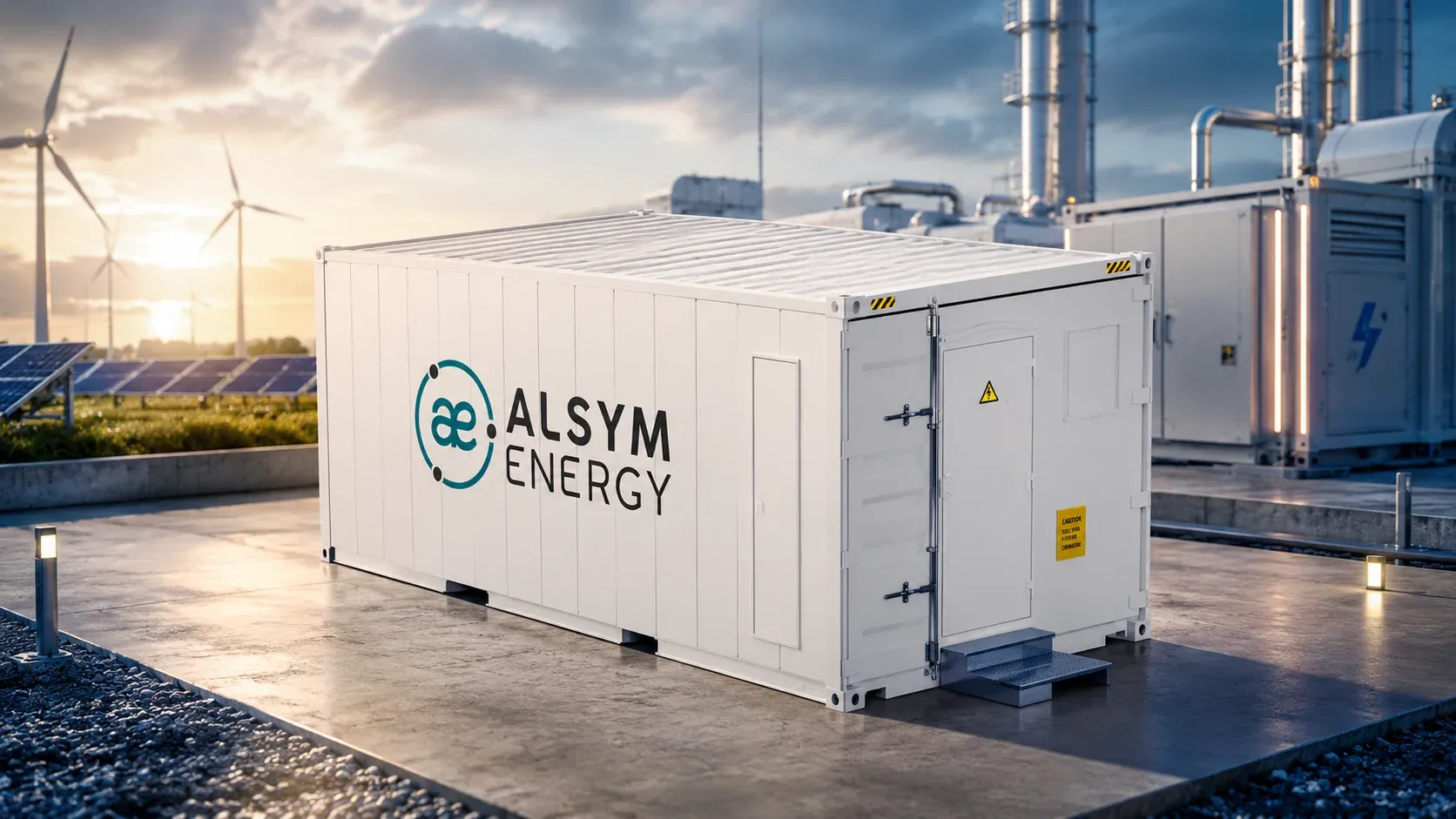
Alsym Energy and Junifier Energy announced a strategic partnership to install 500 MWh of sodium‑ion battery energy storage systems (BESS) across California, beginning with projects in the Mojave Desert. The collaboration emphasizes fire‑safe chemistry, passive cooling, and domestically sourced cells to capture federal and state incentives while reducing capital and operating costs.
Partnership Overview and Project Scope
The agreement calls for Juniper Energy, a California‑based renewable developer, to integrate Alsym Energy’s Na‑Series sodium‑ion batteries into multi‑megawatt storage projects. The initial deployment targets 500 MWh of capacity, with the first installations slated for high‑temperature sites such as the Mojave Desert. Both companies describe the effort as a move away from lithium‑ion systems that rely on active cooling and carry fire risk.
Keith McDaniels, Founder and Managing Partner of Juniper Energy, said the company “evaluated the non‑lithium landscape” and identified Alsym’s Na‑Series as “the premier solution for the next generation of California’s grid.” Mukesh Chatter, CEO and Co‑Founder of Alsym Energy, highlighted the chemistry’s safety profile and U.S. manufacturing as key enablers for faster, more profitable project delivery.
Technical Advantages in Extreme Climates
Sodium‑ion chemistry differs from lithium‑ion in two operational aspects that are critical for desert environments:
- Thermal Stability – The Na‑Series chemistry is engineered to avoid thermal runaway, eliminating the fire hazard that can arise in lithium‑ion cells under high ambient temperatures.
- Passive Cooling – Because the cells do not require active HVAC systems, the balance‑of‑plant (BoP) design is simplified. Passive cooling reduces upfront equipment costs and lowers ongoing operations and maintenance (O&M) expenditures.
Alsym’s data sheet cites high charge and discharge rates that support multiple daily cycles, enabling both energy shifting and ancillary services such as frequency regulation. The company also claims a long cycle life, though specific round‑trip efficiency and degradation metrics were not disclosed.
From an infrastructure perspective, the absence of active cooling equipment reduces site footprint and eases permitting in environmentally sensitive areas. It also mitigates the risk of fire‑related shutdowns, which can affect grid reliability and increase insurance premiums.
Economic and Policy Incentives
The partnership is structured to capture a suite of federal and state financial incentives:
| Incentive | Relevance to Project |
|---|---|
| One Big Beautiful Bill (OBBB) tax credits | Domestic production of battery cells qualifies for higher credit levels under the Inflation Reduction Act. |
| Department of Energy (DOE) programs | Funding for domestically manufactured energy storage technologies can offset capital costs. |
| State renewable portfolio standards (RPS) | California’s RPS mandates storage to complement solar and wind, creating revenue streams for BESS. |
By sourcing cells from Alsym’s U.S. manufacturing facilities, Juniper can claim a “lithium‑free” supply‑chain hedge, reducing exposure to global rare‑metal price volatility and potential geopolitical constraints. The reduced BoP complexity also translates into lower balance‑of‑plant capital expenditures, improving internal rates of return (IRR) for the projects.
Grid Integration and Operational Implications
The Na‑Series batteries offer a 30‑minute fast‑charging capability, positioning them for several market services:
- Daily solar shifting – Storing excess midday solar generation and discharging during evening peaks.
- Frequency regulation – Rapid response to grid frequency deviations, a service valued in California’s ancillary market.
- Multi‑cycle operation – Ability to perform several charge/discharge cycles per day, enhancing revenue potential compared with longer‑duration, low‑turnover storage.
From a grid operator’s viewpoint, the fire‑safe nature of sodium‑ion cells reduces the need for stringent fire‑safety siting constraints, potentially expanding the pool of viable locations for BESS. Passive cooling also lessens the risk of performance degradation during heatwaves, a growing concern as climate‑driven temperature extremes become more frequent.
However, the technology’s market readiness remains limited to pilot‑scale deployments. While Alsym’s AI‑driven materials discovery platform claims a ten‑fold acceleration over traditional methods, the commercial track record of sodium‑ion BESS at utility scale is still emerging. Grid planners should therefore monitor performance data from the initial 500 MWh rollout before committing larger portfolios to the chemistry.
Key Takeaways
- Safety and Simplicity – Alsym’s Na‑Series sodium‑ion batteries avoid thermal runaway and require no active cooling, reducing fire risk and BoP costs in high‑temperature sites.
- Domestic Content Benefits – U.S.‑manufactured cells enable Juniper Energy to capture federal tax credits and DOE incentives, improving project economics and insulating against global supply‑chain shocks.
- Operational Flexibility – Fast 30‑minute charging and multi‑cycle capability support solar shifting, frequency regulation, and other revenue streams, but large‑scale performance data are still limited.
EnergyInsyte's Take
The Alsym‑Juniper partnership introduces a non‑lithium storage option that aligns with California’s safety, climate‑resilience, and domestic‑content priorities. By leveraging sodium‑ion chemistry’s inherent thermal stability and passive cooling, the 500 MWh rollout could demonstrate a cost‑effective pathway for BESS deployment in extreme environments. Decision‑makers should track the operational metrics of these early installations—particularly degradation rates, round‑trip efficiency, and O&M performance—to assess whether sodium‑ion technology can scale beyond pilot projects and become a mainstream component of the U.S. grid’s storage mix.
Source: Businesswire