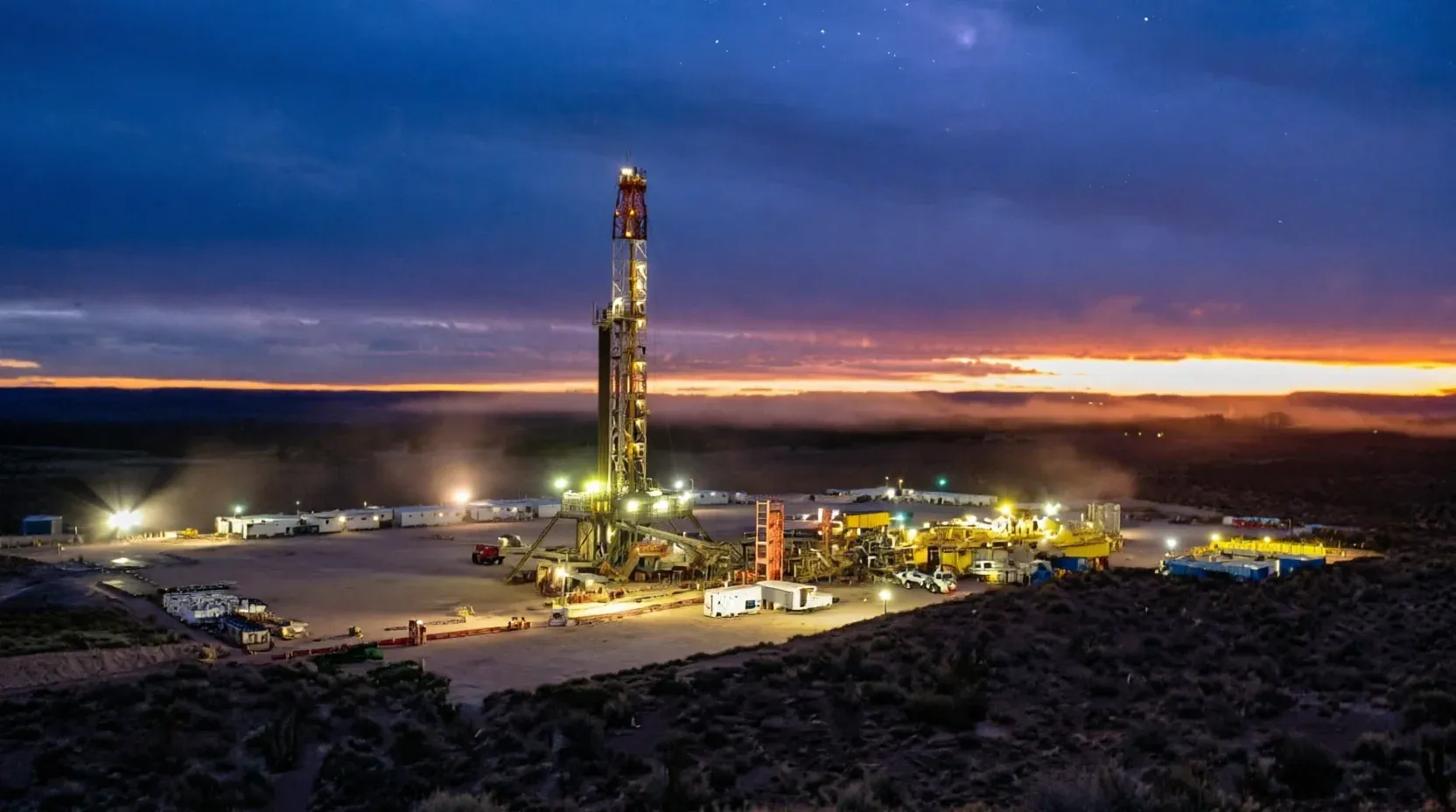
Argentina LNG, a joint venture between YPF, Eni, and XRG, has officially submitted an application to join Argentina’s Large Investment Incentive Regime (RIGI). This strategic move aims to secure the regulatory and fiscal framework necessary to develop a large-scale liquefied natural gas export project utilizing the Vaca Muerta formation's resources.
Argentina LNG Integrated Value Chain Development
The proposed project focuses on building a comprehensive LNG value chain, spanning from upstream gas production to critical export infrastructure. Key components include gas transportation and processing facilities designed to handle Vaca Muerta's output. A central feature of the development is the deployment of two Floating Liquefied Natural Gas (FLNG) units. These units, positioned offshore in the Río Negro province, are expected to provide a combined liquefaction capacity of 12 million tonnes per year (MTPA). By integrating these assets, the consortium seeks to establish a competitive platform for supplying international energy markets.
RIGI Application and the Path to FID
Submitting the application for the Large Investment Incentive Regime (RIGI) serves as a critical milestone for the consortium's capital deployment timeline. The RIGI framework is designed to provide the stability required for such massive infrastructure outlays. Securing this status is viewed as a prerequisite for reaching the project's Final Investment Decision (FID), which the partners have targeted for completion by the end of 2026. This timeline places significant pressure on regulatory approvals and the ability of YPF, Eni, and XRG to align their technical and financial capabilities to unlock the advanced gas resources located within the Vaca Muerta formation.
Key Takeaways
- The project targets a combined liquefaction capacity of 12 MTPA via two FLNG units.
- YPF, Eni, and XRG are the primary promoters of the integrated LNG project.
- The consortium aims to reach a Final Investment Decision (FID) by the end of 2026.
EnergyInsyte's Take
In our view, the RIGI application is the linchpin for the Argentina LNG project's bankability. By seeking these specific incentives, the YPF-Eni-XRG consortium is signaling that the project's scale requires high-level fiscal certainty to mitigate long-term risks. If successful, this development could transform Vaca Muerta from a domestic resource into a global export powerhouse, provided the 2026 FID timeline remains intact despite the complex logistical requirements of offshore FLNG operations.
Questions & Answers
How will the project handle liquefaction and export?
The project will utilize two Floating Liquefied Natural Gas (FLNG) units located offshore in Río Negro, providing a total capacity of 12 MTPA.
What is the strategic significance of the RIGI application?
The application is a vital step toward reaching the Final Investment Decision (FID) by late 2026, providing the necessary regulatory framework for large-scale investment.
Which resources are being leveraged for this project?
The project is designed to unlock and export the gas resources found within the Vaca Muerta formation.
Source: ENI