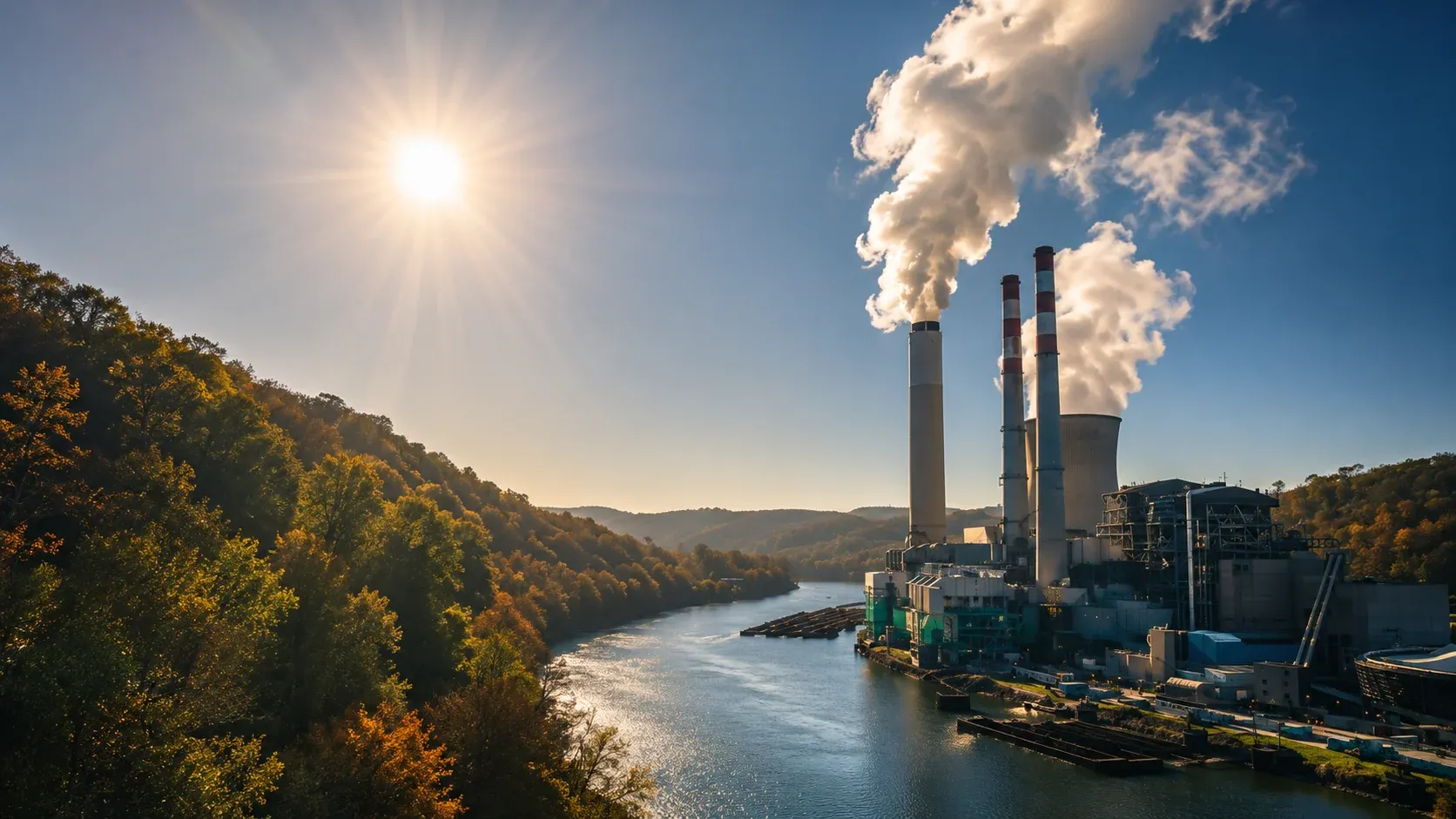
Babcock & Wilcox (B&W) announced a strategic collaboration with TerraSpark to develop the TerraSpark Energy Campus in West Virginia, a 1.6‑gigawatt coal‑fired power plant that will also host a multi‑industry campus and a Coal Innovation & Training Center focused on rare‑earth extraction and advanced‑materials research. The partnership is anchored by an $18.5 million grant from the U.S. Department of Energy, which is earmarked for early‑stage development activities such as engineering design, permitting support, and feasibility studies. By combining B&W’s century‑plus boiler expertise with TerraSpark’s vision for an integrated industrial hub, the project aims to create a next‑generation, low‑emission baseload resource that can serve energy‑intensive manufacturers while demonstrating modern coal‑technology pathways.
B&W’s Design and Construction Role
Under the agreement, B&W will design and supply four 400‑megawatt supercritical boilers—the core of the plant’s generation capacity—and provide a full suite of advanced emissions‑control equipment, including selective catalytic reduction and flue‑gas desulfurization systems. Babcock & Wilcox Construction Co., LLC is slated to deliver construction services, overseeing site preparation, civil works, and the installation of the boiler‑train. In parallel, B&W will collaborate closely with Mantel to integrate carbon‑capture technology that can strip CO₂ from the flue stream for sequestration or utilization. Executive Vice President and Chief Commercial Officer Jimmy Morgan emphasized that the effort “aligns with B&W’s continued commitment to serving the U.S. coal fleet, which is a reliable, secure and essential component of the nation’s energy mix,” underscoring the company’s belief that modernized coal assets can coexist with stringent environmental standards.
Strategic Rationale for Coal‑Based Generation
TerraSpark positions the campus as a source of dependable, high‑capacity, low‑emissions power for emerging industrial and manufacturing demand. Morgan highlighted that B&W’s proven boiler and emissions‑control technologies are intended to “extend the life, improve performance and enhance the environmental compliance of existing and new coal‑fired assets.” Mantel co‑founder Cameron Halliday added that the carbon‑capture solution “enables coal‑fired power plants … to operate efficiently, but with dramatically lower emissions,” reinforcing the view that coal can remain a viable part of the energy mix when paired with state‑of‑the‑art mitigation tools. The combined offering—high‑efficiency supercritical steam cycles, robust pollutant controls, and carbon‑capture—creates a next‑generation, low‑emission baseload resource that can supply round‑the‑clock electricity to energy‑intensive facilities while meeting evolving regulatory expectations.
Funding, Timeline and Stakeholder Outlook
The Department of Energy grant of $18.5 million is directed toward development activities such as detailed engineering, environmental assessments, and early permitting work. The announcement did not disclose a full project schedule, total capital cost, or specific permitting milestones, leaving the exact construction timeline open. TerraSpark partner Bill Tolpegin highlighted B&W’s “more than 160 years of innovation” as a critical asset for delivering “reliable, around‑the‑clock power.” While the financial terms beyond the DOE grant remain undisclosed, the involvement of seasoned players—B&W, Mantel, and TerraSpark—suggests a strong foundation for advancing the project through the complex regulatory and financing landscape.
Key Takeaways
- B&W will supply four 400 MW supercritical boilers and advanced emissions‑control equipment for TerraSpark’s 1.6 GW coal plant.
- The project has received an $18.5 million U.S. Department of Energy grant to support development.
- Mantel will provide carbon‑capture technology, and B&W Construction will handle construction services.
EnergyInsyte's Take
The collaboration adds a high‑capacity coal asset to the U.S. generation mix, backed by federal funding and modern emissions controls. Execution risk remains, as the announcement lacks a detailed timeline, permitting path, or total project cost. Energy executives should monitor DOE grant utilization, carbon‑capture integration progress, and any regulatory developments that could affect the plant’s commercial viability.
Source: Businesswire