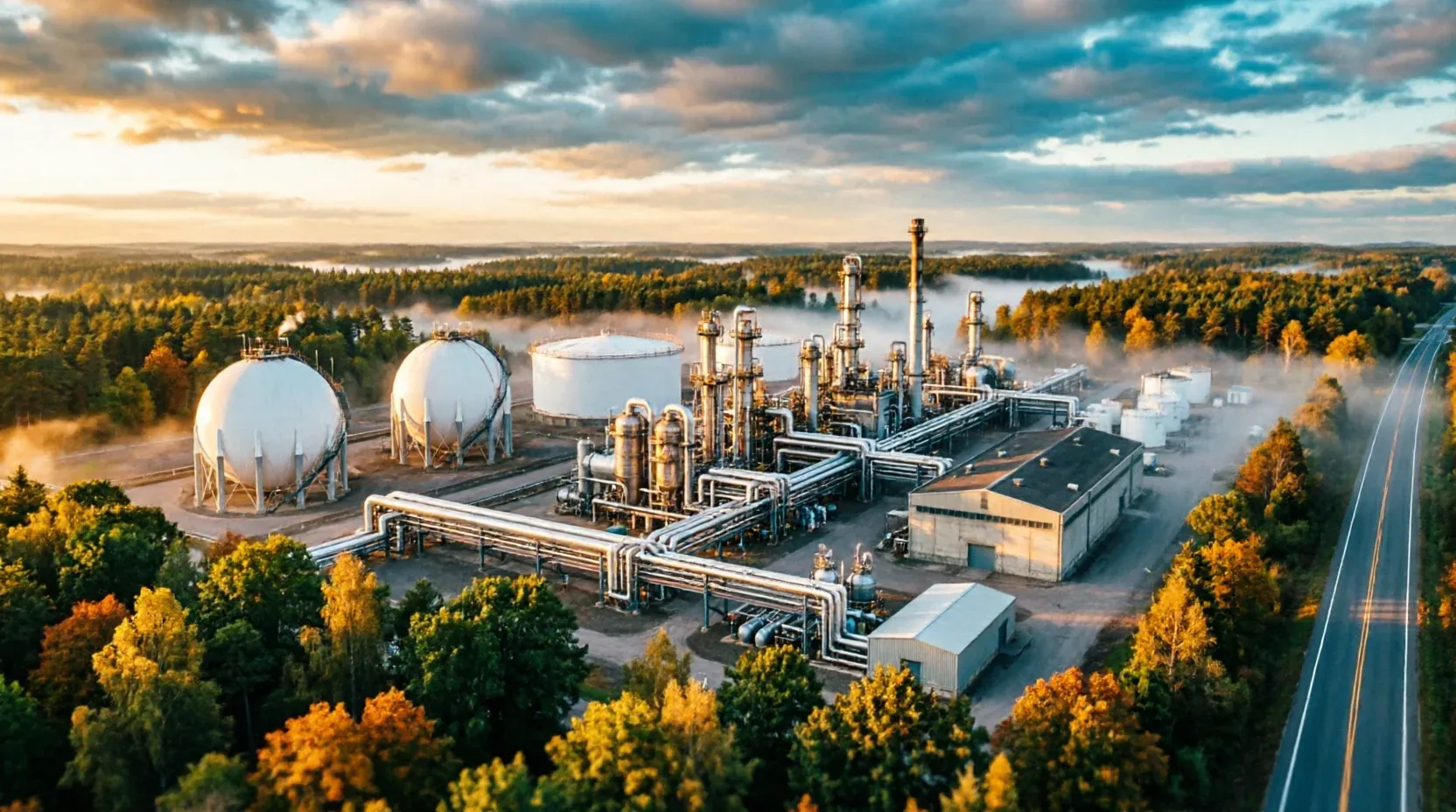
The Blue Point One joint venture is positioning itself to dominate the global low-carbon ammonia market by breaking ground on a massive production facility in Modeste, Louisiana. This $3.7 billion industrial project aims to establish a dual-purpose supply chain capable of serving both traditional agricultural nitrogen needs and emerging clean energy applications. By integrating advanced autothermal reforming (ATR) technology with large-scale carbon sequestration, the venture is testing whether industrial-scale ammonia production can meet stringent decarbonization requirements without sacrificing the massive volumes required by global commodity markets. The project represents a significant capital deployment by three major energy players to secure a foothold in the transition to low-carbon fuel vectors.
Blue Point One Joint Venture Capital Structure and Scale
The project is being executed through a strategic partnership between CF Industries Holdings, Inc., JERA Co., Inc., and Mitsui & Co., Ltd. Under the current ownership structure, CF Industries holds a 40% stake, JERA maintains 35%, and Mitsui holds the remaining 25%. This $3.7 billion investment is designed to produce an average annual capacity of 1.4 million metric tons of ammonia, a volume that would make the facility the world’s largest ammonia plant upon its scheduled completion in 2029.
To support this scale, the partners are coordinating a complex web of infrastructure investments. Linde is committing more than $400 million to construct a new on-site air-separation unit, which will supply the necessary oxygen and nitrogen to the plant. Additionally, CF Industries is allocating an extra $550 million over the next four years toward shared, scalable infrastructure. This secondary investment is intended to prepare the Blue Point Complex for future ammonia production and potential fertilizer upgrades. The project is also expected to serve as a significant regional economic driver, with the companies projecting the creation of approximately 3,900 construction jobs over a four-year period and more than 100 permanent manufacturing roles once the facility becomes operational.
ATR Technology and Carbon Sequestration Integration
A central technical pillar of the Blue Point One project is the utilization of autothermal reforming (ATR) technology. The company is positioning this method as a way to produce hydrogen for synthesis with nitrogen, which is a critical step in the ammonia production process. To address the carbon intensity of this process, the joint venture is relying on a specialized carbon management partnership. A joint venture between 1PointFive, a subsidiary of Occidental, and Enbridge, Inc., will be responsible for the safe transport and permanent sequestration of the carbon dioxide generated during production.
The project's environmental objective is to capture and permanently sequester 98% of the CO₂ produced. If successful, the facility would achieve what the partners describe as the lowest environmental footprint of any large-scale ammonia production facility globally. This high sequestration rate is intended to meet specific customer requirements for low-carbon products and support the broader expansion of ammonia manufacturing within the United States. By linking high-capacity production with aggressive carbon capture, the venture is attempting to bridge the gap between traditional heavy industry and the requirements of a decarbonizing global energy market.
Key Takeaways
- The Blue Point One joint venture is investing $3.7 billion to build a 1.4 million metric ton per year ammonia plant in Modeste, Louisiana, with production expected to begin in 2029.
- Ownership is split among CF Industries (40%), JERA (35%), and Mitsui & Co. (25%), with Linde investing over $400 million in an on-site air-separation unit.
- The facility plans to utilize autothermal reforming (ATR) technology and aims to capture and permanently sequester 98% of its generated CO₂ via a partnership between 1PointFive and Enbridge, Inc.
EnergyInsyte's Take
In our view, the Blue Point One project is a high-stakes bet on the commercial viability of low-carbon ammonia as a scalable energy carrier. By securing massive off-take potential through both the agricultural and energy sectors, the joint venture is mitigating the risk typically associated with first-of-a-kind large-scale decarbonization projects. The decision to integrate Linde’s air-separation unit and the 1PointFive/Enbridge sequestration network directly into the project's capital structure suggests that the partners view carbon management not as an add-on, but as a core component of the plant's industrial architecture. This signals a shift in heavy industry where "low-carbon" is no longer a premium niche but a fundamental requirement for long-term asset competitiveness. The success of this $3.7 billion deployment will likely serve as a blueprint for how traditional ammonia producers navigate the transition to net-zero mandates.
Questions & Answers
How does the ownership structure impact the project's capital requirements?
The $3.7 billion investment is allocated according to the ownership levels of the three primary partners: CF Industries (40%), JERA (35%), and Mitsui (25%). This structure distributes the significant financial burden of the facility and its supporting infrastructure across three major global entities.
What specific technologies are being deployed to achieve low-carbon status?
The plant will leverage autothermal reforming (ATR) technology for hydrogen production and relies on a partnership between 1PointFive and Enbridge, Inc. to transport and permanently sequester 98% of the CO₂ generated during the production process.
What is the total planned infrastructure investment beyond the primary plant cost?
Beyond the initial $3.7 billion, CF Industries is investing $550 million in scalable infrastructure, and Linde is investing more than $400 million in a dedicated on-site air-separation unit to provide essential oxygen and nitrogen.
What are the projected economic impacts for the Louisiana region?
The project is expected to generate approximately 3,900 construction jobs over a four-year period and create more than 100 high-paying manufacturing jobs once the plant becomes operational in 2029.
Source: Businesswire