
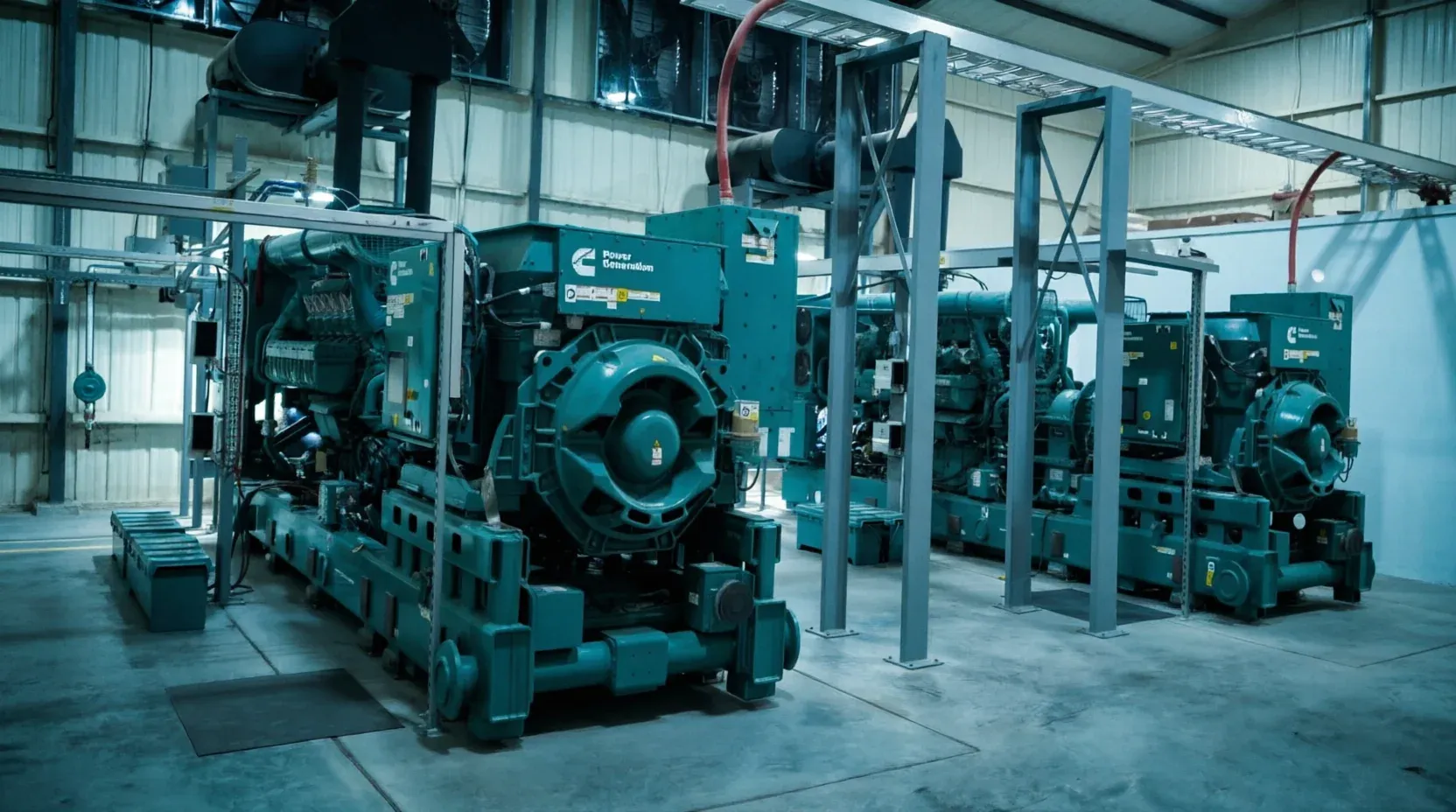
Cummins Inc. has entered into a multi‑year agreement with Circe Energy to provide a suite of high‑efficiency, natural‑gas‑fueled generator sets that will serve as the backbone of a behind‑the‑meter, prime‑power microgrid for Circe’s new artificial‑intelligence (AI) focused high‑performance computing (HPC) data‑center campus in West Texas. The partnership reflects a growing consensus among North‑American data‑center developers that on‑site generation is essential for meeting the speed, reliability, and availability requirements of AI‑intensive workloads. Deliveries are slated to begin in 2026 and continue through 2030, with the first phase of the microgrid expected to energize the campus in 2027. By decoupling the facility’s primary power source from the regional utility grid, the project aims to eliminate interconnection delays, mitigate grid‑congestion risks, and provide a fast‑start, scalable power solution that can grow in step with the rapid expansion of AI compute demand across the continent.
Cummins’ Generator Set Delivery Plan for Circe Energy
The contract specifies two of Cummins’ flagship natural‑gas platforms: the HSK78 (model C2000N6CD) and the QSK60 (model C1400N6). Both are high‑horsepower, low‑emission generator sets designed for continuous, prime‑power operation in demanding environments. The HSK78 delivers up to 2 MW of electrical output, while the QSK60 provides roughly 1.4 MW, together furnishing a combined capacity that exceeds 3 MW—sufficient to meet the baseline power needs of a modular AI‑compute campus and to support future load growth.
Deliveries will be staged over a four‑year window, beginning in early 2026 and concluding at the end of 2030. Each shipment will include not only the generator sets themselves but also Cummins’ proprietary microgrid controls, integration hardware, and a suite of long‑term service agreements administered through Cummins’ North American service network. The company’s Power Integration Center (PIC) microgrid laboratory will pre‑configure, validate, and test each system before it leaves the factory, ensuring that performance targets for efficiency, emissions, and response time are met prior to field installation.
While Cummins is responsible for supplying the generation equipment, performing technical validation, and delivering the microgrid control architecture, the ultimate system design and on‑site implementation remain the responsibility of Circe Energy and its engineer‑of‑record. This division of labor allows Cummins to focus on its core competency—delivering reliable, high‑efficiency power hardware—while Circe retains control over the campus layout, cooling infrastructure, and overall architectural integration.
Infrastructure Design Tailored to AI‑Intensive Loads
Circe’s West Texas campus is being built as a “powered shell” that can accommodate the extreme power density and cooling requirements of modern AI workloads. The design incorporates liquid‑cooling loops, high‑density rack layouts, and modular building blocks that can be added in phases as compute demand rises. The microgrid architecture, co‑developed with Cummins, enables a phased energization strategy: an initial set of generator assets will be commissioned in 2027 to supply baseline power, with additional units staged for later years to match incremental capacity additions.
Key elements of the infrastructure include:
- Microgrid Controls: Cummins’ integrated control platform continuously balances generation output with real‑time load, providing seamless transition between generator‑only operation and any future utility interconnection that may be added for redundancy.
- Operational Data Sharing: Sensors embedded in the generator sets and the microgrid controller feed performance data back to Cummins’ PIC laboratory, allowing ongoing refinement of control algorithms and predictive maintenance schedules throughout the asset’s life.
- Scalable Power Architecture: The combination of the HSK78 and QSK60 platforms offers a flexible mix of large‑step and fine‑step capacity, enabling the campus to scale from a few megawatts to well over ten megawatts as AI model sizes and training workloads expand.
- Reliability Features: Fast‑start capability, automatic load‑following, and built‑in redundancy ensure that the campus can maintain continuous operation even during utility outages or peak‑demand events.
By delivering a turnkey microgrid solution that includes both generation hardware and sophisticated control software, Cummins helps Circe achieve a predictable, cost‑competitive power supply that is insulated from the uncertainties of the regional grid.
Signal of Growing On‑Site Power Demand in Data Centers
The Cummins‑Circe agreement is emblematic of a broader shift in the North American data‑center market. As AI and other high‑performance computing applications proliferate, developers are increasingly confronted with utility interconnection timelines that can stretch months or even years, as well as grid constraints that limit the amount of new capacity that can be added in a given region. The source material notes that “utility interconnection timelines and grid constraints are creating challenges for data center developers seeking to bring capacity online quickly and reliably.”
Natural‑gas‑fueled microgrids address these challenges by offering a fast‑start, scalable power source that can be deployed in phases, reducing reliance on external grid upgrades. Cummins’ statement underscores this point, emphasizing that its solutions “help customers meet unprecedented growth in data demand while closing utility power gaps with dependable on‑site generation for large, power‑intensive facilities.” The West Texas project therefore serves as a proof‑point for a new class of data‑center energy strategy—one that blends high‑efficiency generation, advanced microgrid controls, and long‑term service support to deliver both speed to market and operational resilience.
Key Takeaways
- Cummins will deliver HSK78 (C2000N6CD) and QSK60 (C1400N6) natural‑gas generator sets to Circe Energy from 2026 through 2030 for a behind‑the‑meter microgrid at the West Texas AI HPC campus.
- The campus is designed for phased energization beginning in 2027, using Cummins’ microgrid controls and technical validation services to support scalable, grid‑independent power.
- The deal reflects a growing trend among data‑center developers to adopt on‑site natural‑gas generation as a way to mitigate utility interconnection delays and enhance reliability for AI workloads.
EnergyInsyte's Take
The Cummins‑Circe agreement illustrates how natural‑gas microgrids are becoming a practical option for AI‑driven data centers facing grid capacity limits. Executives should monitor the rollout schedule and the performance data emerging from the West Texas site, as those results will inform the viability of similar on‑site solutions for other high‑density compute projects. Uncertainties remain around long‑term fuel cost stability and regulatory treatment of on‑site natural‑gas generation, factors that will shape broader adoption.
Source: Businesswire