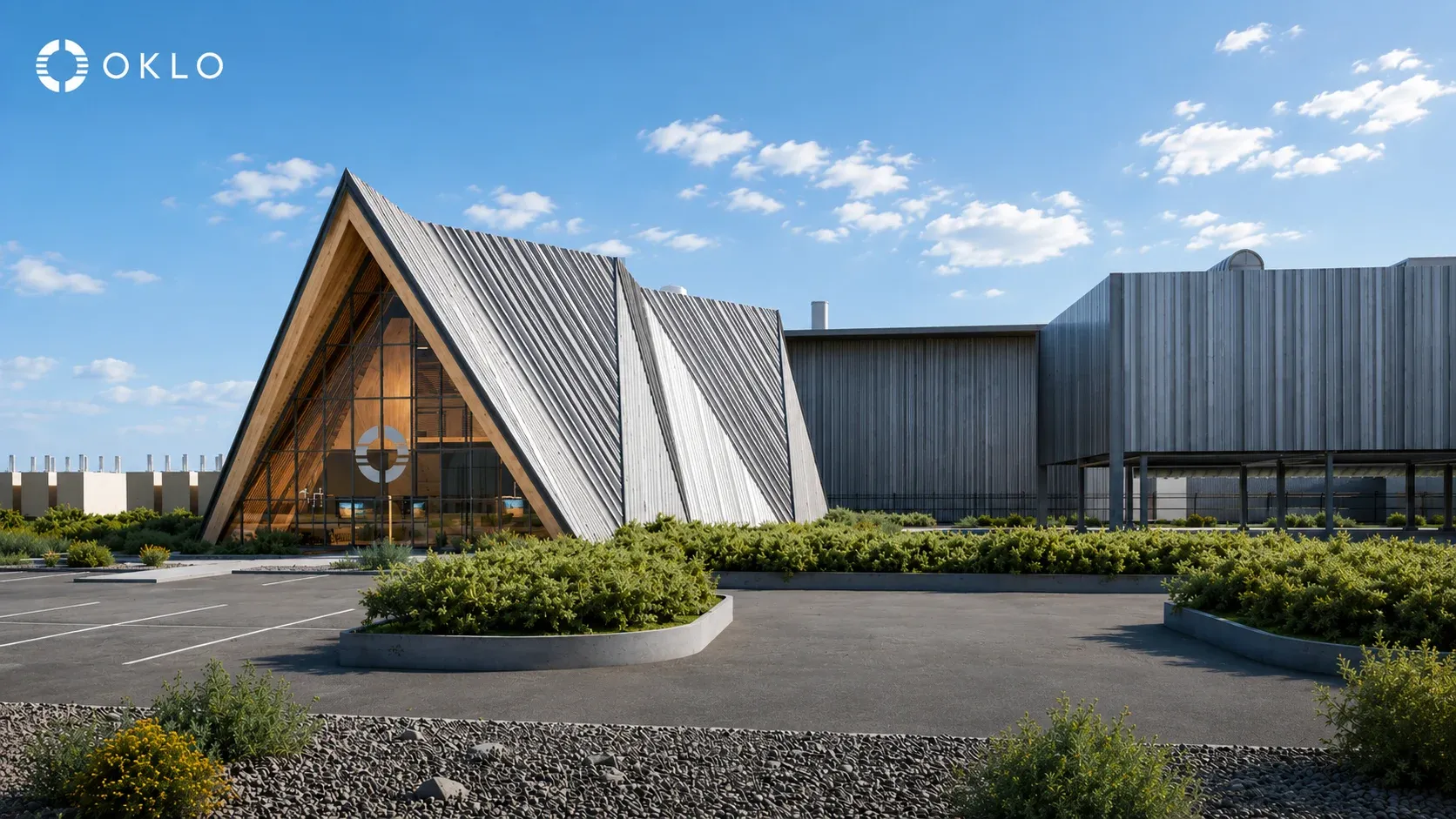
The U.S. Department of Energy’s Idaho Operations Office has formally approved the Preliminary Documented Safety Analysis (PDSA) for Oklo Inc.’s Aurora powerhouse located at the Idaho National Laboratory (INL). This approval is more than a procedural checkbox; it represents a comprehensive review of Aurora‑INL’s preliminary safety basis—including hazard analysis, accident analysis, safety controls, and design commitments—under the DOE’s Reactor Pilot Program (RPP). By clearing this milestone, the project moves a step closer to demonstrating that advanced fast‑fission reactors can satisfy stringent federal safety standards while still pursuing accelerated, scalable deployment. The announcement underscores the DOE’s intent to unlock U.S. industrial capacity for next‑generation nuclear generation through a modern, DOE‑oversight‑driven pathway.
DOE Approves PDSA for Aurora‑INL
The approved PDSA details Aurora‑INL’s early‑stage safety framework. It confirms that the project’s hazard identification process, accident scenario modeling, and proposed safety controls meet the rigorous criteria set by the DOE. Oklo’s co‑founder and CEO Jacob DeWitte called the decision “an important milestone for Aurora‑INL” and emphasized that it “helps establish a foundation for future Aurora deployments.” Within the RPP authorization process, this approval is a critical gate that enables Oklo to proceed with detailed design work, procurement, and construction while remaining under DOE oversight. The RPP itself is designed to streamline the path to commercial‑scale generation by providing a “modern authorization framework for building and operating advanced nuclear projects,” as highlighted in the DOE release.
Context for the Aurora Powerhouse
Aurora‑INL will be the first of Oklo’s planned fast‑fission power plants. The project secured access to recovered fuel from the Experimental Breeder Reactor‑II (EBR‑II) after a competitive DOE process that began in 2019—the same year Oklo obtained a site‑use permit at INL for the Aurora powerhouse. In parallel, Oklo is constructing the Aurora Fuel Fabrication Facility (A3F) at INL, which will fabricate the initial fuel assemblies using the EBR‑II material. The Idaho Operations Office approved A3F’s own PDSA in December 2025, marking the first facility approval under DOE’s Fuel Line Pilot Program. Together, these approvals create a coordinated supply chain: A3F produces the fuel, Aurora‑INL installs and operates the reactor, and both entities operate within the same DOE‑managed safety and regulatory framework.
Market Relevance for Energy Executives
For senior energy leaders, the Aurora‑INL milestone signals that fast‑fission technology is advancing beyond conceptual design into a phase where real‑world safety reviews are completed. Oklo expects the early operating experience gained at INL to inform future U.S. Nuclear Regulatory Commission (NRC) licensing and to de‑risk subsequent commercial rollouts of fast‑fission reactors. While full commercial licensing remains pending, the PDSA approval demonstrates that the project can satisfy DOE’s rigorous review standards—a prerequisite for attracting downstream capital, supply‑chain partners, and potential customers seeking clean, reliable baseload power. The RPP framework, by providing a clear, DOE‑overseen pathway, helps reduce uncertainty for investors and accelerates the timeline for integrating advanced nuclear into the broader generation mix.
Key Takeaways
- DOE’s Idaho Operations Office approved the Preliminary Documented Safety Analysis for Oklo’s Aurora powerhouse at INL under the Reactor Pilot Program.
- Aurora‑INL will use recovered fuel from the Experimental Breeder Reactor‑II, secured through a competitive DOE process initiated in 2019.
- The Aurora Fuel Fabrication Facility received its own PDSA approval in December 2025, marking the first approval under DOE’s Fuel Line Pilot Program.
EnergyInsyte's Take
The PDSA approval signals that Oklo’s fast‑fission design can satisfy DOE’s safety criteria, an essential step before NRC licensing and commercial financing can proceed. Executives should monitor the timeline for NRC license submission and any further DOE milestones, as these will clarify the pace at which advanced reactors could become a viable addition to the generation mix.
Source: Businesswire