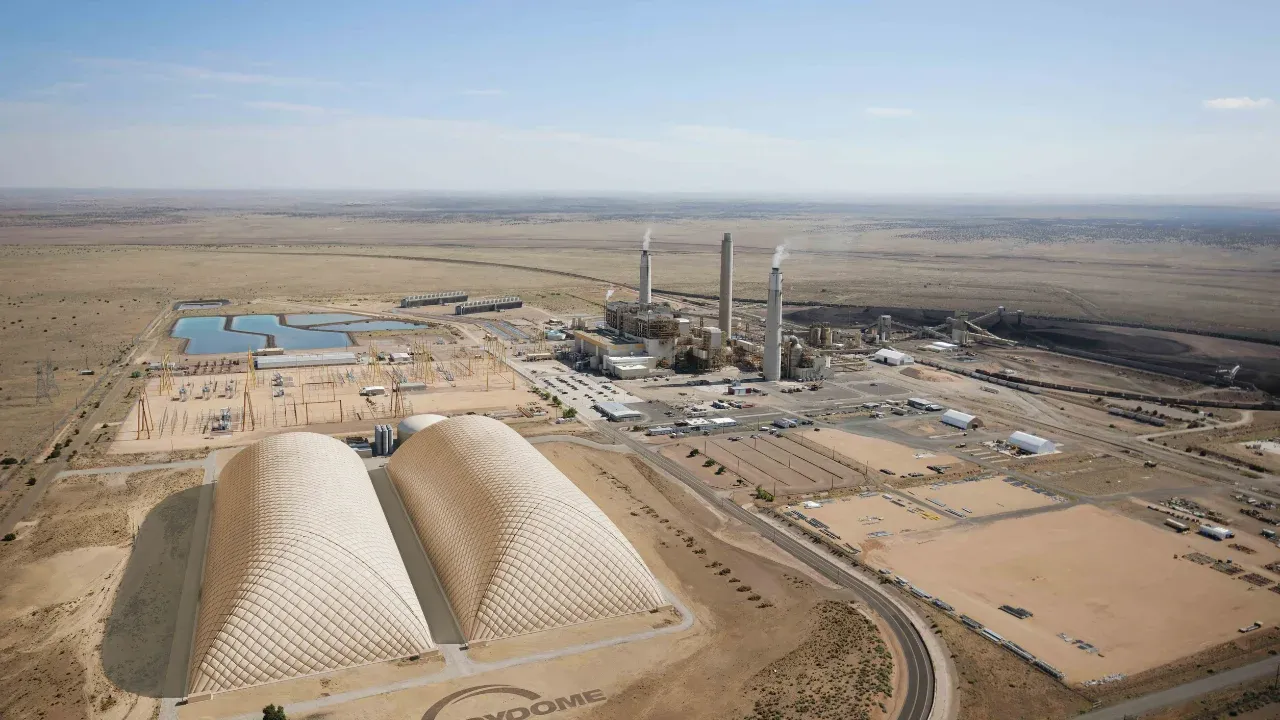
Energy Dome and Salt River Project (SRP) have agreed to add a 19 megawatt (MW), 10-hour carbon dioxide-based (CO2) battery system to the Arizona grid. The project, which is part of a broader collaboration with Google, aims to test non-lithium-ion long-duration energy storage (LDES) technologies to support grid reliability and affordability.
Energy Dome and SRP CO2 Battery Implementation
The project will be co-located at SRP’s Coronado Generating Station (CGS) in St. Johns, Arizona. Under a 20-year tolling agreement, Energy Dome will own and operate the facility while SRP will dispatch the system's output. The CO2 battery is expected to come online in 2029 and is designed to store enough energy to power approximately 4,275 homes for 10 hours.
The system utilizes Energy Dome’s proprietary thermomechanical process, which uses grid power to compress and store CO2. When energy is required, the CO2 is expanded through a turbine to generate electricity for the grid. To ensure technical oversight, SRP and Energy Dome will work with the Electric Power Research Institute (EPRI), an independent non-profit energy R&D institute, to monitor the project's performance data.
Google and SRP Collaboration for Long-Duration Storage
The project was selected through a Request for Proposals for LDES pilots issued by SRP in 2024. Google will fund a portion of the project via a cost-sharing agreement with SRP. This initiative represents a second project in the collaboration between Google and SRP to accelerate the deployment of non-lithium-ion storage technologies.
The deployment is positioned as a way to diversify SRP's battery energy storage portfolio. According to Energy Dome CEO Claudio Spadacini, the technology is designed to be manufactured domestically and built quickly to address rising demand driven by AI growth and regional expansion.
SRP Grid Expansion and Capacity Goals
The project aligns with SRP's broader objective to at least double the number of generating resources on its power system by 2035. This expansion is intended to meet the increasing energy demand within the Phoenix metropolitan area. SRP Manager of Innovation and Development Chico Hunter stated that the project allows the utility to test the real-world performance of the CO2 battery technology specifically within the Arizona climate.
The company did not disclose further details regarding the specific financial terms of the tolling agreement or the exact amount of Google's cost-sharing contribution.
Key Takeaways
- The project consists of a 19 MW, 10-hour CO2 battery system expected to be operational by 2029.
- Energy Dome will own and operate the facility under a 20-year tolling agreement with SRP.
- Google is providing partial funding through a cost-sharing agreement to support the deployment of non-lithium-ion storage.
EnergyInsyte's Take
This project signals a strategic shift toward diversifying storage portfolios beyond lithium-ion to manage long-duration capacity needs. Executives should monitor the performance data provided by EPRI to determine if thermomechanical CO2 storage can scale effectively in high-temperature climates. The primary uncertainty remains whether this technology can meet the cost-effectiveness and reliability benchmarks required for wider utility adoption by 2035.
Source: Businesswire