


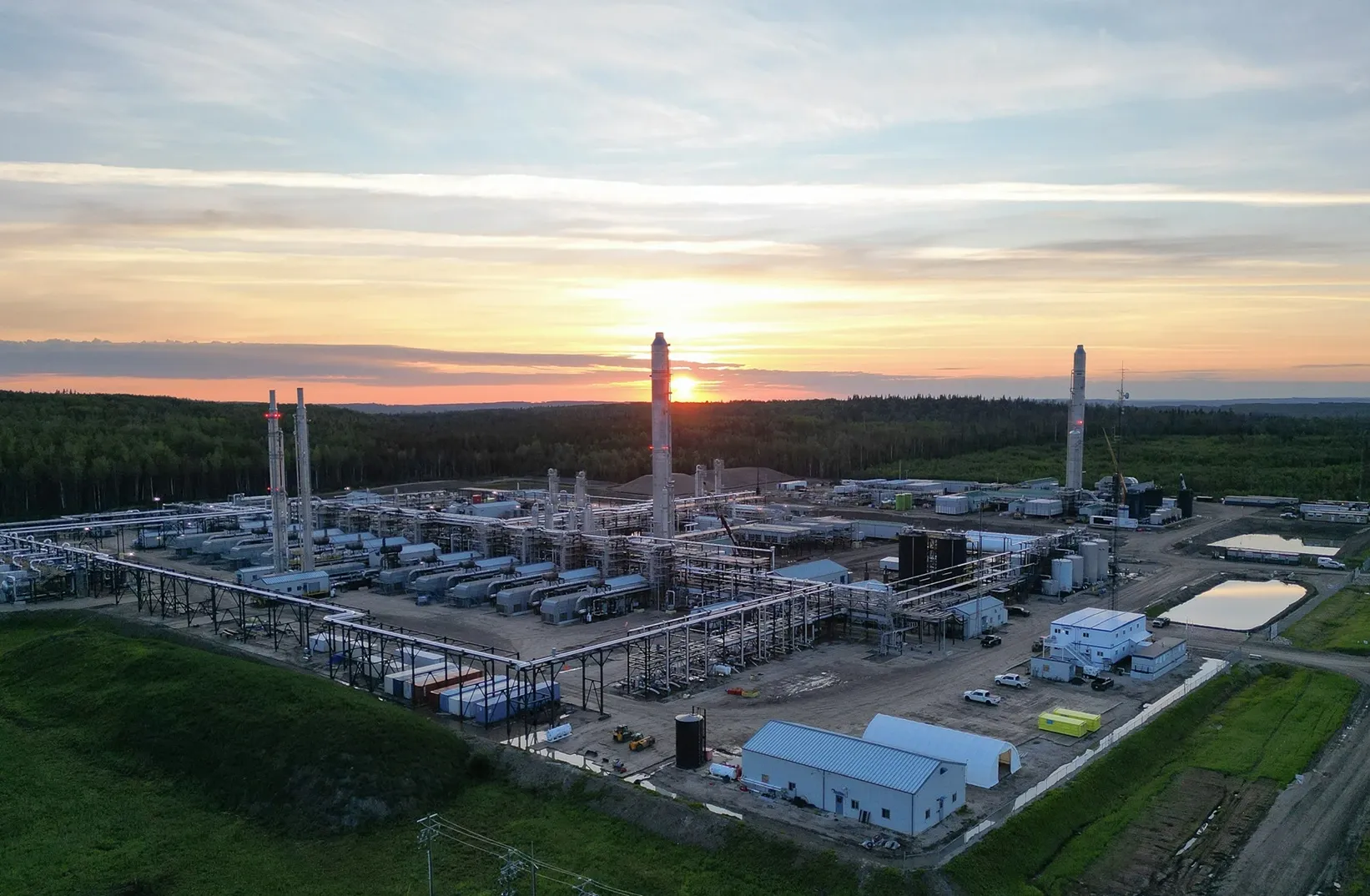
Entropy Inc., a subsidiary of Advantage Energy Ltd., has commissioned the Glacier Phase 2 co-generation and carbon capture and storage (CCS) project in Saddle Hills County, Alberta. This first-of-kind installation integrates a 15 MW gas turbine with CCS technology to provide low-carbon baseload power to Advantage and merchant power to the Alberta Electric System Operator (AESO) grid. For energy executives and grid operators, the project demonstrates a scalable model for integrating post-combustion carbon capture directly into power generation and gas compression infrastructure. The facility marks a transition toward firm, low-emission electricity while targeting significant CO2 removal rates across the broader Glacier Gas Plant operations.
Glacier Phase 2 Infrastructure and Power Agreements
The Glacier Phase 2 project centers on the installation of a 15 MW Solar T130 turbine. This asset is designed to deliver reliable low-carbon power from natural gas by utilizing integrated carbon capture, transportation, and storage. Under a 15-year power purchase agreement, Entropy will sell 6 MW of electricity to Advantage at a price of $85/MWh. A third-party process engineering firm utilizing a lifecycle assessment approach has calculated the design-basis carbon intensity of this electricity at 84 kg/MWh.
Beyond the new turbine, the project integrates CCS across a total of 45 MW of capacity. This includes the 15 MW turbine and approximately 30 MW of reciprocating engines that drive compression at the Glacier Gas Plant. By capturing emissions from eleven gas-fired engines and one turbine, the system targets the sequestration of 192,000 tonnes per annum (tpa) of CO2. Entropy aims for CO2 removal rates exceeding 90% for all material unabated emissions sources at the plant.
The execution of the project involved over 250,000 exposure hours without a serious incident. A critical component of the timeline was the installation of plant-to-plant interconnects, which were completed within a strict three-week turnaround at the Glacier Gas Plant. The company is now moving the facility toward steady-state operation and intends to publish verified performance data via its EntropyIQ real-time carbon measurement and accounting system.
Capital Deployment and Canadian Policy Framework
The economic viability of Entropy’s portfolio relies heavily on provincial and federal policy frameworks. Key supports include the Federal Carbon Capture Utilization and Storage Investment Tax Credit (CCUS ITC), the Alberta Carbon Capture Utilization and Storage Investment Program (ACCIP), and the Saddle Hills County Carbon Capture Tax Incentive Bylaw. These mechanisms are intended to minimize the cost of CO2 reductions for industrial operators and consumers.
Entropy has invested more than $250 million across several CCS projects in Canada. However, the company reported that these projects are currently progressing through the Natural Resources Canada (NRCan) and Canada Revenue Agency (CRA) review processes, and no ITC or ACCIP proceeds have been received to date. Entropy noted that review timelines have been significantly longer than anticipated and budgeted.
According to the company, these administrative delays have led to increased financing costs and reduced certainty for both project developers and investors. Entropy stated that predictable and timely administration of the CCUS ITC program will be essential for attracting capital and supporting future investment decisions as Canada seeks to advance larger-scale carbon capture initiatives. The company has committed to working with federal departments to improve the administration of these credits to ensure the incentive remains effective for the industry.
Key Takeaways
- Glacier Phase 2 integrates CCS across 45 MW of capacity (one 15 MW turbine and 30 MW of engines) to sequester 192,000 tonnes of CO2 annually.
- Entropy has a 15-year power purchase agreement with Advantage for 6 MW of electricity priced at $85/MWh, with a design-basis carbon intensity of 84 kg/MWh.
- Entropy has invested over $250 million in Canadian CCS projects but has yet to receive proceeds from the CCUS ITC or ACCIP due to prolonged review timelines.
EnergyInsyte's Take
In our view, the commissioning of Glacier Phase 2 is a significant technical validation of post-combustion CCS for gas turbines, providing a blueprint for "firm" low-carbon power that avoids the intermittency of renewables. However, the strategic narrative is overshadowed by a critical execution gap in government administration. The fact that Entropy has deployed over $250 million without receiving anticipated tax credit proceeds signals a systemic risk for B2B developers relying on federal incentives. This suggests that while the engineering is viable and the market demand for low-carbon baseload power is present, the financial "bridge" provided by the CCUS ITC is currently unstable. For investors and utilities, this highlights that regulatory and administrative timelines are now as critical a risk factor as technical performance. Until the CRA and NRCan streamline approvals, the scalability of such first-of-kind assets may be hindered by increased financing costs.
Source: PRNEWSWIRE
