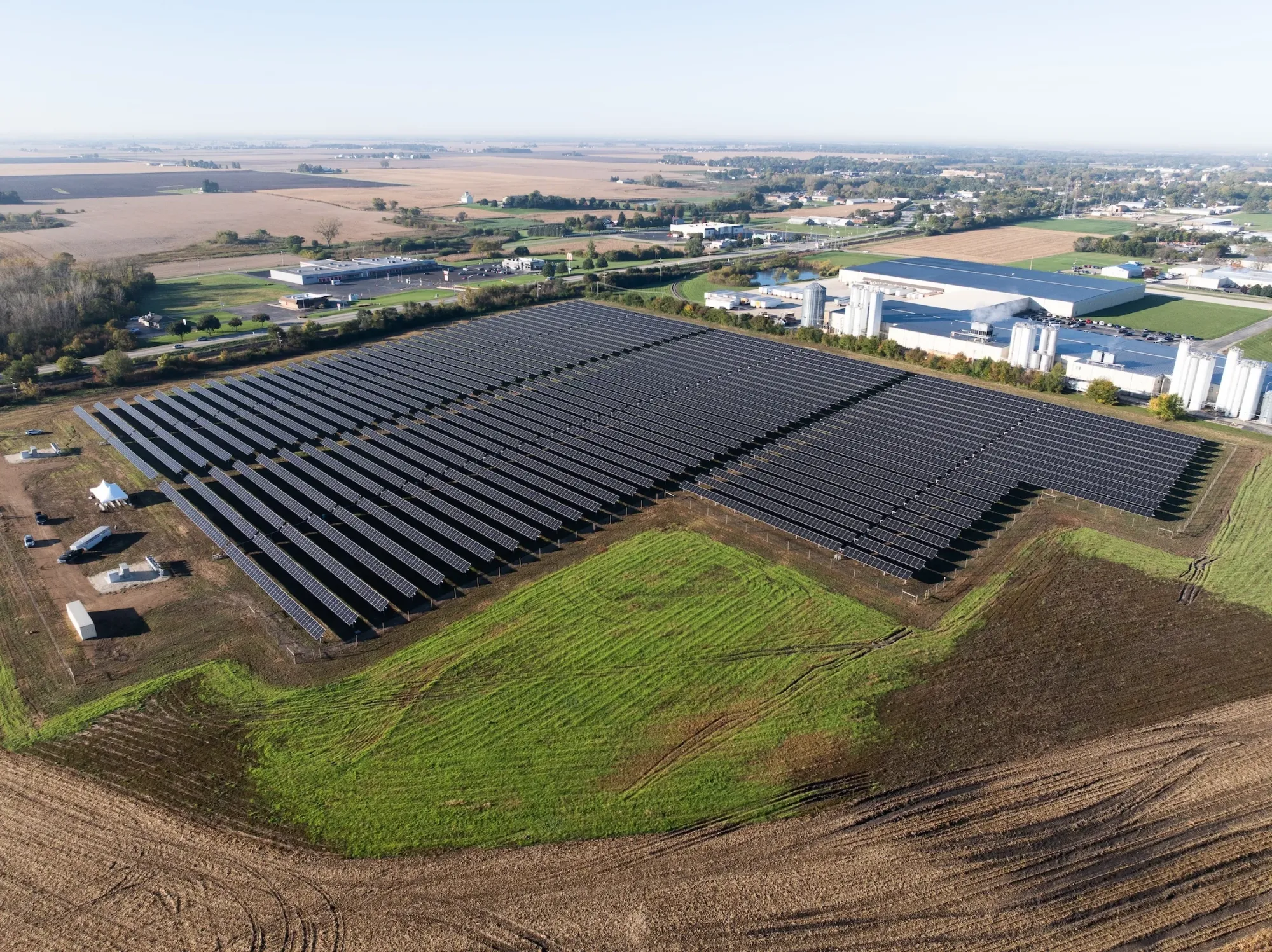

FH Capital’s definitive agreement to purchase a 75.1% majority interest in Jinko Solar (U.S.) Industries Inc. signals a strategic shift in U.S. solar‑module and battery‑energy‑storage (BESS) supply chains. The deal gives the private‑equity firm control of a 2 GW manufacturing facility and a nascent BESS business, with plans to double solar output and launch domestic battery production. For utilities, developers, and industrial energy buyers, the transaction offers a new source of “Made‑in‑America” renewable hardware that aligns with policy incentives and the accelerating need for grid‑scale storage.
Ownership Change and Immediate Scale Implications
The transaction transfers controlling ownership from JinkoSolar, which will retain a 24.9% minority stake, to FH Capital’s designated affiliate. FH Capital, led by Managing Partner Sanjeev Chaurasia—who co‑founded Credit Suisse’s renewable‑energy practice and led JinkoSolar’s 2010 NYSE IPO—brings deep financing expertise and a track record of scaling clean‑energy assets. Legal counsel Latham & Watkins LLP represents FH Capital, while Morgan Stanley Asia Limited advises JinkoSolar.
From an infrastructure perspective, the 2 GW solar‑module plant already represents a substantial domestic capacity. Doubling that output would push the facility to 4 GW, enough to supply roughly 1.5 GW of utility‑scale solar—equivalent to the annual generation of over 1 million homes. The expansion also includes the launch of a U.S. BESS line, addressing the growing need for firming intermittent solar output and meeting the Energy Storage Investment Tax Credit (ITC) requirements that many utilities are now leveraging.
Market Context: Domestic Supply Chains and Policy Drivers
U.S. policy has increasingly favored home‑grown renewable components. The Inflation Reduction Act (IRA) offers a 30% investment tax credit for solar modules and batteries that meet stringent domestic content thresholds. By positioning the expanded plant as a U.S.-sourced source, FH Capital can capture a premium market segment that utilities and corporate buyers are actively seeking to satisfy compliance and ESG reporting mandates.
The timing also coincides with a surge in utility‑scale solar procurement. The Solar Energy Industries Association (SEIA) projects U.S. solar installations to exceed 200 GW by 2030, with a sizable share earmarked for large‑scale projects that require reliable, high‑performance modules. Simultaneously, the Energy Storage Association forecasts cumulative U.S. storage capacity to reach 30 GW by 2030, driven by grid‑balancing, peak‑shaving, and renewable‑integration needs. FH Capital’s combined solar‑module and BESS platform directly addresses both trends, reducing reliance on imported panels and batteries that have faced supply‑chain volatility.
Execution Risks and Capital Requirements
While the strategic rationale is clear, the expansion will demand significant capital. FH Capital has not disclosed the transaction value, but doubling a 2 GW module line typically requires $1–1.5 billion in equipment, clean‑room upgrades, and workforce scaling. Adding a BESS line introduces further complexity: cell‑manufacturing, pack assembly, and safety certification each carry distinct regulatory hurdles.
Key execution risks include:
- Permitting and environmental review – Expanding footprint or adding new manufacturing lines may trigger state and local permitting processes that can extend timelines.
- Supply‑chain constraints – Securing polysilicon, wafer, and battery cell inputs at domestic volumes remains challenging, especially as global demand tightens.
- Talent acquisition – Scaling high‑mix production lines requires engineers and technicians with specialized expertise, a scarce resource in many U.S. manufacturing hubs.
FH Capital’s experience in financing and its network of industry relationships will be critical to mitigating these risks. The firm’s ability to marshal debt and equity, possibly leveraging the IRA’s tax‑credit financing structures, could accelerate the build‑out.
Strategic Implications for Utilities and Industrial Buyers
For utility planners, the emergence of a larger, domestically based solar‑module supplier reduces exposure to geopolitical trade disruptions that have previously affected Asian exporters. The anticipated BESS capability also offers a single‑source option for paired solar‑plus‑storage projects, simplifying procurement and potentially lowering overall project EPC costs.
Industrial energy buyers—particularly those in data centers, manufacturing, and hydrogen production—stand to benefit from a more predictable supply of high‑efficiency modules and batteries that meet “U.S.-sourced” criteria. This can streamline compliance with corporate renewable‑energy procurement targets and support long‑term power‑purchase agreements (PPAs) that require firm capacity.
Competitive Landscape and Future Positioning
JinkoSolar remains a global leader, operating over 10 production facilities worldwide and maintaining a sales network across 30+ countries. Retaining a 24.9% stake ensures continuity of technology transfer and access to Jinko’s R&D pipeline, which includes high‑efficiency bifacial cells and advanced battery chemistries. Competitors such as First Solar, SunPower, and emerging domestic manufacturers are also expanding capacity, but few combine both solar‑module and BESS production under one corporate umbrella.
If FH Capital successfully doubles output and launches BESS manufacturing within a 24‑month horizon, the platform could become a benchmark for integrated renewable hardware production in the United States, potentially attracting additional private‑equity or strategic investors seeking exposure to the domestic clean‑energy supply chain.
Key Takeaways
- FH Capital will acquire a 75.1% stake in Jinko Solar (U.S.) Industries, gaining control of a 2 GW solar‑module plant and an emerging BESS business.
- The firm plans to double solar‑module capacity to 4 GW and start domestic battery‑pack manufacturing, aligning with IRA domestic‑content incentives and growing utility demand.
- Execution will require $1–1.5 billion in capital, careful permitting, and secure supply‑chain contracts for polysilicon and battery cells; FH Capital’s financing expertise is a critical enabler.
Conclusion
The FH Capital–JinkoSolar partnership creates a domestic manufacturing platform that could reshape how U.S. utilities and large energy consumers source solar and storage hardware. By leveraging JinkoSolar’s proven technology and FH Capital’s capital‑raising capabilities, the venture is positioned to meet policy‑driven domestic‑content targets while delivering the scale needed for the next wave of grid‑integration projects. The next 12‑18 months will reveal whether the expansion can overcome supply‑chain and regulatory hurdles, but the strategic intent aligns closely with the infrastructure priorities of today’s energy leaders.
Source: Businesswire