Helion Energy announced that it has received two critical regulatory licenses—the Radioactive Materials License (RML) and the Radioactive Air Emissions License (RAEL)—from the Washington State Department of Health (DOH). The approvals confirm that Helion’s Orion facility in Malaga, WA, meets the state’s stringent safety, staffing, and programmatic requirements for fusion operations. By securing both licenses, Helion becomes the first company in the world with formal permission to build and operate a commercial fusion power plant. The milestone not only validates years of engineering and regulatory work but also signals that the United States is moving from experimental fusion research toward practical, grid‑connected power generation.
Helion Receives Washington DOH Licenses for Orion
Helion’s achievement marks the first global issuance of the specific permits required for a fusion power plant. The Washington DOH granted an RML, which authorizes the possession, use, and disposal of radioactive materials, and an RAEL, which governs emissions of radioactive gases and particles to the atmosphere. Both licenses were awarded after a detailed review of Orion’s physical infrastructure, the qualifications of its staff, and the robustness of its safety and emergency‑response programs.
CEO David Kirtley emphasized the significance, stating that the approvals “open the door for practical, commercial, safe fusion power.” He noted that Helion’s long‑standing collaboration with the DOH—spanning earlier licensing for smaller fusion experiments— helped streamline the review process. DOH Director Jill Wood added that the partnership “is essential to protecting public health while advancing clean energy,” underscoring the agency’s confidence that Orion’s design adheres to the “right‑sized” regulatory approach intended for fusion’s distinct safety profile.
Infrastructure Progress at the Orion Site
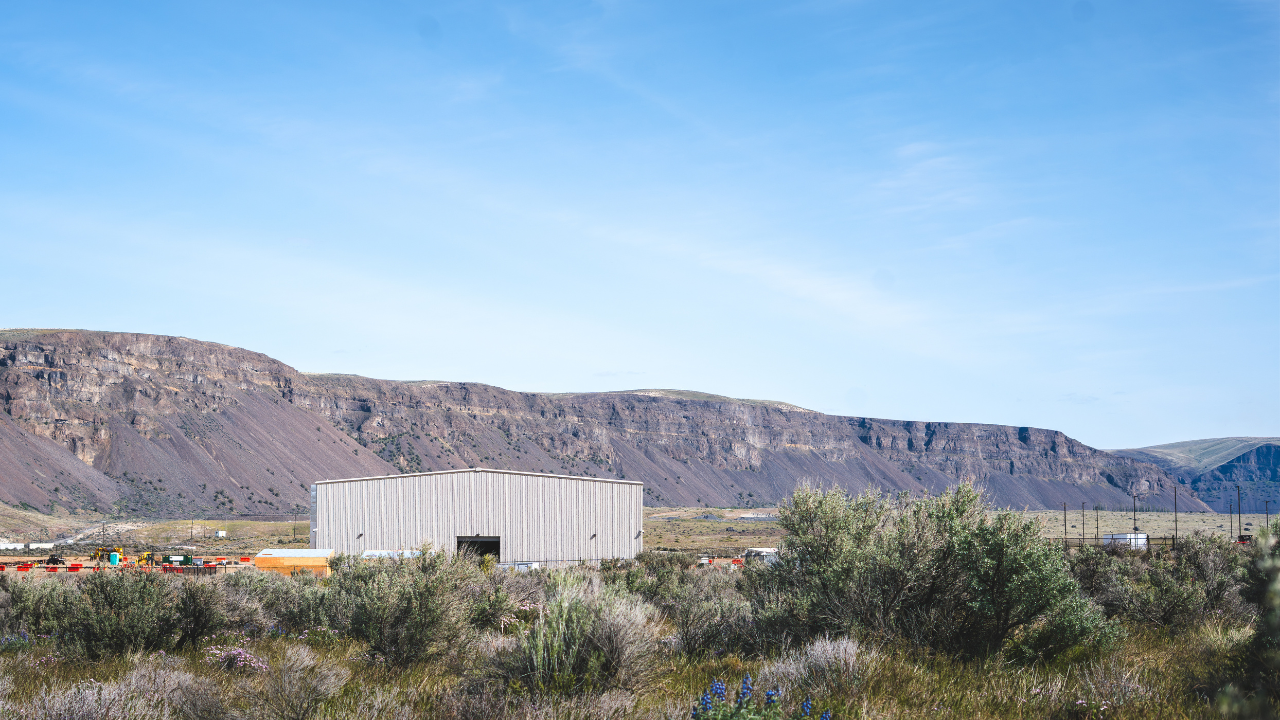
Construction at the Orion site has advanced on multiple fronts. The assembly building, where plasma‑generation components are fabricated and integrated, and the adjacent office complex are now fully completed, providing the operational base for Helion’s engineering teams. In the spring of 2026, Helion broke ground on the generator building, the core structure that will house the pulsed‑power system and the fusion reactor vessel. Initial earthwork—including grading, utility trenching, and foundation staking—has already been completed, setting the stage for vertical construction later this year.
Beyond the physical plant, Helion is negotiating a transmission interconnection agreement with Chelan County Public Utility District (CCPUD). This agreement, the first of its kind for a fusion facility, will secure a dedicated high‑voltage line to deliver electricity generated by Orion to the regional grid. The company’s proactive engagement with CCPUD reflects its strategy to align plant commissioning with grid‑integration timelines, minimizing delays once the reactor reaches commercial output.
Community outreach remains a cornerstone of the project. Since 2023, Helion has hosted more than ten public meetings in Chelan County, providing residents with technical briefings, safety information, and opportunities to voice concerns. Feedback from these sessions has informed site‑specific mitigation measures, such as noise‑abatement fencing and traffic‑management plans, reinforcing local support for the venture.
Regulatory Framework Shapes Fusion Deployment
The licensing pathway that enabled Helion’s approvals originates from the U.S. Nuclear Regulatory Commission’s decision to regulate fusion under the by‑product material framework. This classification groups fusion facilities with particle accelerators and medical radiation sources, rather than with traditional nuclear fission reactors, because fusion does not involve a self‑sustaining chain reaction and produces only short‑lived radioactive by‑products.
Congress codified this approach in the bipartisan ADVANCE Act of 2024, which explicitly recognized fusion’s unique safety profile and called for a “right‑sized” regulatory regime. Washington state reinforced the federal framework with its own legislation—HB 1924 and HB 1018—passed in 2024 and 2025. These bills clarified fusion’s role in the state’s clean‑energy portfolio, established permitting certainty, and authorized the DOH to issue the RML and RAEL specific to fusion operations.
Together, the federal act and state laws create a clear, predictable pathway for developers, reducing regulatory uncertainty and encouraging investment. By adhering to this framework, Helion demonstrates that commercial fusion can meet rigorous health and safety standards without the extensive, costly licensing processes associated with fission reactors.
Key Takeaways
- Helion secured a Radioactive Materials License and a Radioactive Air Emissions License from the Washington Department of Health, becoming the first company worldwide with such approvals for a fusion power plant.
- Orion’s assembly and office structures are finished, and earthwork for the generator building started in spring 2026, while the company seeks a transmission interconnection with Chelan County Public Utility District.
- Washington’s licensing regime follows the NRC’s by‑product material framework, enabled by the 2024 ADVANCE Act and state laws HB 1924 and HB 1018 that provide a “right‑sized” regulatory path for fusion projects.
EnergyInsyte's Take
Helion’s licenses remove a key regulatory hurdle, allowing the company to focus on construction and grid integration. Execution risk now centers on completing the generator building, securing the interconnection agreement, and maintaining community support. Executives should monitor the timeline for full plant commissioning and any further state or federal guidance that could affect the fusion deployment roadmap.
Source: Businesswire