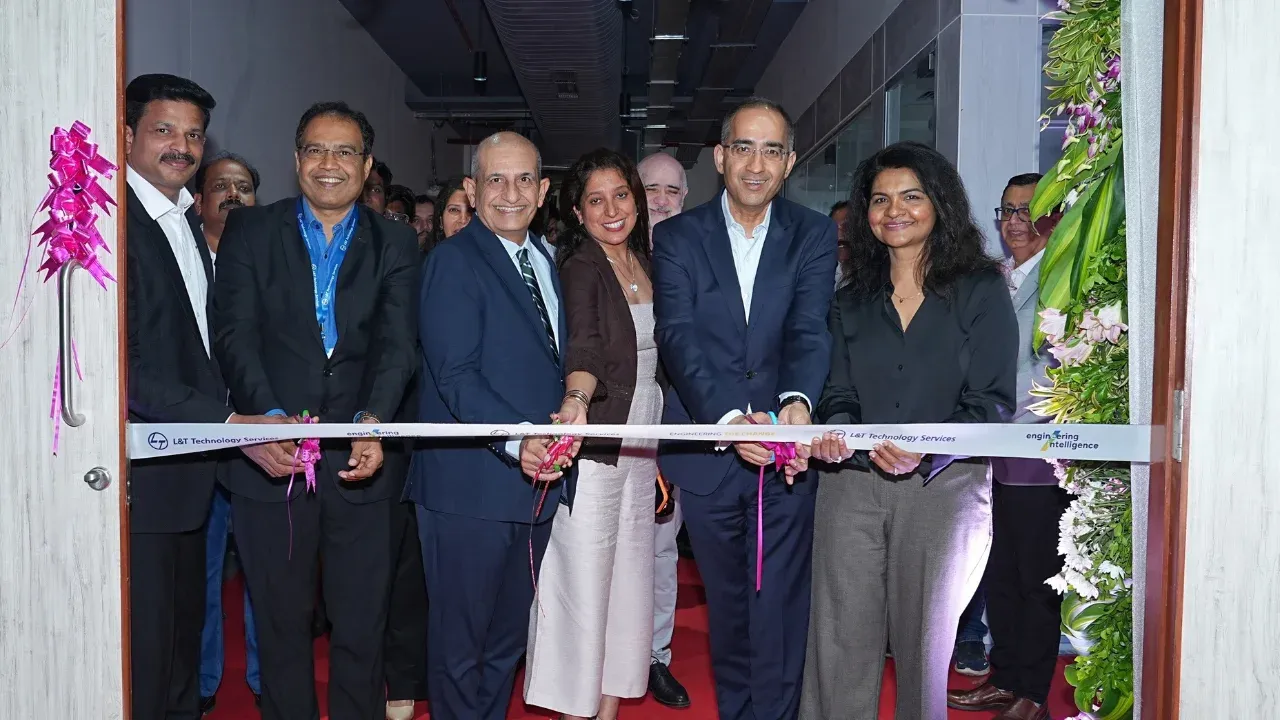
L&T Technology Services (LTTS) is positioning itself to bridge the gap between virtual engineering and physical shop-floor execution through the launch of its AI-Native EI Lab for Digital Manufacturing in Bengaluru, India. By integrating advanced simulation with physical automation, the company aims to provide a testing ground for autonomous industrial operations. This strategic move targets the convergence of digital twins and real-world manufacturing, offering a controlled environment where enterprises can validate how AI-driven workflows scale across complex, multi-plant production lifecycles.
LTTS Engineering Intelligence and NVIDIA Integration
The new EI Lab functions as an experiential environment designed to demonstrate the integration of autonomous systems, industrial robotics, and supply chain management. LTTS is leveraging its EIOne Unified Intelligence platform to orchestrate over 100 engineering intelligence solutions and agentic AI swarms within a single, governed ecosystem. A central component of this infrastructure is an NVIDIA-accelerated environment. This setup incorporates NVIDIA Omniverse, NVIDIA Isaac Sim, NVIDIA PhysX, NVIDIA Cosmos, and NVIDIA NeMo, alongside OpenUSD-based digital twin workflows. By combining these technologies, LTTS intends to provide manufacturers with accelerated visualization and capabilities for both Industrial and Physical AI. The lab is structured to move customers through a progression from digital engineering and virtual validation toward connected production and intelligent, autonomous operations.
Scaling Autonomous Operations and Manufacturing Intelligence
The lab's architecture is built upon three distinct capability pillars intended to address different layers of the industrial value chain. The first, Manufacturing Intelligence, focuses on executive decision-making through an AI-powered Manufacturing Command Center, which utilizes a manufacturing data fabric and a supply chain control tower. The second pillar, the AI-Native Factory, focuses on the orchestration of intelligent machines, cobots, drones, and digital twins to execute tasks with minimal human intervention. Finally, the Operations AI & Autonomy layer acts as a verification gate. This layer is designed to check actions generated by agent swarms before they are implemented on physical machinery, which LTTS claims enables more governed and safer autonomous decision-making. This framework encompasses factory design, simulation, production, quality control, maintenance, and sustainability, aiming to translate complex simulation-first approaches into practical, scalable manufacturing solutions for global industrial customers.
Key Takeaways
- LTTS inaugurated the AI-Native EI Lab for Digital Manufacturing in Bengaluru to demonstrate AI-native manufacturing and autonomous systems.
- The lab utilizes an NVIDIA-accelerated environment featuring technologies such as NVIDIA Omniverse, Isaac Sim, PhysX, Cosmos, and NeMo.
- The EIOne platform integrates more than 100 engineering intelligence solutions and agentic AI swarms into a single ecosystem.
EnergyInsyte's Take
In our view, the launch of the EI Lab signals a critical shift from theoretical AI applications to the rigorous validation of "Physical AI" in heavy industrial environments. By incorporating a "verification gate" for agent swarms, LTTS is directly addressing the primary barrier to autonomous industrial adoption: the risk of unmanaged AI decision-making on the factory floor. The heavy reliance on NVIDIA’s simulation stack suggests that the future of industrial scaling will depend on high-fidelity digital twins that can accurately predict physical outcomes. For energy and manufacturing executives, this represents a move toward "simulation-first" operational models where digital validation precedes physical deployment.
Questions & Answers
How does the EI Lab address the safety risks associated with autonomous machine decision-making?
The lab utilizes an "Operations AI & Autonomy" layer that functions as a verification gate. This system checks actions generated by agent swarms before they reach physical machines, aiming to provide governed and safer execution within connected manufacturing environments.
What specific NVIDIA technologies are being utilized to accelerate the digital twin workflows?
The environment integrates NVIDIA Omniverse, NVIDIA Isaac Sim, NVIDIA PhysX, NVIDIA Cosmos, and NVIDIA NeMo, all working alongside OpenUSD-based workflows to support Industrial and Physical AI.
What is the role of the EIOne platform within the LTTS ecosystem?
EIOne serves as a Unified Intelligence platform that brings together over 100 engineering intelligence solutions and agentic AI swarms. It is designed to allow enterprises to build, deploy, and scale AI-driven workflows while maintaining enterprise-grade security and operational control.
Which industrial sectors is LTTS targeting with these engineering intelligence solutions?
While the lab focuses on digital manufacturing, LTTS provides services across various segments including mobility, sustainability, and tech, serving clients in industrial products, medical devices, transportation, telecom, and process industries.
Source: L&T Technology