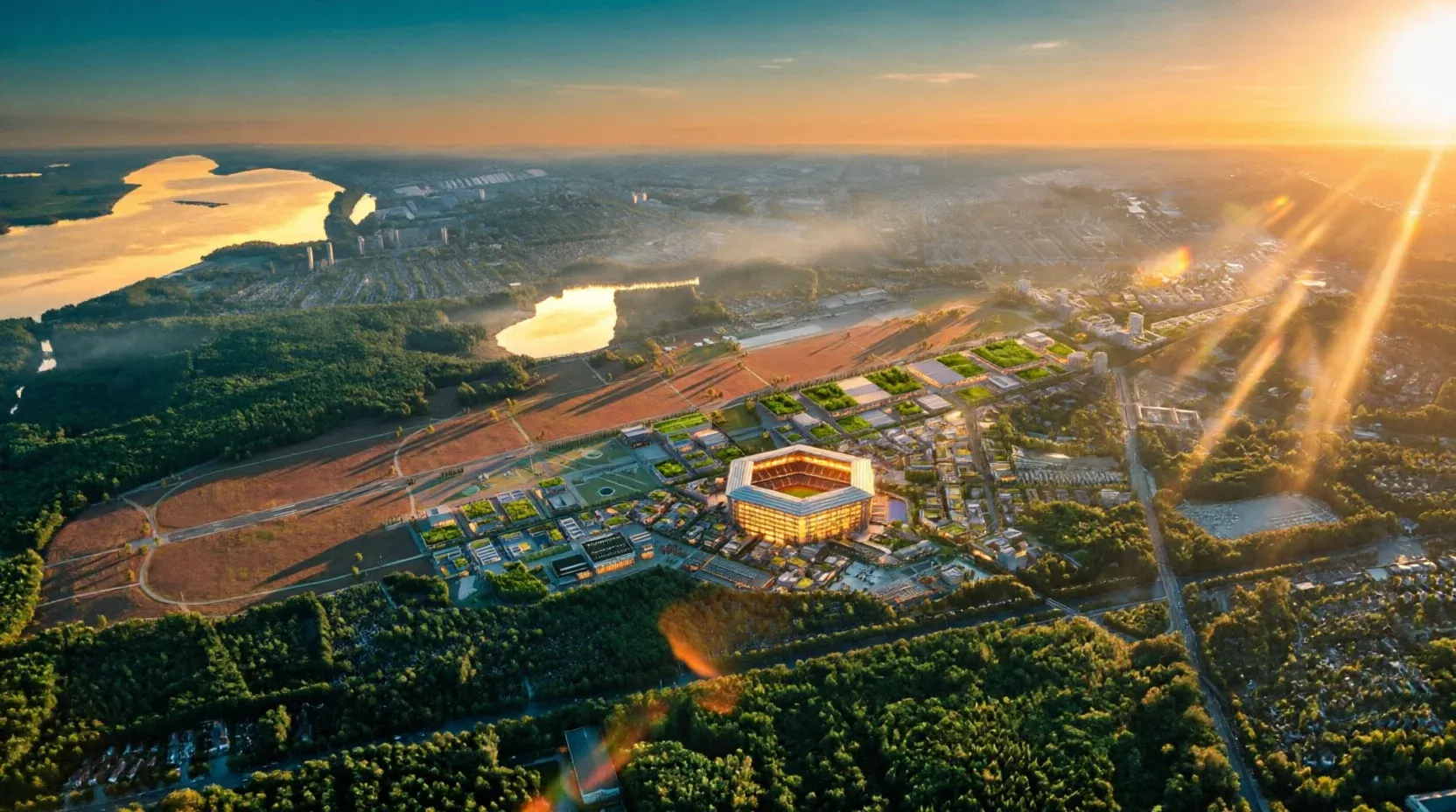
Mitsubishi Electric is testing its building and city-level energy optimization technologies within a legacy structure at Berlin’s Urban Tech Republic. Scheduled for September 1, the demonstration aims to balance energy efficiency with thermal comfort. This initiative marks the first time the company is applying technologies verified at its SUSTIE™ facility to a legacy building outside of Japan.
Urban Tech Republic Demonstration Goals
The demonstration at the former Tegel Airport site focuses on improving operational efficiency and energy management by leveraging building data, such as CO2 emissions. Mitsubishi Electric intends to use digital twin building simulation technology and optimal operation planning technology to develop an air conditioning system operation plan. These specific tools were previously verified at the company's SUSTIE™ net Zero Energy Building (ZEB) technology test facility in Japan. By applying these methods to an existing structure, the company expects to verify prediction accuracy and the effectiveness of balancing thermal comfort against energy savings.
Berlin TXL Partnership and Infrastructure
This project follows a May 2024 partnership agreement between Mitsubishi Electric Europe B.V. and Berlin TXL Management GmbH, the developer and manager of the Berlin TXL project. The German Branch of Mitsubishi Electric Europe B.V. has been selecting target buildings and defining technical requirements to prepare for this deployment. Beyond individual building performance, the company is positioning this demonstration to explore the potential for optimized energy management at the district level. This shift from single-asset management to district-wide data utilization suggests a move toward more integrated, large-scale urban energy infrastructure.
Key Takeaways
- Mitsubishi Electric will demonstrate smart building and city technologies at Berlin’s Urban Tech Republic on September 1.
- The project utilizes digital twin simulation and optimal operation planning technology previously verified at the SUSTIE™ facility in Japan.
- This marks the first application of these specific technologies to a legacy building outside of the Japanese market.
EnergyInsyte's Take
In our view, Mitsubishi Electric is attempting to prove that high-performance ZEB technologies can be retrofitted into aging urban infrastructure rather than being limited to new builds. By moving from the controlled environment of the SUSTIE™ facility to a legacy building in Berlin, the company is testing the scalability of its digital twin simulations. This signals a strategic push to transition from managing isolated HVAC systems to orchestrating district-level energy optimization via real-time CO2 and building data.
Questions & Answers
How does Mitsubishi Electric plan to optimize the air conditioning systems in the Berlin demonstration?
The company will develop an optimal operation plan using digital twin building simulation technology and optimal operation planning technology, both of which were verified at its SUSTIE™ facility.
What is the significance of the location for this specific technology deployment?
The demonstration takes place in a legacy building at the Urban Tech Republic (former Tegel Airport), marking the first time these technologies are being applied to a legacy building outside of Japan.
Beyond individual building efficiency, what is the broader strategic objective of this project?
The project aims to explore the potential for optimized energy management at the district level by leveraging building data, such as CO2 emissions, to improve urban-scale energy optimization.
Who are the primary entities managing the Berlin TXL project infrastructure?
The Berlin TXL project is developed and managed by Berlin TXL Management GmbH, with Mitsubishi Electric Europe B.V. acting as the technology partner.
Source: Businesswire