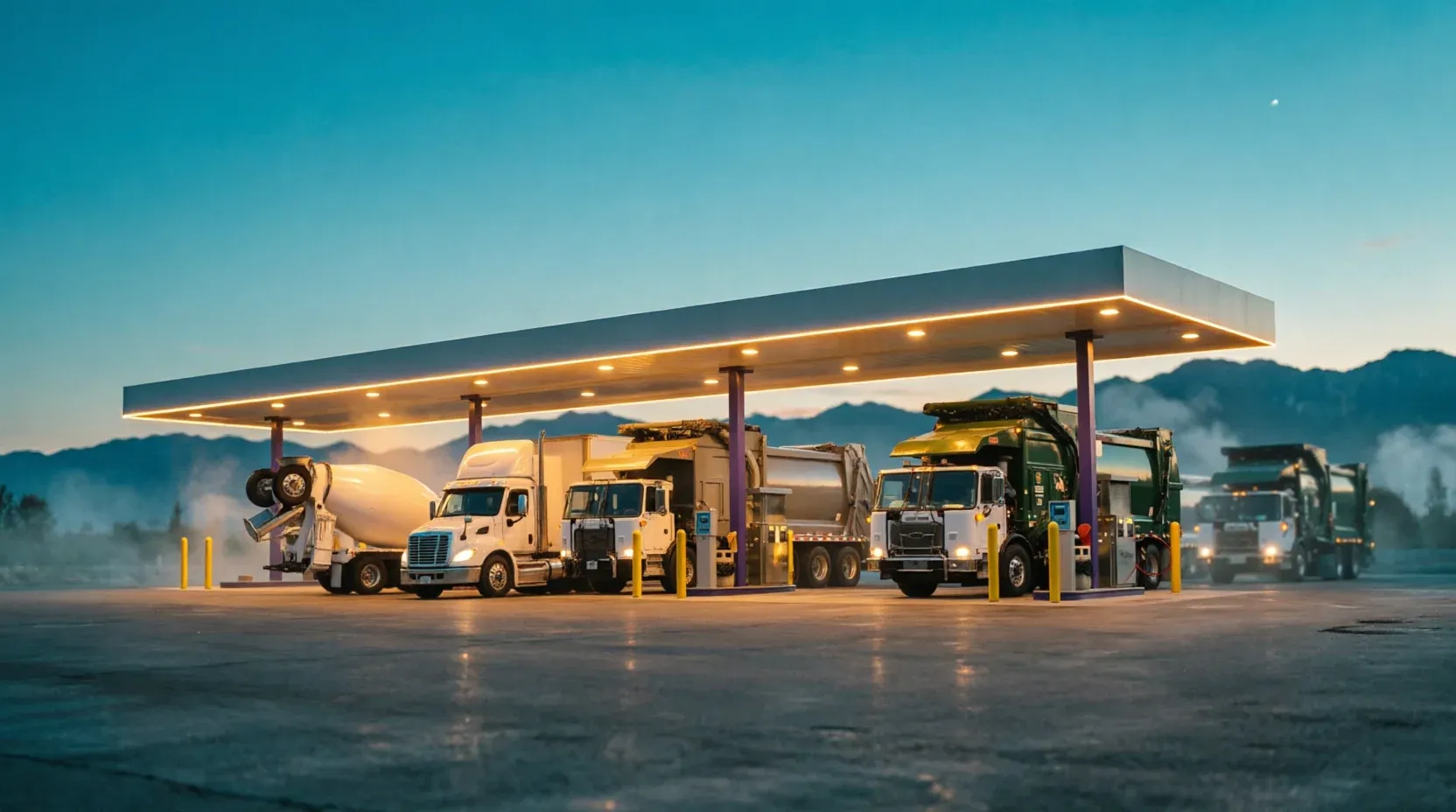
OPAL Fuels is scaling its California footprint by converting an underutilized asset into a high-capacity fueling hub for heavy-duty fleets. The company has completed renovations at its Goshen, California station, aiming to capture increasing demand for low-carbon transportation fuels. This strategic upgrade expands the facility's throughput, positioning the site as a critical node for agricultural and commercial logistics moving through the state's Central Valley.
Goshen Station Capacity Expansion
The renovation of the facility at 30981 Road 67, Goshen, CA, adds 1.7 million gasoline gallon equivalents (GGE) of additional capacity. OPAL Fuels expects the upgraded station to dispense approximately 14 million GGE of renewable natural gas (RNG) and compressed natural gas (CNG) over the next decade. By upgrading the infrastructure, the company aims to provide faster fill times and a more reliable local supply for its existing customer base. This expansion follows the company's 2025 acquisition of the station, with the full suite of improvements finalized through 2026 to support the transition from traditional diesel to low-carbon alternatives.
Heavy-Duty Fleet Integration
The upgraded infrastructure integrates Premier Ag Transportation Inc. into the station's customer roster, joining Western Milling and ten other commercial and regional customers. This diversification of the user base strengthens the station's role as a public-access fueling hub for heavy-duty trucking. Beyond serving the twelve existing fleets, the facility is designed to accommodate additional commercial users seeking to displace diesel. The company projects that the Goshen station will displace approximately 1.3 million gallons of diesel annually. This shift supports the regional agricultural and commercial sectors by providing a low-carbon fuel option intended to maintain fleet competitiveness within the Central Valley.
Key Takeaways
- The Goshen facility is projected to dispense 14 million GGE of RNG and CNG over the next ten years.
- Upgrades at the site added 1.7 million GGE of capacity to the existing infrastructure.
- The project is expected to displace approximately 1.3 million gallons of diesel on an annual basis.
EnergyInsyte's Take
In our view, OPAL Fuels is executing a disciplined "buy-and-build" strategy by targeting underutilized assets and retrofitting them for high-demand corridors. By securing a diverse customer mix—ranging from agricultural giants like Western Milling to specialized carriers like Premier Ag Transportation—the company is mitigating single-user dependency risks. This move signals that the economic viability of RNG in the Central Valley is increasingly tied to infrastructure reliability and throughput speed. Successfully scaling these localized hubs could provide a repeatable blueprint for decarbonizing heavy-duty logistics.
Questions & Answers
How much additional capacity does the Goshen upgrade provide?
The renovation added 1.7 million gasoline gallon equivalents (GGE) of capacity, bringing the total expected output to 14 million GGE over the next decade.
Which major commercial entities are utilizing the upgraded station?
The station serves Western Milling, Premier Ag Transportation Inc., and ten other commercial and regional customers.
What is the projected environmental impact regarding diesel displacement?
The station is projected to displace approximately 1.3 million gallons of diesel annually.
What is the strategic timeline for this facility's development?
OPAL Fuels acquired the station in 2025 and completed the extensive upgrades through 2026.
Source: Businesswire