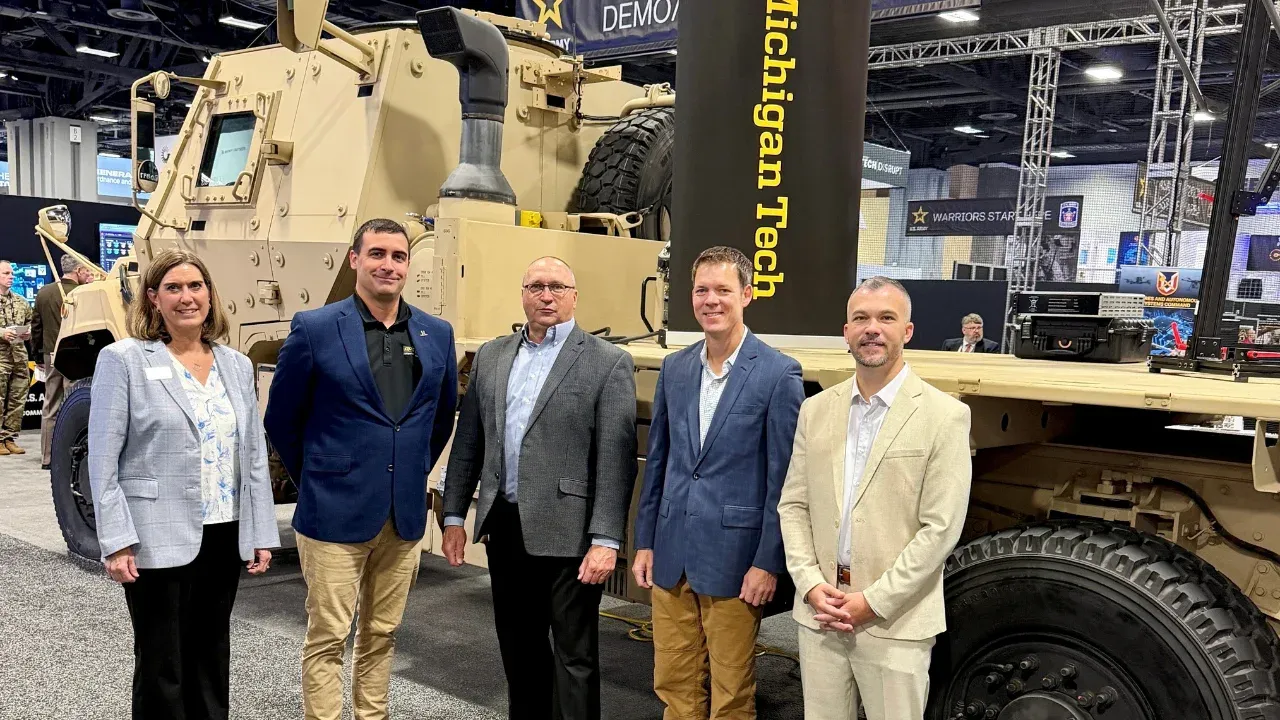
Oshkosh Defense is moving to bridge the gap between academic energy research and scalable battlefield power deployment through a new strategic partnership with Michigan Technological University’s Advanced Power Systems Research Center (APS LABS). The collaboration aims to transition the Vehicle Integrated Power Kit (VIPK) from a prototype phase into a production-ready solution for the Family of Medium Tactical Vehicles A2 (FMTV A2). By combining APS LABS’ research capabilities with Oshkosh Defense’s manufacturing expertise, the companies intend to provide mobile, on-platform energy capable of supporting high-demand systems. This development targets the increasing requirement for reliable, high-output power in austere environments where traditional grid access is non-existent or compromised.
Scaling the VIPK for FMTV A2 Integration
The central objective of this partnership is the commercialization and technology transfer of the VIPK, a system designed to deliver significant electrical capacity directly from tactical vehicles. The kit is engineered to generate up to 120kW of power at 600 volts of direct current (DC). This specific power profile is intended to support a diverse array of critical mission requirements, including Counter Unmanned Aircraft Systems (C-UAS), directed energy weapon systems, and missile defense systems, as well as field hospitals and post operations.
To ensure these mobile assets can function within a larger energy ecosystem, the VIPK is designed to be compliant with the Tactical Microgrid Standard (TMS). This compliance is intended to enable interoperability with other power systems operating in the field, effectively allowing individual vehicles to act as nodes within a mobile microgrid. Oshkosh Defense, acting as the original equipment manufacturer (OEM) for the FMTV A2, is positioning this kit to integrate seamlessly with the existing platform's design and performance. The current roadmap involves completing and validating two prototypes for government assessment and soldier evaluation. Following this, APS LABS plans to build two additional prototypes for continued testing and demonstrations while the partnership finalizes the Technical Data Package and optimizes the design for large-scale manufacturability.
Mobile Microgrid Capabilities in Austere Environments
The development of the VIPK highlights a growing shift toward decentralized, mobile energy generation within tactical and remote industrial frameworks. By providing 120kW of power at 600V DC, the system addresses the heavy electrical loads required by modern electronic warfare and defense technologies. The ability to generate this power on-platform reduces a unit's reliance on external, vulnerable power sources, which is a critical factor in maintaining operational flexibility in complex or contested environments.
The partnership leverages a specific division of labor: APS LABS provides the agile research and development necessary to refine the energy systems, while Oshkosh Defense applies its production expertise to ensure the technology can be manufactured at scale. This approach is designed to mitigate the common "valley of death" in energy technology, where high-performing prototypes fail to reach the market due to a lack of manufacturing integration. For the energy sector, this illustrates how specialized microgrid standards, such as the TMS, are becoming essential for ensuring that mobile power assets can communicate and exchange energy effectively across distributed networks.
Key Takeaways
- The VIPK can generate up to 120kW of power at 600 volts of direct current (DC).
- The system is designed to be compliant with the Tactical Microgrid Standard (TMS) to allow for field interoperability.
- The partnership will involve the validation of two prototypes for government assessment, followed by the production of two additional prototypes for testing.
EnergyInsyte's Take
In our view, the Oshkosh Defense and Michigan Tech partnership signals a critical maturation of mobile microgrid technology. We are seeing a move away from simple auxiliary power units toward sophisticated, high-voltage DC energy hubs that can support the massive electrical demands of directed energy and C-UAS technologies. By adhering to the Tactical Microgrid Standard (TMS), Oshkosh is not just selling a power kit; they are building a standardized component for a distributed energy architecture. This is a strategic move to ensure that as energy needs on the move increase, the infrastructure remains interoperable. The focus on transitioning from a prototype to a "production-ready" kit via the FMTV A2 platform suggests that the industry is prioritizing the manufacturability of complex energy systems as much as their theoretical performance.
Questions & Answers
How much power can the VIPK generate and at what voltage?
The Vehicle Integrated Power Kit (VIPK) is capable of generating up to 120kW of power at 600 volts of direct current (DC).
What is the strategic purpose of the VIPK's compliance with the Tactical Microgrid Standard (TMS)?
Compliance with the TMS is intended to enable interoperability, allowing the VIPK to integrate and function alongside other power systems within a field-based microgrid environment.
What are the immediate next steps in the development timeline for this partnership?
The team will first complete and validate two prototypes for government assessment and soldier evaluation. Subsequently, APS LABS will build two more prototypes for continued testing while the Technical Data Package is finalized.
Which specific vehicle platform is this technology being integrated into?
The technology is being developed for the Family of Medium Tactical Vehicles A2 (FMTV A2), for which Oshkosh Defense serves as the original equipment manufacturer (OEM).
Source: Oshkosh Defense