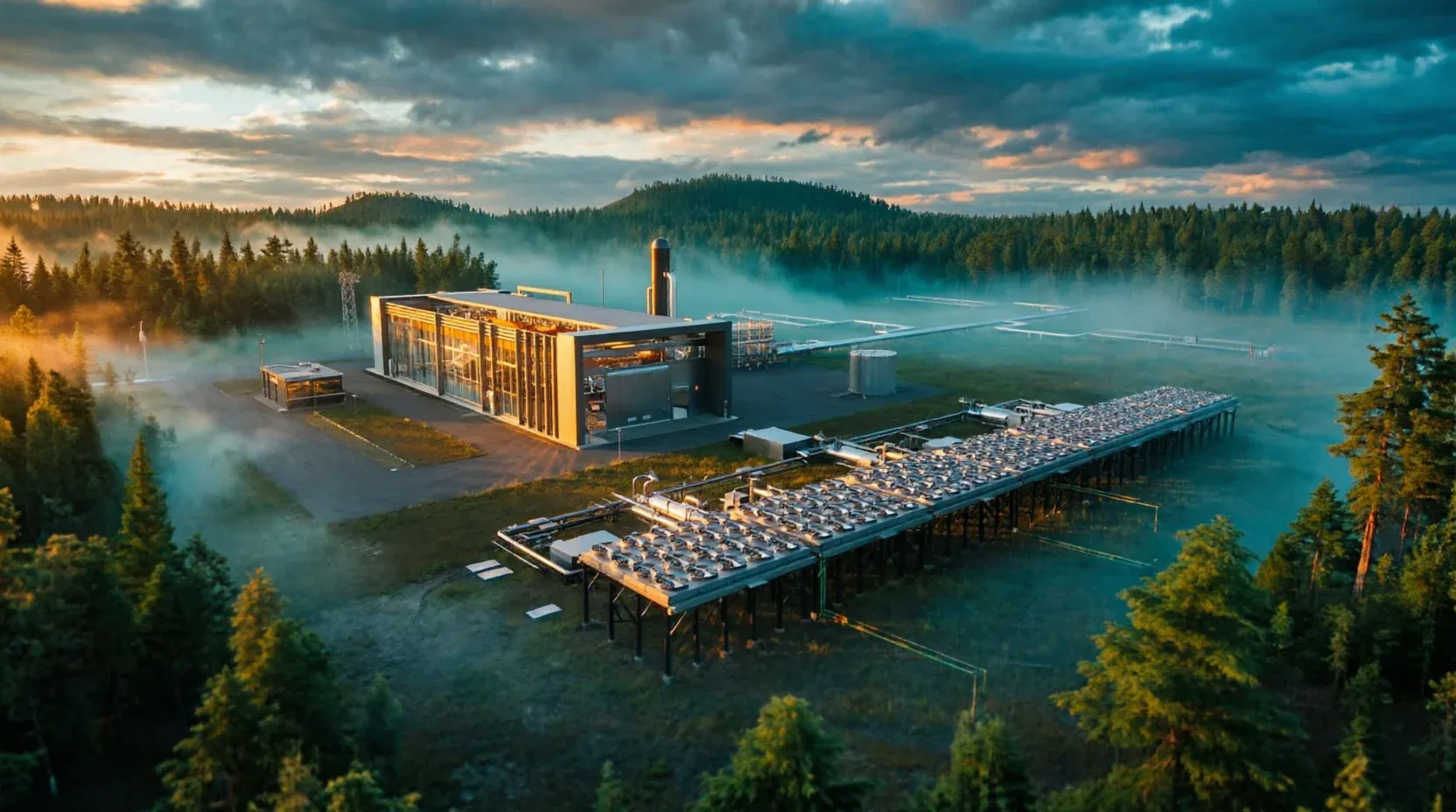
The commercial viability of deep-crust geothermal energy is moving closer to reality as Quaise Energy closes a $180 million Series B equity financing round. This capital injection, which includes a $35 million investment from drilling contractor Nabors Industries, aims to fund Project Obsidian—the company's planned world-first superhot geothermal power plant. By targeting depths exceeding 5 km, Quaise intends to utilize its proprietary millimeter wave drilling technology to access high-temperature rock previously unreachable by conventional mechanical methods, potentially transforming geothermal into a ubiquitous, baseload power source.
Nabors Industries Investment and Strategic Framework
The $180 million Series B round, which brings Quaise’s total funding to $280 million, is anchored by a significant $35 million commitment from Nabors Industries (NYSE: NBR). Beyond direct equity, the two companies have established a strategic framework agreement designed to integrate Nabors' drilling expertise with Quaise’s millimeter wave technology. This partnership provides Quaise with access to a dedicated land rig and Nabors’ advanced platform, which incorporates reservoir modeling, well design, and drilling strategy. The companies expect that sharing operational data and experience will help enhance drilling performance, reduce overall costs, and accelerate the development timeline for Project Obsidian. This collaboration marks a shift from theoretical technology development toward integrated, large-scale industrial execution in the geothermal sector.
Project Obsidian and Millimeter Wave Drilling Goals
Quaise Energy is positioning Project Obsidian as the primary vehicle for demonstrating the commercial utility of superhot geothermal energy. The funding will specifically accelerate the commercialization of the company's millimeter wave drilling system, which was developed through over a decade of research at the Massachusetts Institute of Technology (MIT). The technical objective is to reach rock at temperatures and depths in excess of 5 km, a threshold that Nabors Industries suggests makes geothermal a global solution rather than a location-dependent resource. The Series B round's initial close in July 2026 was led by Prelude Ventures, with additional strategic investments from Japanese energy firms JERA Co., Inc. and Idemitsu Kosan. BofA Securities and Goldman Sachs & Co. LLC served as advisors for the financing.
Key Takeaways
- Quaise Energy closed an $180 million Series B, bringing its total lifetime funding to $280 million.
- Nabors Industries invested $35 million and entered a strategic framework agreement covering drilling operations and technology integration.
- The capital is earmarked for Project Obsidian and the commercialization of millimeter wave drilling for depths exceeding 5 km.
EnergyInsyte's Take
In our view, the involvement of Nabors Industries signals a critical transition for Quaise from a research-heavy MIT spin-off to a serious industrial contender. By securing a dedicated land rig and integrating reservoir modeling through a major drilling contractor, Quaise is attempting to de-risk the most significant hurdle in deep geothermal: the execution of high-temperature well construction. If the millimeter wave technology can successfully reach the 5 km target, it could decouple geothermal energy from specific tectonic geographies, allowing for gigawatt-scale baseload power in a much wider array of locations. This is a high-stakes bet on hardware-driven deep-earth access.
Questions & Answers
How will the Nabors Industries partnership impact Project Obsidian's execution?
The partnership provides Quaise with a dedicated land rig and access to Nabors' advanced platform for reservoir modeling and well design. This integration is intended to optimize drilling performance and expedite the project timeline through shared operational data.
What specific technical capability is the Series B funding intended to advance?
The funds are directed toward the commercialization of Quaise's millimeter wave drilling system, specifically targeting the ability to reach superhot rock at depths in excess of 5 km.
Which major energy players are participating in this funding round?
In addition to Nabors Industries, the round includes strategic investments from JERA Co., Inc. and Idemitsu Kosan, two of Japan's largest energy companies, with Prelude Ventures leading the first close.
What is the strategic significance of the "superhot" geothermal approach?
Unlike conventional geothermal which is often location-dependent, the superhot approach aims to access higher temperatures at greater depths, which Nabors suggests could make clean, baseload energy a global, ubiquitous solution.
Source: Businesswire