


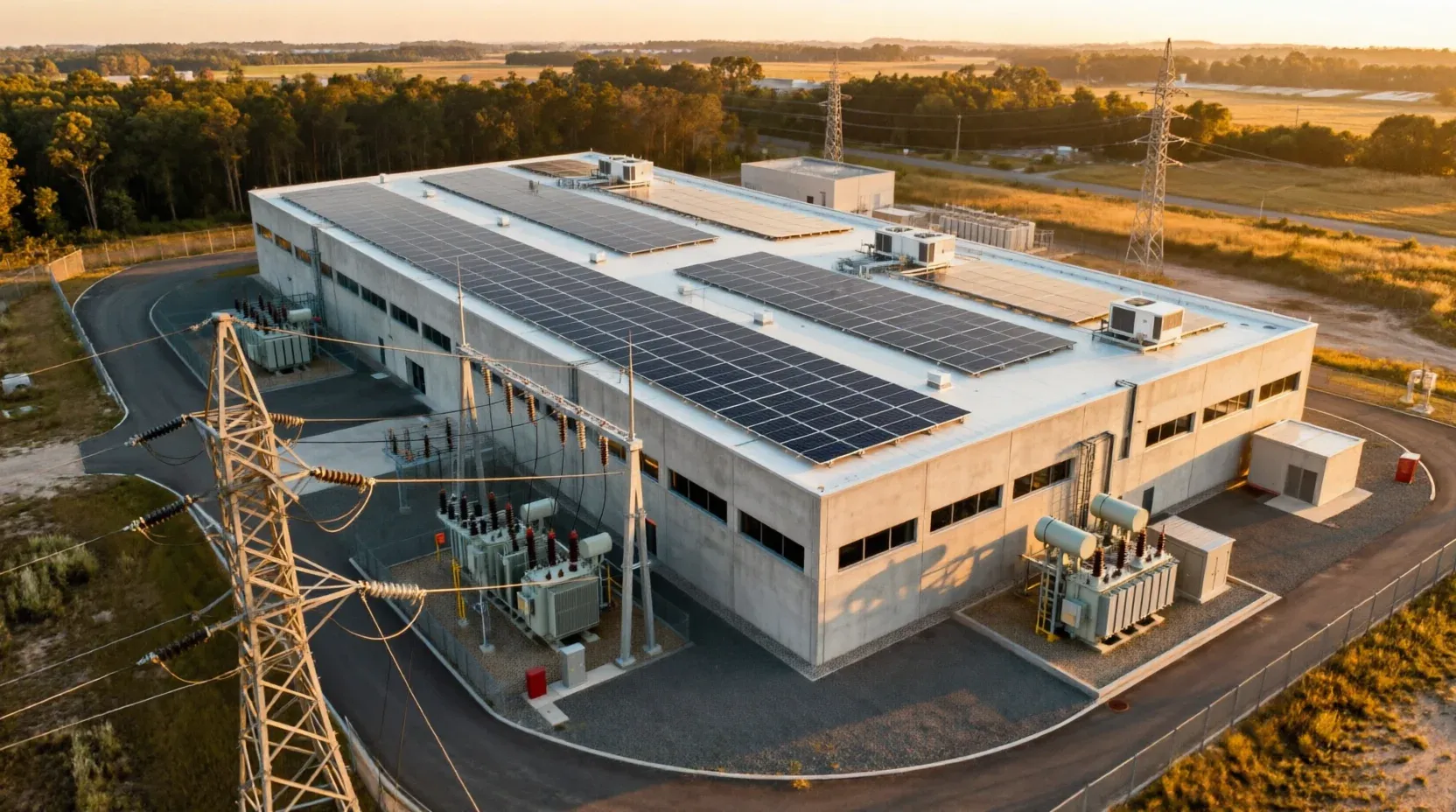
Rune is attempting to bypass the massive infrastructure bottlenecks stalling the AI revolution by turning solar farms into immediate data centers. The company has unveiled RELIC (Renewable Energy Linked Intelligent Compute), a modular system designed to capture wasted energy directly at generation sites. To support this deployment, Rune secured $40 million in Series A funding led by Spark Capital, bringing its total capital raised to $53.5 million. This strategic move targets the estimated 50-plus terawatt hours of energy lost annually in the U.S. due to solar curtailment and clipping. By installing compute hardware behind the meter, Rune aims to provide high-performance capacity without the multi-year wait times typically required for grid interconnection and utility approvals.
RELIC Modular Deployment and Infrastructure Savings
The RELIC system is positioned as a rapid-response alternative to traditional data center construction, which often faces years of delays due to grid constraints. Rune claims its modular units can be deployed in 60 minutes and can bring GPUs online in as little as six weeks from the date of contract. A primary driver of this speed is the "off-grid by design" architecture; the system runs natively on DC power, which is the native output of solar arrays. This eliminates the need for AC conversion, transformers, and heavy site preparation. By removing these components, Rune asserts it can cut non-compute infrastructure costs by 85% compared to conventional AI data center models. For a 100MW deployment, the company estimates these savings could reach $620 million.
The company is currently demonstrating this model through a live installation at a 200MW solar facility in Texas. This deployment operates on an existing renewable asset without requiring grid work or site modifications. The technology is designed to capture "curtailed and clipped" power—energy that is produced by solar plants but never sold or delivered to the grid—without disrupting the core operations of the host facility. This approach seeks to transform underutilized renewable assets into active compute nodes, effectively treating every solar plant as a latent data center.
Scaling AI Capacity via Stranded Energy Capture
Rune’s leadership is leveraging deep expertise in both power electronics and silicon architecture to address the resource allocation crisis in AI. Co-Founder and CEO William Layden, who previously managed a division at Cube Hydro focused on hydroelectric energy harvesting, is positioning RELIC to bridge the gap between energy generation and compute demand. Supporting this technical push is Co-Founder and CTO Varun Palivela, a chip architect with experience at NUVIA, Qualcomm, and Arm. The company’s thesis is that the current AI power constraint is not a lack of generation, but a failure in how resources are allocated across the grid.
The $40 million Series A round includes participation from a diverse group of investors, including Union Square Ventures, Lowercarbon Capital, Activate Capital, Committed Capital, Timeless Partners, and Logos Fund. This capital is intended to expand Rune’s pipeline of power partnerships and compute customers. As AI labs face increasing difficulty securing grid connections, Rune is testing whether a decentralized, behind-the-meter model can provide a more scalable path for inference capacity. By coupling compute directly to clean generation, the company aims to provide a way for AI to scale while utilizing energy that would otherwise be wasted.
Key Takeaways
- Rune secured $40 million in Series A funding, bringing total funding to $53.5 million, led by Spark Capital.
- The RELIC system can be deployed in 60 minutes and brings compute capacity online in as little as six weeks.
- Rune claims its model reduces non-compute infrastructure costs by 85% compared to traditional AI data centers.
EnergyInsyte's Take
In our view, Rune is making a high-stakes bet that the path to AI scaling lies in bypassing the utility grid entirely rather than waiting for it to catch up. By targeting the 20% of solar energy that is typically wasted through curtailment, Rune is not just solving a compute problem; they are addressing a fundamental inefficiency in renewable energy economics. If the Texas deployment signals successful, this "behind-the-meter" architecture could fundamentally change how developers value solar assets. Instead of viewing curtailment as a lost revenue opportunity, operators could see it as a secondary product line: high-density compute. However, the long-term viability of this model will depend on whether the modular, off-grid approach can maintain the extreme reliability and cooling standards required by the most demanding AI workloads without the stability of a traditional utility connection.
Questions & Answers
How does RELIC minimize the cost of AI data center deployment?
RELIC reduces non-compute infrastructure costs by 85% compared to traditional models. It achieves this by running natively on DC power to eliminate AC conversion losses and by removing the need for transformers, grid connections, utility approvals, and heavy construction.
What specific energy source is RELIC designed to capture?
The system is designed to capture "stranded" or underutilized electricity from solar plants, specifically targeting curtailed and clipped power—energy that is produced but not delivered to the grid.
What is the projected timeline for bringing RELIC compute capacity online?
Rune claims that while traditional data center builds can take years, RELIC units can be deployed in 60 minutes and can have customers energized in as little as six weeks from the contract date.
Which major investors are backing Rune's current expansion?
The $40 million Series A was led by Spark Capital, with participation from Union Square Ventures, Lowercarbon Capital, Activate Capital, Committed Capital, Timeless Partners, and Logos Fund.
Source: Businesswire


