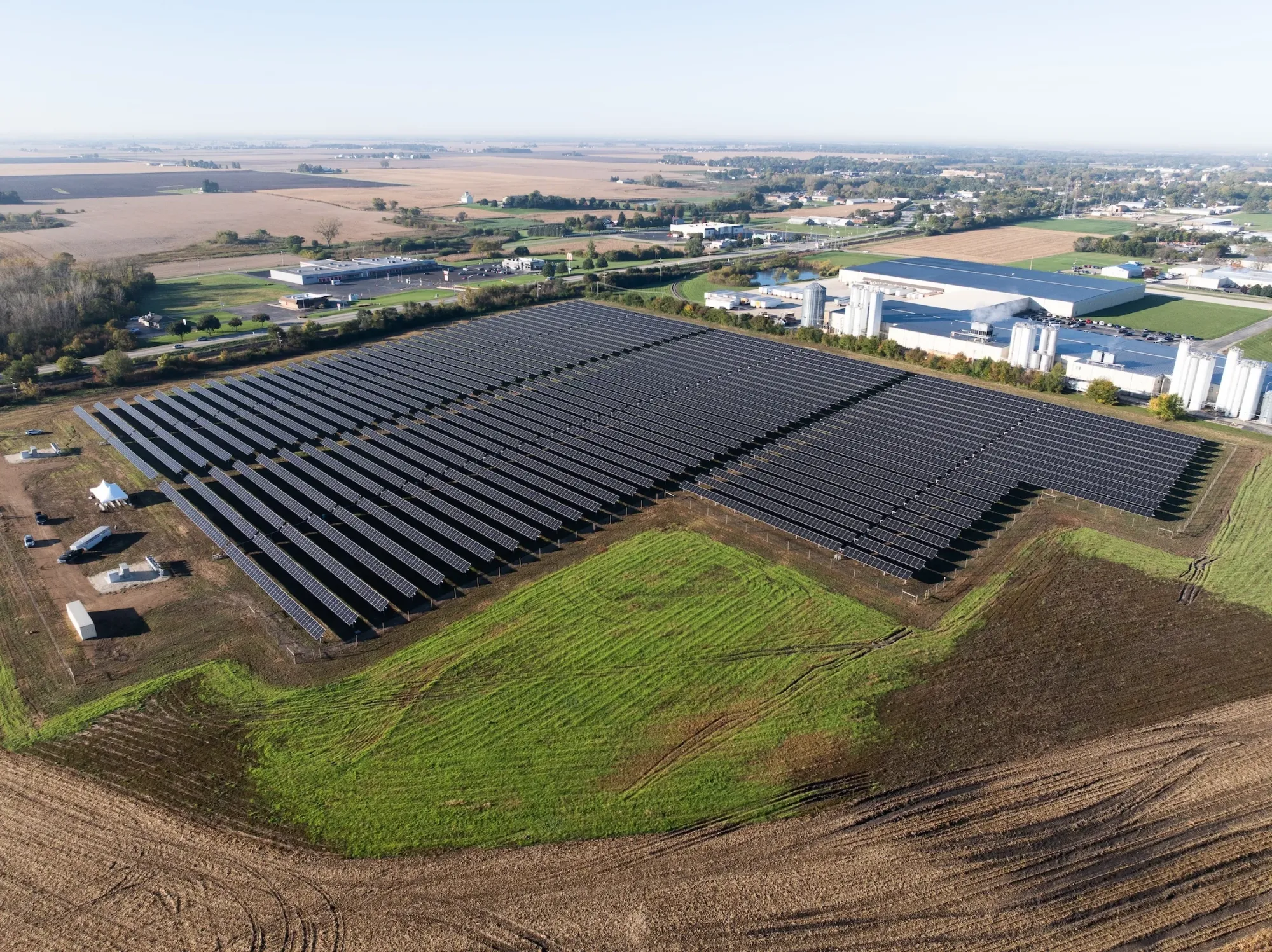
SK Inc. and KKR have signed definitive agreements to launch Korea's largest renewable energy platform, valued at KRW 2 trillion (~$1.3 billion), integrating assets from SK affiliates with approximately 1.7GW of operating capacity and a 10GW development pipeline. The platform targets surging clean-power demand from AI data centers, semiconductor production lines, and other large industrial needs in Korea. Through this newly established platform, funds managed by KKR and SK will bring together renewable energy businesses previously held by SK Innovation, SK ecoplant, and SK eternix into a single, integrated platform spanning development, construction, operation, and maintenance, tapping into each company's respective operational experience and renewables investment expertise.
SK and KKR Form KRW 2 Trillion Renewable Platform
Funds managed by KKR and SK will combine renewable energy businesses previously held by SK Innovation, SK ecoplant, and SK eternix into a single integrated platform spanning development, construction, operation, and maintenance. The portfolio covers solar, onshore wind, offshore wind, and fuel cells, excluding hydrogen. By integrating the entire value chain, the platform enhances economies of scale and operational efficiency across all areas of renewable energy generation. At 10GW total capacity, the platform could simultaneously and continuously power 100 large-scale, 100MW-class data centers, positioning it as a primary clean-power supplier for Korea's most energy-intensive industrial users, from AI data centers to global semiconductor production lines.
Platform Combines SK Affiliate Assets for 10GW Pipeline
The platform launches with 1.7GW already in operation across the three SK affiliates, with the development pipeline expected to bring total capacity to 10GW, making it Korea's largest renewable energy business. SK described the integration as part of a proactive portfolio rebalancing aimed at strengthening sustainability and competitiveness, combining global capital with SK's execution capability to build a long-term growth model. SK plans to use the launch as an opportunity to strengthen the foundation and support the growth of its renewable energy business, while continuing to restructure its portfolio in a direction that enhances capital efficiency and business competitiveness. The company did not disclose further details on the pipeline timeline or specific project locations in the announcement.
KKR Leads Management with Asia Pacific Infrastructure Strategy
KKR will hold management control of the platform in its initial phase, with SK participating as an equity investor and retaining the flexibility to pursue control rights through future discussions. The investment comes primarily from KKR's Asia Pacific infrastructure strategy, where the firm manages over $100 billion in infrastructure assets globally and has deployed more than $31 billion into energy transition and renewables since 2011. KKR's regional track record includes Serentica Renewables, a clean-energy platform delivering power to large-scale industrial users in India; CleanPeak Energy, a distributed-energy platform in Australia; and Zenith Energy, an off-grid energy solution platform in Australia. Keith Kim, Partner at KKR, said Korea is one of Asia's most attractive renewable markets, underpinned by strong corporate demand from semiconductor, data center, and manufacturing sectors, and that together they are establishing a leading, scaled renewable energy platform that can supply reliable clean power to Korea's most demanding industrial users.
Key Takeaways
- Platform valued at KRW 2 trillion (~$1.3 billion) with 1.7GW operating capacity and 10GW total pipeline targeting AI data centers and semiconductor production
- KKR holds initial management control while SK retains equity stake with option to pursue future control rights
- Portfolio integrates SK Innovation, SK ecoplant, and SK eternix assets across solar, onshore wind, offshore wind, and fuel cells
EnergyInsyte's Take
The deal signals serious capital commitment to Korea's industrial decarbonization, but execution risk sits in the 10GW pipeline conversion rate and the unresolved control transition between KKR and SK. Buyers and grid operators should watch whether the integrated platform can deliver contracted supply at the scale and reliability that hyperscale data centers and fabs require, and whether the fuel-cell inclusion meaningfully diversifies generation profiles.
Source: Businesswire