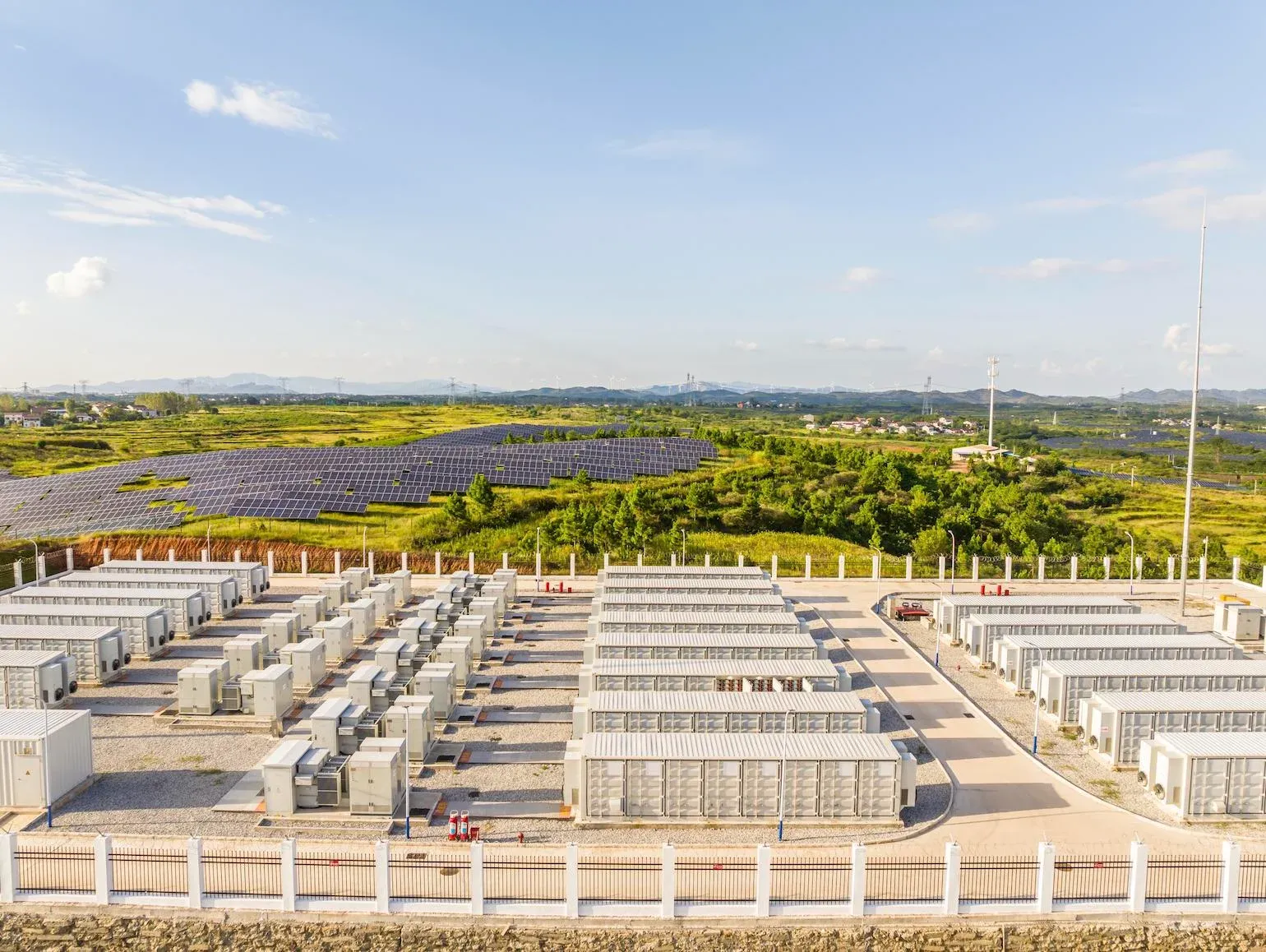
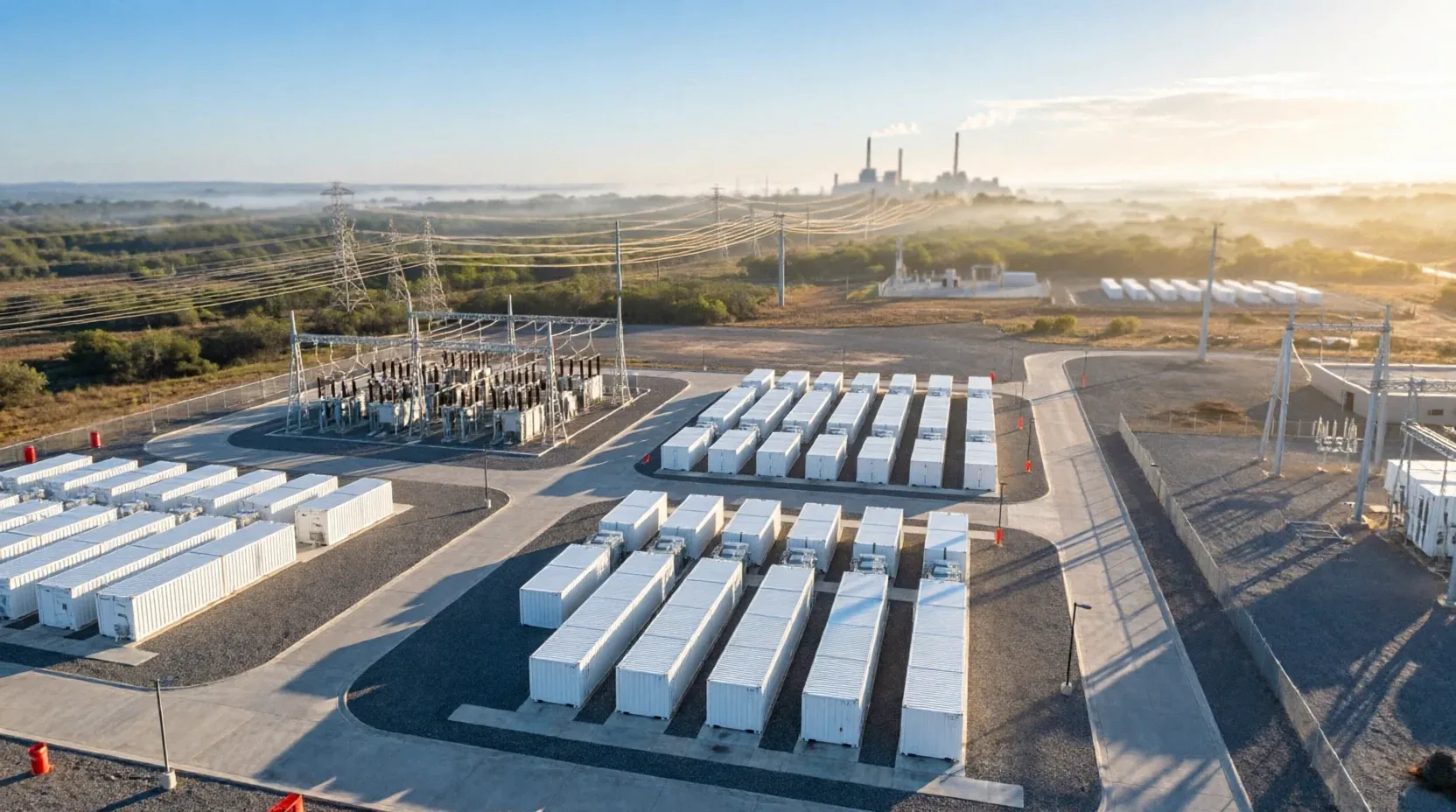
The U.S. battery storage market is continuing its rapid expansion, with operators adding 8.3 GW of battery storage capacity during the first six months of 2026.
The additions brought the country's operational battery storage capacity to nearly 52 GW, according to the U.S. Energy Information Administration (EIA).
The latest expansion reinforces a broader shift in the electricity sector: batteries are moving from a supporting technology for renewable projects toward a critical component of grid infrastructure.
Battery Storage Is Scaling Rapidly
The U.S. power system ended 2025 with approximately 43.6 GW of operational battery storage capacity. Another 8.3 GW came online during the first half of 2026.
That represents a substantial increase in only six months and continues a multi-year acceleration in utility-scale storage deployment. EIA says U.S. battery storage capacity has grown at an average annual rate of approximately 70% over the past three years.
The growth is being driven by several overlapping requirements across the electricity market.
Utilities need additional flexibility as solar and wind generation expand, electricity demand rises, and power markets experience larger differences between periods of surplus and shortage.
Battery systems can respond to these conditions within milliseconds, making them useful for both short-duration energy shifting and grid-balancing services.
Solar Growth Is Increasing the Need for Storage
The relationship between battery storage and renewable generation is becoming increasingly important.
Solar generation can create substantial electricity output during daylight hours while producing little or no electricity after sunset. Batteries can absorb some of that excess generation and discharge it during periods when demand remains high but solar output declines.
This makes storage particularly valuable as renewable penetration increases.
The International Energy Agency expects low-emissions sources—including renewables and nuclear power—to account for 50% of global electricity generation by 2030, compared with 42% in 2025.
As renewable generation takes a larger share of electricity production, the ability to shift electricity across hours becomes increasingly important.
Batteries Are Becoming a Grid Infrastructure Asset
The latest U.S. capacity numbers also highlight an important change in how batteries are viewed by the energy industry.
Early battery projects were often developed primarily to support individual renewable facilities. Increasingly, however, large-scale batteries are being deployed as grid assets capable of providing multiple services.
Depending on market design and system configuration, storage can help with:
- Peak-demand management
- Renewable energy integration
- Frequency regulation
- Grid balancing
- Energy arbitrage
- Capacity adequacy
- Transmission congestion management
- Backup power
This flexibility gives batteries an increasingly important role as utilities attempt to manage more complex electricity systems.
The Economics of Storage Are Changing
Battery deployment is also being supported by improvements in technology and project economics.
The energy industry is moving toward larger battery installations, longer-duration systems and increasingly sophisticated software for forecasting electricity prices and optimizing charging and discharging.
The objective is no longer simply to store electricity.
Developers are increasingly trying to determine when electricity is most valuable, then use storage to move energy into those higher-value periods.
That changes the business case for batteries from a simple capacity calculation into a broader grid-services and market-optimization opportunity.
Storage Could Become More Important as Electricity Demand Rises
Another factor is the changing U.S. electricity-demand outlook.
Data centers, artificial intelligence infrastructure, manufacturing, electrification and industrial expansion are increasing pressure on power systems.
At the same time, new generation and transmission infrastructure can take years to develop.
Battery storage can provide flexibility on a considerably shorter deployment timeline than many large generation and transmission projects.
This makes storage particularly attractive for regions experiencing rapid load growth or transmission constraints.
The trend is also visible in corporate energy markets. Deloitte's 2026 renewable energy outlook identifies battery storage as a key mechanism for delivering firm clean power, particularly as hyperscalers and other large electricity consumers seek reliable low-carbon energy.
Four-Hour Batteries Are Not the Entire Answer
Despite the rapid growth, battery storage is not a complete replacement for conventional generation or long-duration storage.
Most lithium-ion battery systems remain optimized for relatively short-duration applications.
That means longer periods of low renewable generation, seasonal energy shortages and prolonged grid disruptions may require additional technologies.
The future grid is therefore likely to combine several forms of flexibility, including batteries, pumped-storage hydropower, demand response, flexible generation, transmission expansion and potentially longer-duration storage technologies.
What the 52 GW Milestone Signals
The U.S. approaching 52 GW of operational battery storage represents more than a capacity milestone.
It demonstrates that storage is becoming a mainstream component of the electricity system.
The next stage of the market will likely focus less on whether batteries can scale and more on where they provide the greatest system value.
Developers, utilities and grid operators will increasingly have to optimize storage around electricity demand, renewable generation, transmission constraints and market conditions.
For the broader energy industry, the direction is clear: as renewable generation and electricity demand continue to grow, flexibility is becoming as important as generation capacity itself.
The rapid expansion of U.S. battery storage suggests that grid-scale batteries will be one of the central technologies shaping that transition.
Sources: U.S. Energy Information Administration and International Energy Agency.