
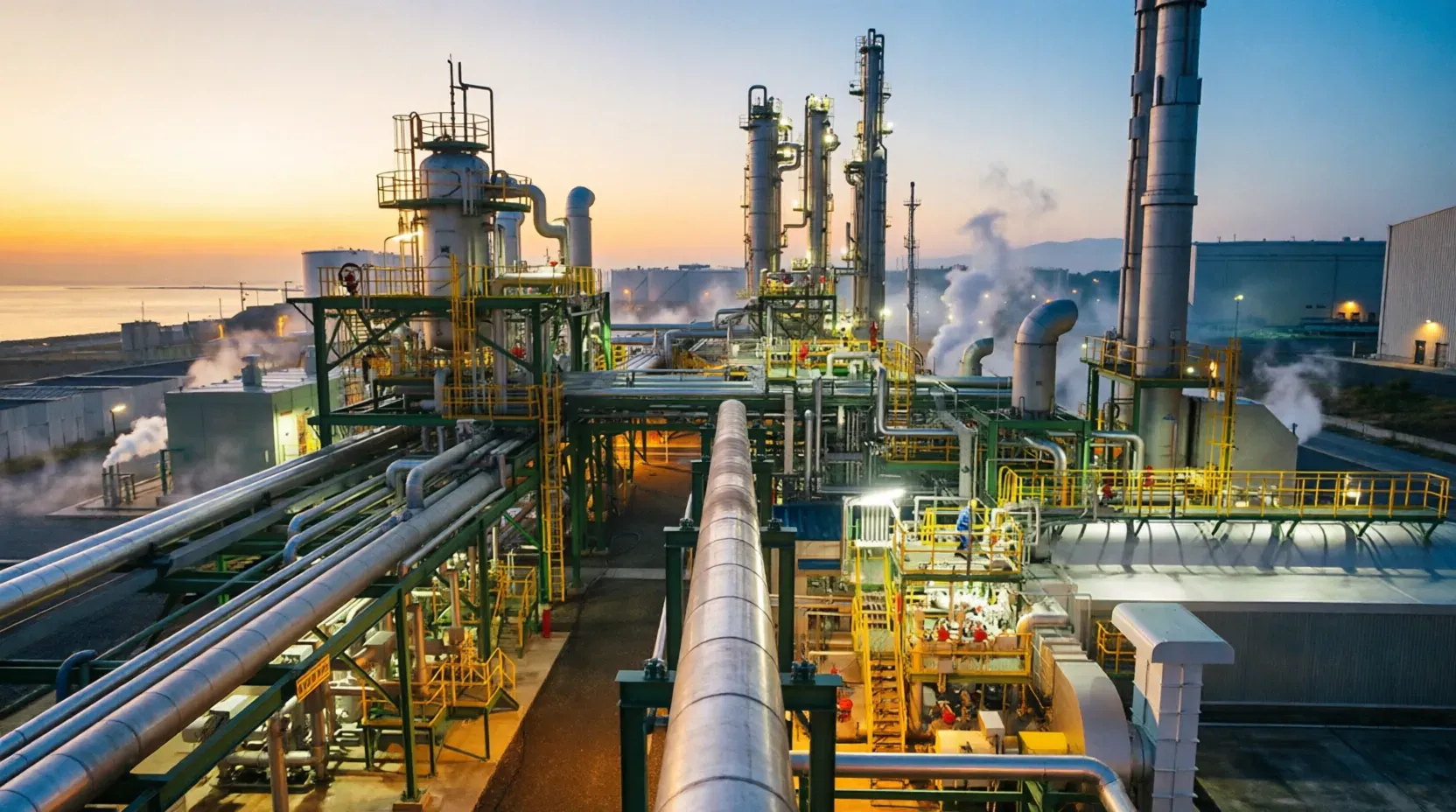
BKV Corporation announced that its Eagle Ford carbon capture and sequestration (CCS) facility is now operational, adding to the company’s commercial CCS portfolio in Texas. The new plant, together with the previously launched Cotton Cove and Barnett Zero sites, will sequester more than 120,000 metric tons of CO₂ annually, underscoring BKV’s push to scale carbon‑management infrastructure across key natural‑gas basins.
Eagle Ford Facility Begins Operations
The Eagle Ford project marks the first new operational CCS facility under BKV’s joint venture with Copenhagen Infrastructure Partners (CIP) and its Energy Transition Fund I. Developed with a diversified midstream energy partner, the plant captures CO₂ from a natural‑gas processing facility handling Eagle Ford Shale production, compresses it, and transports it to an adjacent Class II injection well for permanent underground storage. The facility is expected to sequester approximately 90,000 metric tons of CO₂ each year, with BKV retaining all environmental credits generated. The project reached a final investment decision in mid‑December 2024, secured Class II well approval from the Texas Railroad Commission, and obtained an EPA‑approved monitoring, reporting and verification (MRV) plan.
Integrated Texas CCS Infrastructure
BKV’s Texas CCS footprint now includes three commercial sites: Barnett Zero in North Texas, Cotton Cove in the Fort Worth Basin, and Eagle Ford near Freer in South Texas. Cotton Cove, co‑developed with Banpu Power US, captures CO₂ from BKV’s co‑located midstream plant and is projected to sequester about 32,000 metric tons annually over its lifespan. Combined, the three facilities will sequester over 120,000 metric tons of CO₂ per year, demonstrating the viability of BKV’s integrated approach that leverages upstream production, midstream transport, and carbon‑management capabilities.
Outlook Toward 1.5 Million‑Ton Goal
BKV cited the operational milestones as evidence of progress toward its previously announced target of injecting 1.5 million metric tons of CO₂ annually by 2028. The company indicated that additional CCS projects are advancing through various development stages, although specific timelines or capacities were not disclosed. Achieving the 2028 goal will depend on continued permitting, financing, and the ability to replicate the integrated model across other basins.
Key Takeaways
- Eagle Ford CCS facility is now operational and will sequester roughly 90,000 metric tons of CO₂ annually.
- Combined with Cotton Cove (≈32,000 t/yr) and Barnett Zero, BKV’s Texas sites will capture over 120,000 metric tons of CO₂ each year.
- BKV aims to reach a 1.5 million‑metric‑ton annual CO₂ injection rate by 2028, with additional projects in the pipeline.
EnergyInsyte's Take
The launch of Eagle Ford adds significant capacity to BKV’s Texas CCS platform, reinforcing the company’s integrated asset strategy. While the 1.5 million‑ton target remains ambitious, execution will hinge on securing further permits and financing for upcoming projects. Energy executives should monitor BKV’s pipeline progress and regulatory developments that could affect scaling timelines.
Source: Businesswire