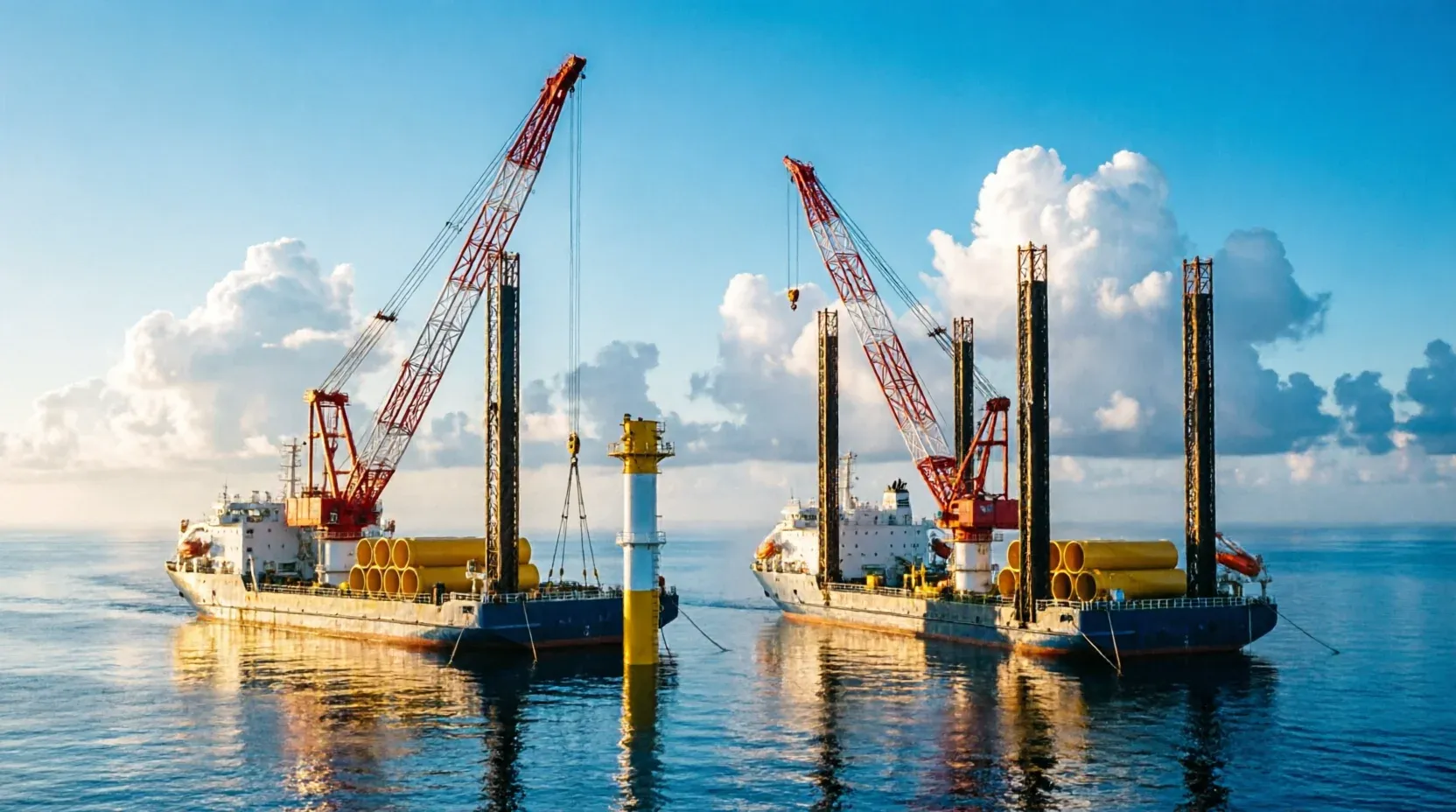
Cadeler has signed firm contracts with COSCO Shipping Offshore shipyard in Qidong, China, to construct two new T-class offshore wind installation vessels. These high-capacity assets are scheduled for delivery in 2030 and 2031. This strategic investment, supported by previously secured equity financing, aims to position Cadeler as a preferred partner for the increasingly complex and large-scale offshore wind projects currently entering the global development pipeline.
COSCO Shipping Offshore T-Class Vessel Contracts
The agreement with COSCO Shipping Offshore shipyard involves an aggregate contract price of approximately EUR 805 million for the two new T-class vessels. This deal builds upon an established collaboration between Cadeler and the Qidong-based shipyard, which has previously constructed several vessels as part of Cadeler’s newbuild programme. According to CEO Mikkel Gleerup, the T-class series is engineered to meet the demands of larger, more technically demanding offshore wind projects. These vessels are designed to incorporate breakthrough technologies and operational capabilities that exceed current industry standards. By securing these assets on competitive commercial terms, Cadeler is actively expanding its fleet to support the accelerating global build-out of offshore wind infrastructure through the end of the decade.
Strategic Fleet Expansion and Technical Capabilities
The T-class vessels are designed to be the largest and most capable vessels introduced to the offshore wind installation market. They are engineered for greater efficiency, versatility, and performance when tackling complex projects. Cadeler is already engaging in discussions with key clients regarding the future deployment of these assets. This expansion is a core component of a long-term strategy to provide specialized capabilities and a modern fleet that can deliver projects safely and reliably. As offshore wind developers face rising technical requirements, the T-class series is positioned to provide the necessary scale. The investment signals a commitment to staying ahead of future customer requirements by providing best-in-class technical solutions for the evolving offshore energy landscape.
Key Takeaways
- Cadeler signed firm contracts for two T-class vessels with a total price of approximately EUR 805 million.
- The new vessels are scheduled for delivery in 2030 and 2031 from the COSCO Shipping Offshore shipyard in China.
- The T-class series is engineered to be the largest and most capable vessels ever introduced to the offshore wind installation market.
EnergyInsyte's Take
In our view, Cadeler’s EUR 805 million commitment signals a decisive move to capture the next generation of offshore wind scale. By securing massive T-class vessels for 2030 delivery, Cadeler is proactively addressing the looming mismatch between increasing turbine sizes and available installation capacity. This long-term capital deployment suggests that the industry's future profitability will depend on specialized, high-spec fleets capable of handling technical complexity. For developers, this provides a signal that high-capacity installation solutions are being prioritized for the next decade.
Questions & Answers
How much is Cadeler investing in the new T-class vessels?
Cadeler has committed approximately EUR 805 million in aggregate for the construction of the two new T-class offshore wind installation vessels.
When will the new T-class vessels be available for deployment?
The two new vessels are scheduled for delivery in 2030 and 2031, supporting Cadeler's long-term fleet expansion strategy.
What technical advantage do the T-class vessels provide?
The T-class vessels are engineered to be the largest and most capable vessels in the market, utilizing breakthrough technologies to handle increasingly complex and large-scale offshore wind projects more efficiently.
Who is the manufacturing partner for this expansion?
The vessels are being constructed by the COSCO Shipping Offshore shipyard located in Qidong, China, a partner with whom Cadeler has an established working relationship.
Source: BUSINESSWIRE