Deep Fission, Inc. (Nasdaq: FISN) is attempting to bypass traditional nuclear construction hurdles by moving reactor deployment deep underground. To execute this strategy, the advanced nuclear company has entered a collaboration with commercial drilling contractor Youngquist Brothers, LLC to test borehole-construction methods. This partnership aims to validate the technical feasibility of placing small modular pressurized water reactors (SMRs) into boreholes approximately one mile deep. By leveraging existing commercial drilling expertise, Deep Fission intends to refine the infrastructure required for its Gravity™ Nuclear Reactor deployment model.
Deep Fission and Youngquist Drilling Collaboration
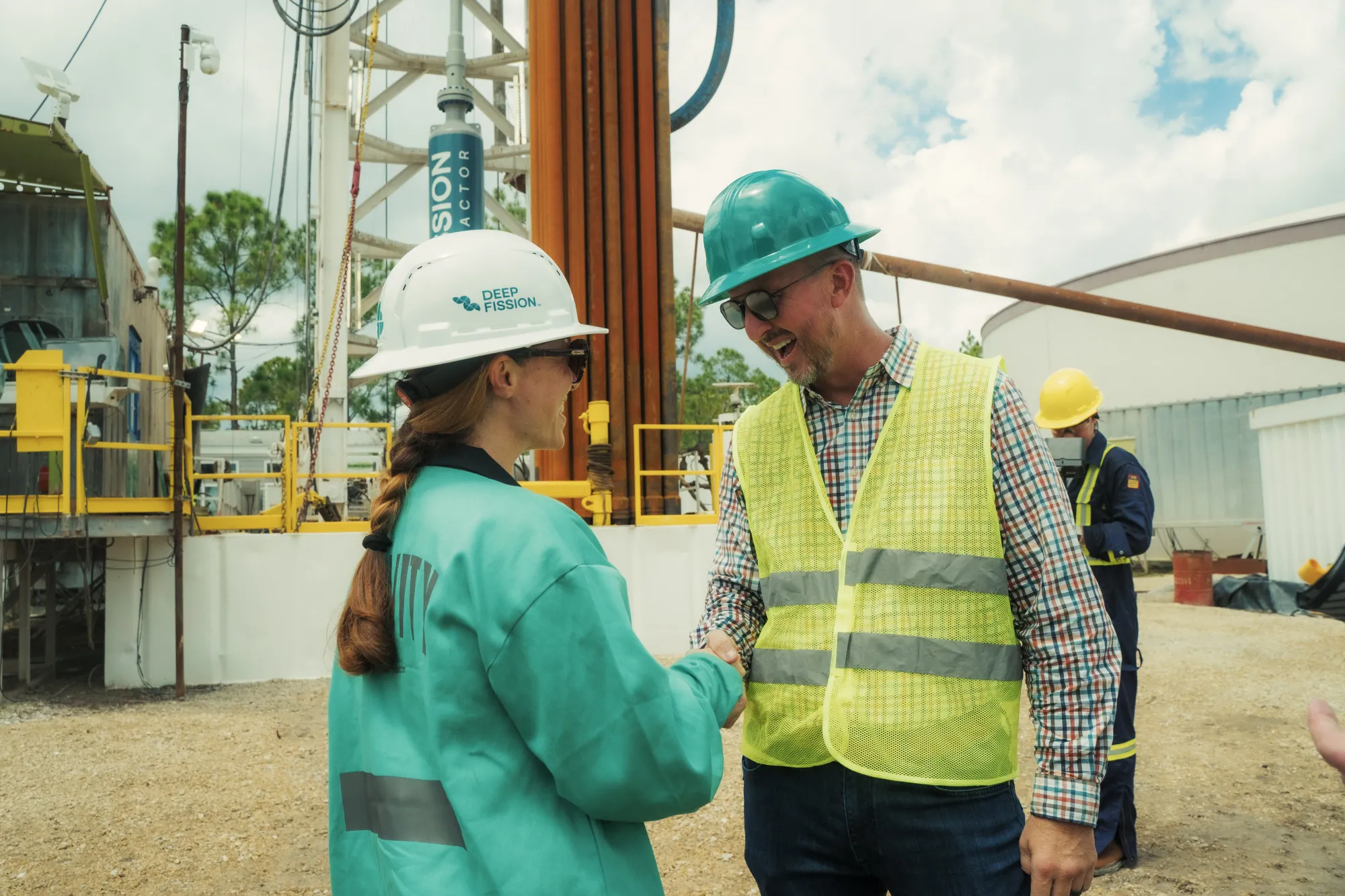
The collaboration focuses on advancing and testing methods for constructing the large-diameter, deep boreholes necessary for Deep Fission's underground deployment model. On September 3, the companies conducted a scale test in Fort Myers, Florida, to evaluate installation and retrieval mechanics. During this demonstration, Deep Fission lowered and retrieved a 30-inch full-size prototype reactor canister into a 34-inch borehole to a depth of approximately 100 feet using Youngquist’s proprietary equipment. While this specific test was limited in depth, the broader partnership seeks to adapt Youngquist’s experience in drilling boreholes exceeding 8,000 feet to the extreme requirements of nuclear applications. Deep Fission CEO and Co-Founder Liz Muller noted that using established commercial drilling expertise allows the company to advance its approach using existing field equipment rather than developing new technologies from the ground up.
Gravity™ Reactor Infrastructure and Deployment
Deep Fission is positioning its Gravity™ Nuclear Reactor to provide low-carbon baseload power to utilities, industrial customers, and data centers. The technology utilizes established pressurized water reactor technology and standard low-enriched uranium fuel. The deployment model secures the reactor roughly one mile underground within a water-filled borehole, where the surrounding rock and water are intended to provide containment, cooling, and core safety functions. This approach aims to simplify construction and enhance safety through geological containment. Deep Fission is currently advancing its first reactor project in Parsons, Kansas, and has been selected for the U.S. Department of Energy’s Reactor Pilot Program. The company is targeting commercial deployment as early as 2027, making the successful validation of deep-borehole construction a critical path item for its operational timeline and scalability.
Key Takeaways
- Deep Fission and Youngquist Brothers are testing large-diameter, deep borehole construction for underground SMR deployment.
- A September 3 demonstration successfully placed a 30-inch prototype reactor canister into a 34-inch borehole at a 100-foot depth.
- The company targets commercial deployment of its Gravity™ Nuclear Reactor as early as 2027.
EnergyInsyte's Take
In our view, Deep Fission is attempting a high-stakes pivot from traditional civil engineering-heavy nuclear builds toward a specialized drilling-centric model. By partnering with Youngquist Brothers, the company is testing whether the high-margin, high-precision world of commercial drilling can meet the stringent safety and containment requirements of nuclear energy. If successful, this could significantly lower the capital intensity and construction timelines typically associated with SMRs. However, the leap from a 100-foot prototype test to a one-mile-deep operational borehole is massive. The success of this model depends entirely on whether borehole stability and thermal management at those depths can reliably support long-term reactor operations.
Questions & Answers
How does the Gravity™ Nuclear Reactor approach intend to manage safety and cooling?
The company intends to use the surrounding rock and water within a one-mile-deep borehole to provide core safety, containment, and cooling functions for the reactor.
What specific technical milestone was achieved during the Florida demonstration?
The companies successfully demonstrated the installation and retrieval mechanics of a 30-inch full-size prototype reactor canister within a 34-inch borehole at a depth of approximately 100 feet.
What is the projected timeline for Deep Fission's commercial operations?
Deep Fission is targeting commercial deployment of its technology as early as 2027.
Which markets is Deep Fission targeting for its baseload power output?
The company is focusing on delivering power to utilities, industrial customers, and data centers to meet growing electricity demand.
Source: deepfission.com