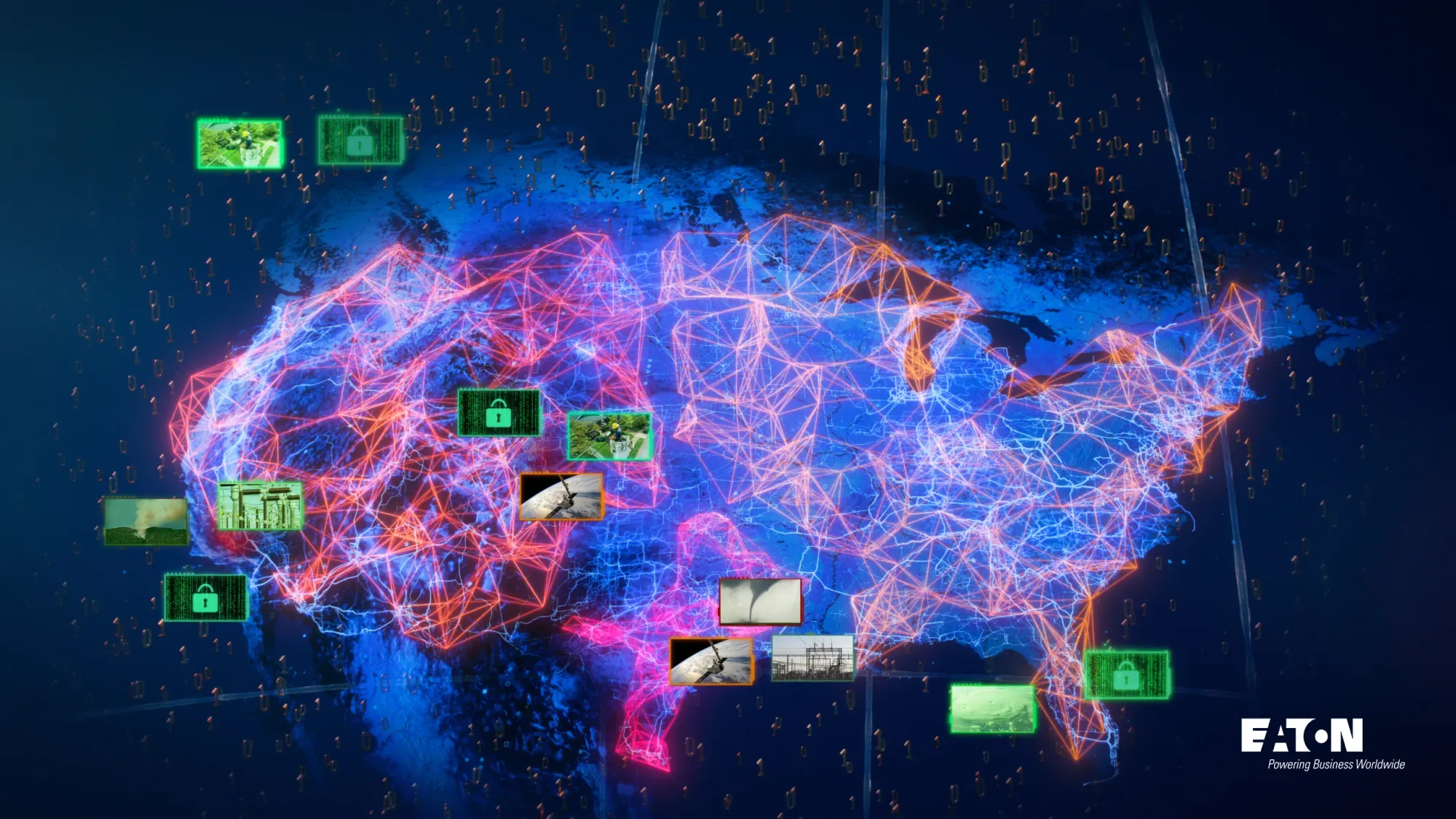
Eaton has been awarded a $7 million, 24-month contract by the U.S. Air Force Research Laboratory (AFRL) to enhance power grid resilience. By integrating quantum computing, machine learning, and advanced visualization, the project aims to strengthen protection against concurrent physical and cyber threats. This initiative focuses on improving detection and response capabilities for critical energy systems through sophisticated, next-generation computational methods.
Advancing Quantum-Enabled Grid Resilience
The AFRL-funded project focuses on solving the "contingency problem," a critical security challenge in electrical grid management. This involves evaluating vast numbers of grid configurations to identify potential vulnerabilities. Unlike current North American Electric Reliability Corporation (NERC) standards, which require transmission systems to withstand two sequential failures (N-2), this research addresses multiple, concurrent, and unpredictable threat combinations. Eaton is collaborating with partners Infleqtion and Penn State to develop new quantum algorithms and hybrid quantum-classical methods. These efforts include optimizing circuits for hybrid computation and conducting experiments across multiple quantum hardware platforms to mitigate errors. The ultimate goal is a proof-of-concept demonstration showing how quantum hardware and machine learning can solve real-world grid challenges.
Strengthening Infrastructure Against Concurrent Threats
Eaton’s research aims to provide faster awareness and actionable control for critical energy systems facing unprecedented risks. These risks include extreme weather, wildfires, and simultaneous physical and cyber attacks. By combining intelligent power management expertise with quantum computational power, the project seeks to enhance infrastructure planning, daily operations, and emergency preparedness. The collaboration utilizes specialized quantum hardware from Infleqtion and AI-supported research from Pennsylvania State University. This approach is designed to move beyond traditional modeling to provide unprecedented anticipation and response capabilities for complex, multi-vector threats to the grid.
Key Takeaways
- Eaton received a $7 million, 24-month contract from the U.S. Air Force Research Laboratory.
- The project utilizes quantum computing, machine learning, and AI to address the "contingency problem."
- Research partners include Infleqtion for quantum hardware and Pennsylvania State University.
EnergyInsyte's Take
In our view, this contract signals a strategic shift toward preparing grid infrastructure for high-complexity, multi-vector threat environments. By moving beyond the N-2 sequential failure standard toward modeling concurrent, unpredictable threats, Eaton is positioning itself at the forefront of next-generation grid security. This move suggests that as physical and cyber threats converge, traditional classical computing may struggle to provide the necessary real-time visibility. The integration of quantum-enabled analytics could become a critical requirement for maintaining reliability in increasingly volatile energy landscapes.
Questions & Answers
How does this project address current NERC reliability standards?
Current NERC standards require transmission systems to withstand two sequential failures (N-2). This project aims to advance beyond that by analyzing and preparing for multiple, concurrent, and unpredictable threat combinations that occur simultaneously.
What specific technologies are being integrated in this 24-month contract?
The project integrates quantum computing, machine learning, and advanced visualization. It specifically focuses on developing new quantum algorithms and hybrid quantum-classical methods to improve grid resilience.
Who are the primary technical partners for Eaton in this initiative?
Eaton is partnering with Infleqtion, which provides specialized quantum hardware, and Pennsylvania State University, which provides advanced machine learning and artificial intelligence support.
What is the intended outcome of the AFRL-funded research?
The research aims to produce a proof-of-concept demonstration. This will showcase how current quantum hardware, combined with new algorithms and machine learning, can solve real-world grid challenges and enhance infrastructure planning and emergency preparedness.
Source: BUSINESSWIRE