


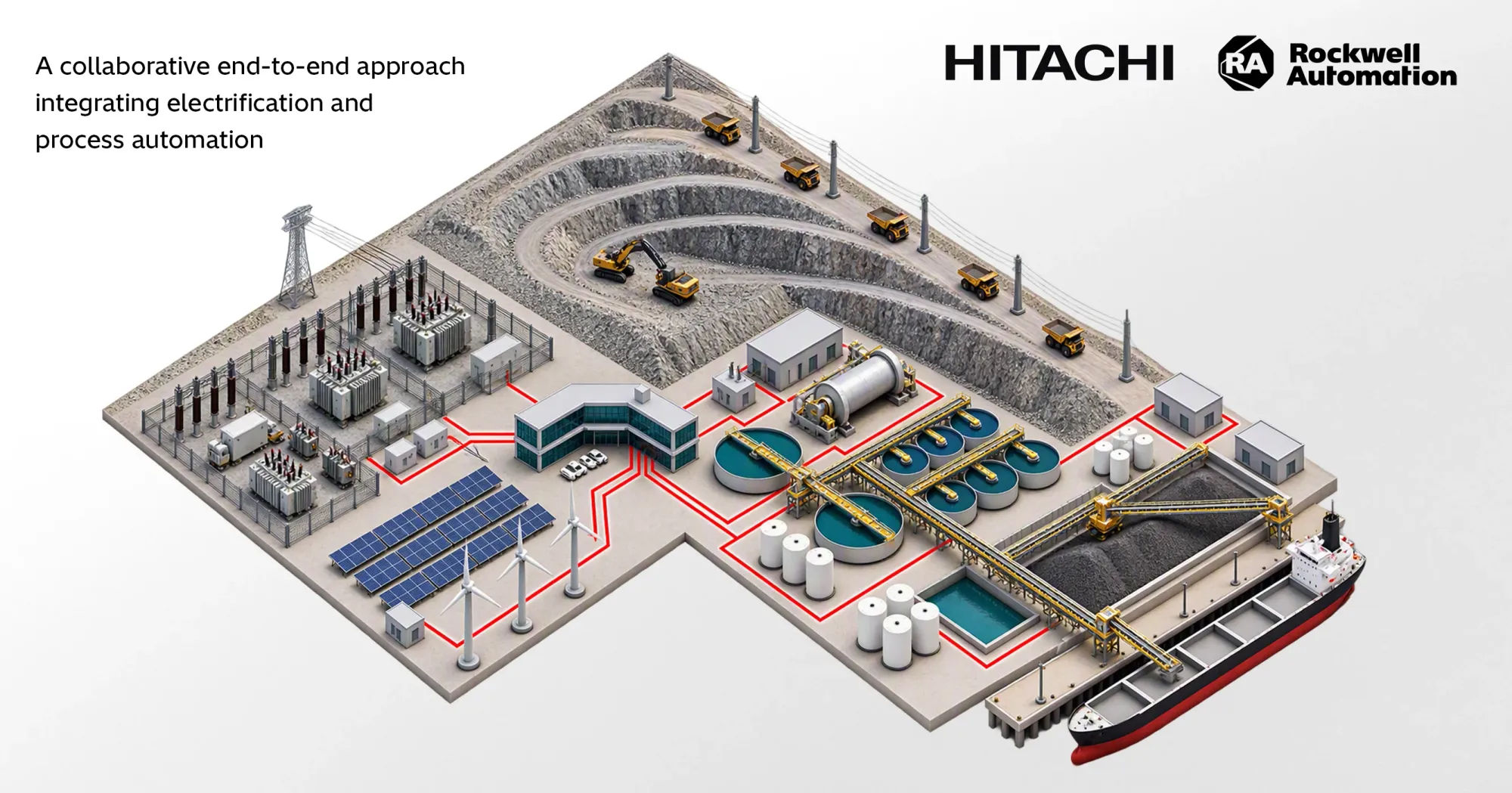
The increasing convergence of industrial power demand and decarbonization mandates is forcing a fundamental shift in how capital-intensive facilities are engineered. Hitachi Energy and Rockwell Automation, Inc. (NYSE: ROK) have announced a strategic collaboration to deploy an integrated "grid-to-process" architecture. This approach seeks to bridge the traditional gap between electrical infrastructure and production management systems. By combining Hitachi Energy’s electrification expertise with Rockwell Automation’s industrial automation and digital transformation capabilities, the two companies aim to provide a unified framework for planning, delivering, and operating complex industrial sites. This move addresses a growing market reality where electrical system decisions directly dictate operational performance and the ability to scale production in energy-constrained environments.
Integrating Electrical Infrastructure and Production Management
The collaboration centers on a unified architecture designed to synchronize the systems that power a facility with the systems that manage its output. Historically, electrical infrastructure and process automation have been planned in isolation, often leading to inefficiencies in resource optimization and project execution. Hitachi Energy and Rockwell Automation are positioning this integrated model to streamline engineering workflows and improve cross-functional coordination during the design and deployment phases of industrial projects.
The technical scope of the partnership encompasses grid connection, power quality, energy management, protection and control, process automation, and digital operations. By integrating these domains, the companies intend to offer customers greater visibility across energy consumption, production performance, and asset utilization once a facility becomes operational. This visibility is intended to support scalable and modular approaches, allowing industrial operators to manage future capacity expansions and the integration of new energy resources more predictably. The companies are currently exploring opportunities in solution development and customer engagement, targeting specific industrial applications where the synergy between power stability and process continuity is most critical for maintaining equipment utilization and reducing operating costs.
Targeting High-Growth Mining and Metals Sectors
While the companies suggest potential applications across various energy-intensive industries, the collaboration is initially focusing on the mining and metals sectors. This prioritization is driven by the massive capital requirements and electrification needs associated with the global demand for critical minerals. According to analysis from McKinsey & Co. cited in the announcement, growth capital expenditures for new capacity in the mining sector could require $1 trillion over the next decade.
For mining companies, the ability to modernize operations while simultaneously expanding production is increasingly tied to reliable, high-quality power. In energy-intensive processes such as crushing, grinding, conveying, and processing, power disruptions can directly impact production continuity and overall equipment utilization. The Hitachi Energy and Rockwell Automation partnership aims to address these complexities by helping companies design more resilient sites. By treating the grid and the process as a single, interconnected ecosystem, the collaboration seeks to help industrial players bring new manufacturing capacity online faster and at a greater scale, navigating the economic shifts brought about by rapid industrial electrification.
Key Takeaways
- Hitachi Energy and Rockwell Automation are collaborating on a "grid-to-process" architecture to integrate electrical infrastructure with production management.
- The partnership is initially targeting the mining and metals industries to address the estimated $1 trillion in required growth capital expenditures over the next decade.
- The integrated approach aims to improve visibility across energy consumption, asset utilization, and production performance through combined electrification and digital technologies.
EnergyInsyte's Take
In our view, this collaboration signals a critical recognition that the "siloed" era of industrial engineering is reaching its limit. As heavy industry faces the dual pressures of skyrocketing power demand and aggressive decarbonization targets, the boundary between the utility-scale grid and the factory floor is effectively dissolving. By linking Hitachi Energy’s electrification assets with Rockwell Automation’s digital control systems, these companies are attempting to capture the value created when energy stability is treated as a core component of production logic rather than an external utility. For C-suite executives in energy-intensive sectors, this move suggests that future competitive advantages will likely stem from how effectively a firm can synchronize its power procurement and quality with its real-time manufacturing throughput. This is not just a technical integration; it is a strategic response to the rising cost of energy complexity.
Questions & Answers
How does the grid-to-process architecture impact capital project execution?
The architecture aims to streamline engineering and improve cross-functional coordination by planning power and production systems together. This integrated approach is intended to help companies bring new manufacturing capacity online more predictably and at a greater scale by reducing the friction between electrical infrastructure and process automation.
Why is the mining and metals sector the primary target for this collaboration?
The sector is facing immense pressure to expand production and modernize operations to meet the demand for critical minerals. With McKinsey & Co. estimating that growth capital expenditures for new capacity could reach $1 trillion over the next decade, the need for reliable, high-quality power in energy-intensive processes like grinding and crushing is paramount to maintaining production continuity.
What specific technical domains are being integrated in this partnership?
The collaboration brings together expertise in grid connection, power quality, energy management, protection and control, process automation, and digital operations. The goal is to create a seamless integration between the electrical systems powering a facility and the automated systems managing its industrial processes.
Can this approach support future energy transitions and capacity increases?
Yes, the companies state that the combination of electrification, automation, and digital technologies provides a scalable foundation. This is intended to support future capacity expansion, increased electrification, and the integration of new energy resources by providing greater visibility across energy consumption and asset utilization.
Source: Hitachi Energy


