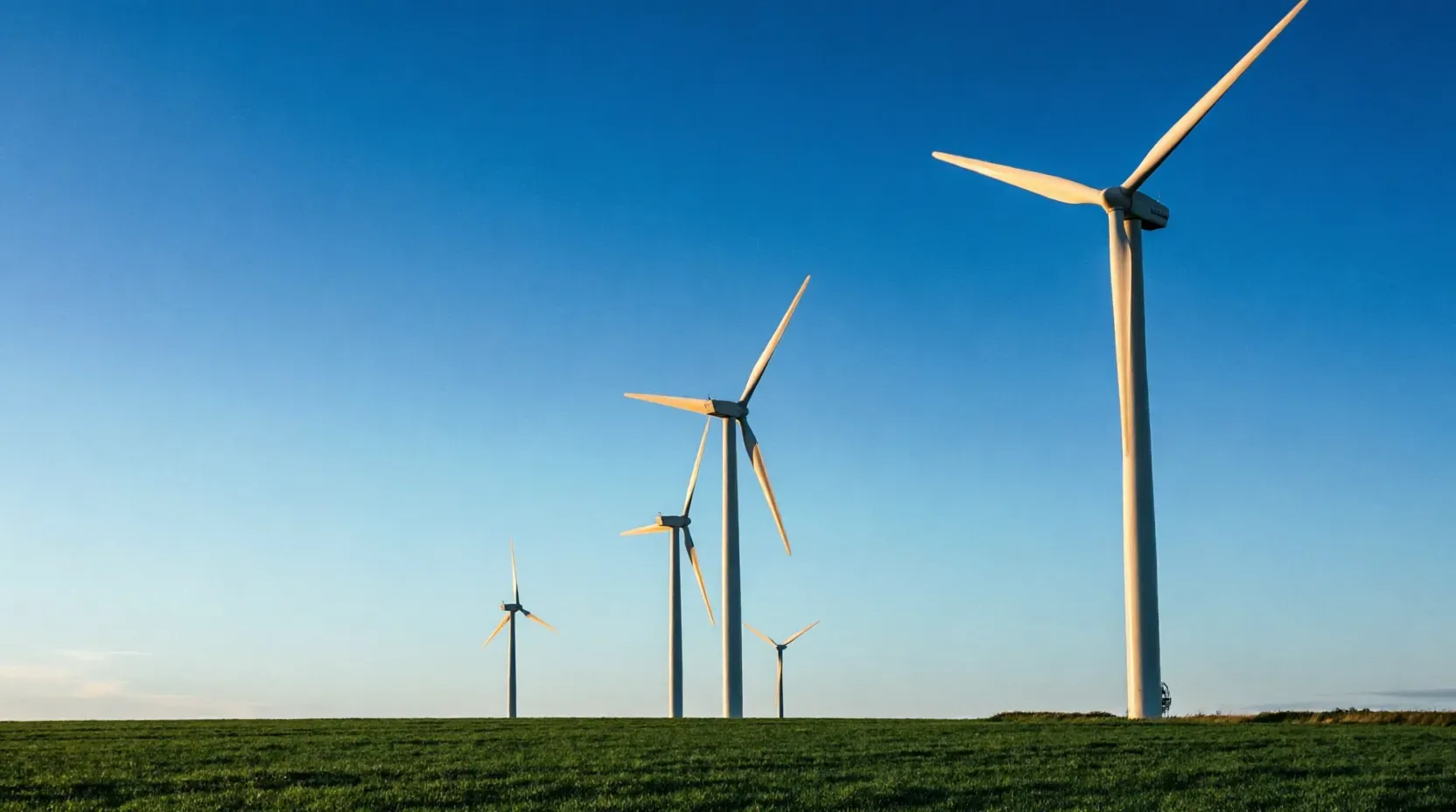
EDF Power Solutions North America and the Saulteau First Nations have executed a 30‑year Electricity Purchase Agreement (EPA) with BC Hydro for the 200.6 MW Taylor South Wind Project. The contract, awarded through BC Hydro’s 2025 Call for Power, is slated to begin delivering power for roughly 60,000 homes by 2032, expanding the province’s clean‑energy supply. The agreement builds on an existing partnership that began three years ago, when EDF Power Solutions first collaborated with Saulteau on the original Taylor Wind project. By formalising a long‑term purchase arrangement, both parties aim to lock in revenue, support regional economic growth, and advance British Columbia’s climate objectives while respecting Treaty rights and Indigenous stewardship of the land.
EDF Power Solutions North America and Saulteau First Nations Execute 30‑Year EPA
The EPA covers the full output of the Taylor South Wind Project, an equity partnership in which Saulteau First Nations hold a 51 % economic interest. The wind farm will be built on Crown Land in the Peace River Region, about 10 km south of Taylor, B.C., on terrain that has already been surveyed for wind resources and is well‑suited to on‑shore turbine installation. EDF Power Solutions North America described the agreement as a continuation of a partnership that began three years ago, noting that the project “will help the BC Government and BC Hydro achieve their goals of adding clean power to the grid.”
BC Hydro’s Minister of Energy and Climate Solutions, Adrian Dix, emphasized that clean, affordable electricity is “essential to strengthening B.C.’s ability to power itself, grow the economy and attract private‑sector investment.” He added that the Taylor South project, together with three other projects selected under the 2025 Call for Power, represents a transformative step toward expanding the province’s electricity supply while keeping power reliable and affordable for people and businesses.
The EPA’s 30‑year term guarantees that BC Hydro will purchase every megawatt‑hour generated by the wind farm at a pre‑agreed price, providing financial certainty for the developers and enabling long‑term planning for operations, maintenance, and community benefit programs. The agreement also includes provisions for ongoing engagement with First Nations, local residents, and key government agencies to ensure the project remains aligned with social, environmental, and economic expectations throughout its lifespan.
Strategic Importance for British Columbia’s Energy Landscape
Taylor South adds 200.6 MW of wind capacity to BC Hydro’s portfolio, diversifying supply and supporting the province’s objective of meeting growing demand for clean electricity. BC Hydro President and CEO Charlotte Mitha highlighted that expanding wind generation “strengthens and diversifies BC Hydro’s power supply, while our flexible hydroelectric system ensures reliability when wind conditions change.” By pairing intermittent wind output with BC Hydro’s extensive hydro storage, the grid can balance fluctuations without compromising stability.
The added capacity is expected to serve 60,000 homes, contributing to BC’s broader goals of meeting residential, commercial, and transportation electricity needs with low‑carbon sources. This aligns with provincial targets to increase renewable generation and reduce greenhouse‑gas emissions in line with Canada’s net‑zero commitments. Moreover, the project’s location in the Peace River Region supports the development of transmission infrastructure that can carry surplus wind power to densely populated areas in the Lower Mainland, further integrating renewable resources into the provincial grid.
From an economic perspective, the wind farm’s output will help offset the need for new fossil‑fuel‑based generation, thereby protecting consumers from potential price volatility associated with fuel markets. The long‑term EPA also signals to investors that BC Hydro is committed to a stable, diversified energy mix, encouraging additional private‑sector participation in future renewable projects across the province.
Investment, Local Economy, and Job Creation
The Taylor South project represents an overall investment of approximately $650 million. More than $150 million of that amount is earmarked for development and construction activities within the local economy, including procurement of materials, services, and subcontracting from regional businesses. The project is projected to create over 250 jobs across development, construction, and operational phases, with a significant portion of positions filled by local workers and members of the Saulteau First Nations.
Chief Rudy Paquette of Saulteau First Nations framed the development as a “triple‑win”—combining economic development, respect for Treaty rights, and responsible use of natural resources. He emphasized that the partnership demonstrates how reconciliation can produce tangible benefits for Indigenous communities, the provincial economy, and the environment.
EDF Power Solutions Senior Director of Development Mark Gallagher noted that the partnership “reflects the trust we have built in the community” and positions EDF as a leading wind developer in Canada. He highlighted that the three‑year partnership leading up to this EPA has involved extensive consultation, joint environmental assessments, and collaborative planning to ensure that the project meets both regulatory standards and community expectations.
Beyond direct employment, the project will generate ancillary economic activity such as training programs for Indigenous youth, support for local supply chains, and community investment initiatives funded through the project’s revenue share. These activities are expected to have a multiplier effect, stimulating further growth in sectors such as transportation, hospitality, and professional services throughout the Peace River Region.
Key Takeaways
- EDF Power Solutions North America and Saulteau First Nations signed a 30‑year EPA with BC Hydro for the 200.6 MW Taylor South Wind Project, slated for in‑service by 2032.
- The project will deliver enough electricity for roughly 60,000 homes and is part of BC Hydro’s 2025 Call for Power, expanding the province’s clean‑energy supply.
- Total project investment is about $650 million, with over $150 million directed to local development and construction, creating more than 250 jobs.
EnergyInsyte's Take
The agreement secures a long‑term revenue stream for the wind farm and adds substantial wind capacity to BC Hydro’s mix, supporting provincial clean‑energy targets without compromising reliability. Execution timelines and final construction costs remain the primary uncertainties; executives should monitor permitting progress and grid integration plans as the 2032 delivery date approaches.
Source: Businesswire