Jacobs is deepening its involvement in the decarbonization of German heavy industry by extending its contract for the thyssenkrupp Steel direct reduction plant in Duisburg. The company will continue managing the project management office, construction, and assembly as the facility approaches its first iron production. This expansion follows an initial contract awarded in August 2023, signaling continued reliance on Jacobs to navigate the technical complexities of this hydrogen-based transition.
thyssenkrupp Steel Duisburg Project Expansion
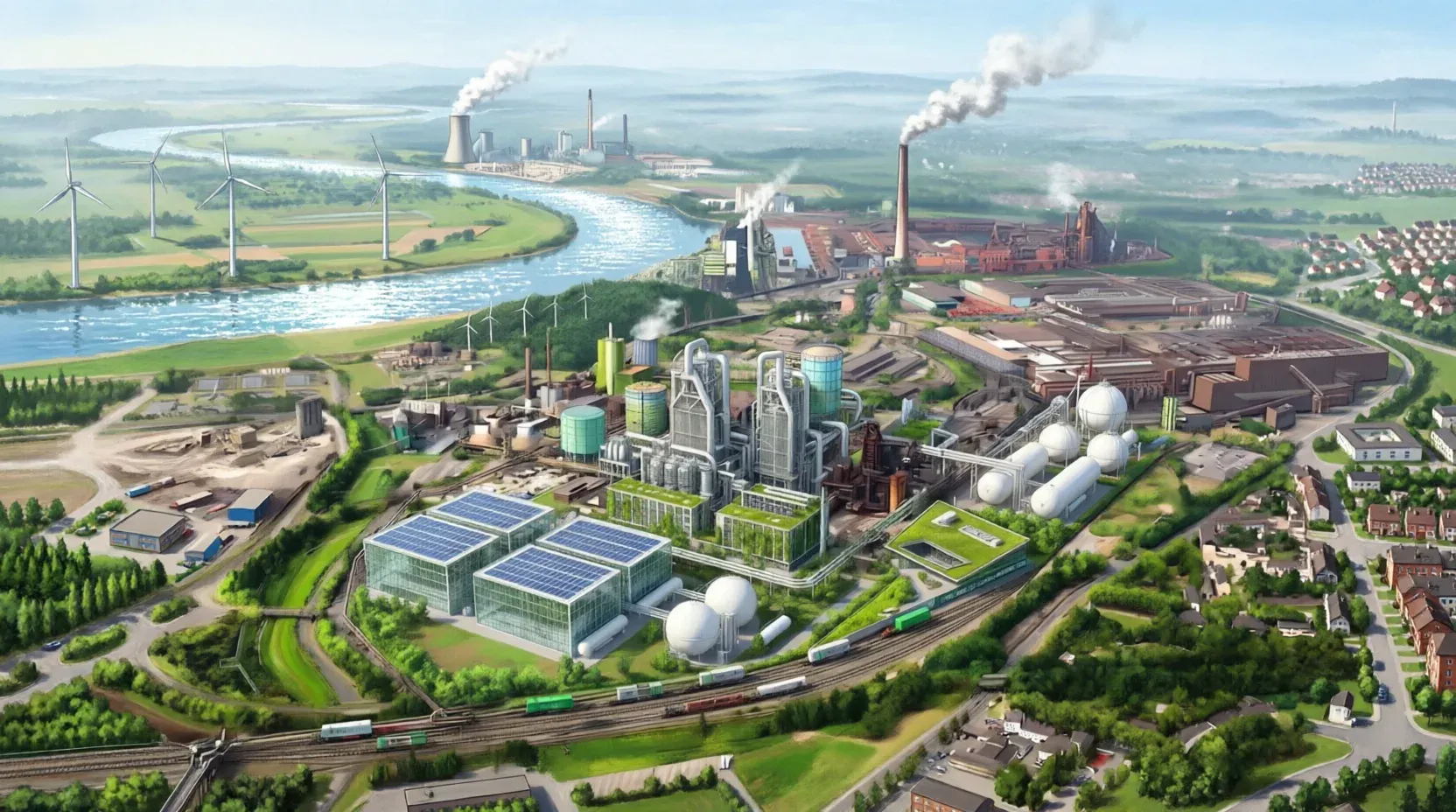
The contract extension tasks Jacobs with coordinating design, logistics, and construction for a facility designed to replace traditional coal-powered blast furnaces with a hydrogen-based process. Once operational, the plant is expected to produce approximately 2.5 million metric tons of direct reduced iron (DRI) annually. On-site, Jacobs is responsible for supervising civil works, quality assurance, and logistics, while managing the flow of materials between various contractors. The company also works alongside thyssenkrupp to support health, safety, and environmental performance. This role is critical as the facility moves toward its goal of climate-neutral steelmaking, requiring precise management of the many interfaces inherent in a first-of-its-kind industrial transformation of this scale.
Decarbonizing Industrial Steel Production
This development highlights the growing scale of industrial decarbonization projects within the German energy landscape. The shift from coal-based metallurgy to hydrogen-capable direct reduction represents a significant pivot in energy consumption patterns for the steel sector. Jacobs is positioning itself as a central integrator in this transition, leveraging its existing presence in Germany, which includes over 300 employees across three offices. The company's involvement in this project mirrors its broader work in German energy infrastructure, such as its framework agreement with TransnetBW to support the SuedLink high-voltage cable project. By managing the complex assembly and logistics of the Duisburg plant, Jacobs is testing its ability to execute large-scale, high-stakes transitions from fossil-fuel-dependent processes to hydrogen-ready industrial assets.
Key Takeaways
- Jacobs will provide project management, construction, and assembly management for the thyssenkrupp Steel plant in Duisburg, Germany.
- The facility is expected to produce approximately 2.5 million metric tons of direct reduced iron (DRI) per year.
- The project aims to replace coal-powered blast furnaces with a hydrogen-based production process.
EnergyInsyte's Take
In our view, this contract extension underscores the immense technical and logistical difficulty of transitioning heavy industry to hydrogen. The fact that thyssenkrupp is extending Jacobs' role suggests that managing the "interfaces" of such a complex transformation is as critical as the technology itself. For investors and operators, this signals that successful decarbonization will depend heavily on specialized project management firms capable of integrating new hydrogen workflows into existing industrial footprints without compromising safety or production timelines.
Questions & Answers
How much annual production capacity is expected from the new Duisburg plant?
The plant is expected to produce approximately 2.5 million metric tons of direct reduced iron (DRI) per year once it is complete.
What specific services is Jacobs providing to thyssenkrupp Steel?
Jacobs is providing project management office (PMO) services, construction management, and assembly management, including the supervision of civil works and logistics.
What is the primary technological shift occurring at this facility?
The project is designed to replace traditional coal-powered blast furnaces with a hydrogen-based direct reduction process to support climate-neutral steelmaking.
How does this project fit into Jacobs' broader German operations?
The project builds on Jacobs' existing work in Germany, including a seven-year agreement with TransnetBW to support the SuedLink high-voltage power cable project.
Source: Jacobs