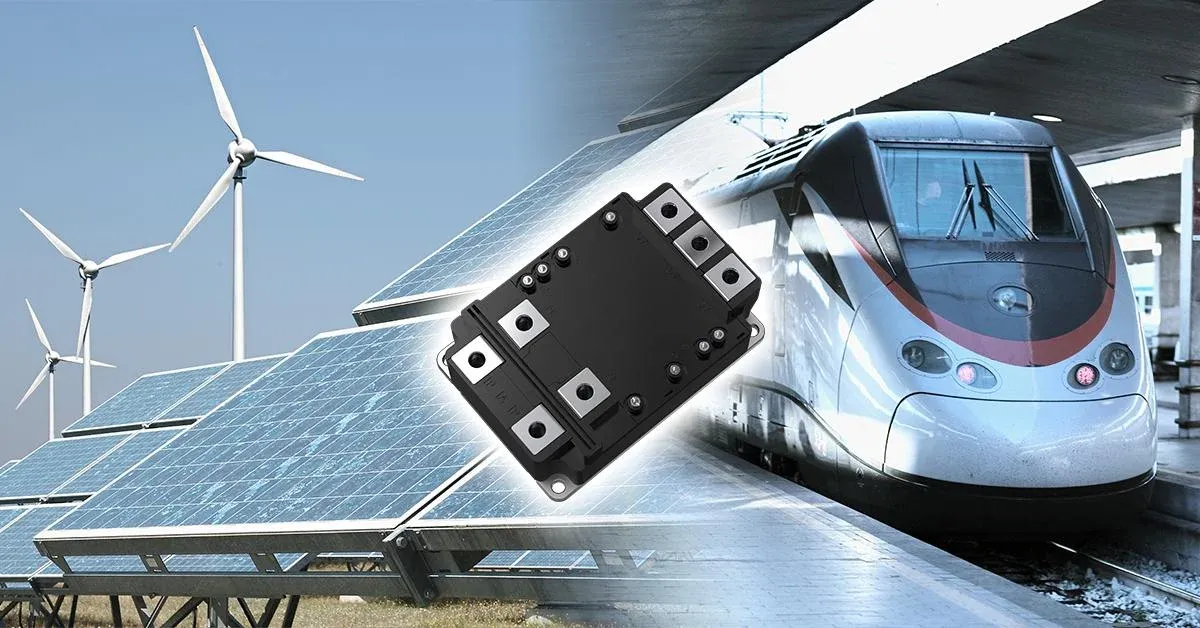
Toshiba Electronic Devices & Storage Corporation is targeting the high-voltage industrial power sector by expanding its silicon carbide (SiC) semiconductor portfolio to address the increasing demands of heavy-duty energy infrastructure. The company has launched the IX800FXF2YMS4, a dual SiC MOSFET module designed to improve the reliability and efficiency of critical systems such as railway traction inverters, renewable energy power generation, and power conversion technologies. By integrating third-generation SiC MOSFET chips with high surge current capabilities, Toshiba is positioning this new module to handle the abnormal electrical conditions often encountered in large-scale industrial motor control and energy storage environments. This strategic expansion brings the total number of SiC MOSFET modules available in Toshiba’s proprietary iXPLV™ package to four, signaling a broader push into high-capacity power management.
IX800FXF2YMS4 Technical Specifications and Surge Capability
The newly released IX800FXF2YMS4 module is engineered to manage high-voltage environments, featuring a drain-source voltage rating of 3300V and a drain current (DC) rating of 800A. A primary technical focus of this module is its ability to withstand large surge currents that occur during abnormal operating conditions. Toshiba has optimized the SiC chip design to deliver an I2t limit value in the diode section of 300kA2s, which serves as a critical indicator of the module's surge current capability. This specification is intended to assist manufacturers in building more resilient railway traction inverters, converters, and industrial motor control equipment.
Beyond surge protection, the module aims to minimize energy waste through improved electrical characteristics. It features a typical drain-source on-voltage (sense) of 1.4V, which the company states helps reduce conduction losses. To address switching efficiency, the module reports a typical turn-on switching loss (Eon) of 185mJ and a typical turn-off switching loss (Eoff) of 175mJ. These metrics are designed to support the development of smaller, more efficient cooling systems for industrial applications. The module also utilizes silver sintering bonding technology to enhance the heat resistance of the SiC chip bonded sections, allowing the component to achieve a channel temperature rating of 175°C.
Industrial Application and Infrastructure Integration
Toshiba is positioning the IX800FXF2YMS4 for integration into several high-growth energy and transport infrastructure segments. The module is specifically identified for use in renewable energy power generation systems and power conversion systems, which include energy storage systems (ESS), uninterruptible power supplies (UPS), and solid-state transformers (SST). Because SSTs are next-generation transformers that utilize power semiconductors to achieve compact sizes and advanced power control, the high-voltage capabilities of this SiC module are particularly relevant to the evolution of grid-edge technology.
The module adopts the iXPLV™ (intelligent fleXible Package Low Voltage Applications) package, which Toshiba claims offers excellent mounting compatibility for industrial equipment manufacturers. By providing a range of four SiC MOSFET modules within this specific package, the company is attempting to offer a more versatile selection for engineers designing complex power electronics. The deployment of these components in railway vehicles and industrial motor controls suggests a focus on sectors where equipment downtime due to thermal or surge-related failures carries significant economic consequences. As industrial demands shift toward higher efficiency and reduced physical footprints, Toshiba's move into high-voltage, high-current SiC modules aligns with the broader trend of densifying power electronics in both transport and utility-scale energy management.
Key Takeaways
- The IX800FXF2YMS4 module features a 3300V drain-source voltage rating and an 800A drain current (DC) rating.
- The module provides an I2t limit value of 300kA2s in the diode section to manage surge currents during abnormal conditions.
- Toshiba utilizes silver sintering bonding technology to achieve a 175°C channel temperature rating for the module.
EnergyInsyte's Take
In our view, Toshiba’s launch of the IX800FXF2YMS4 is a calculated move to capture a larger share of the high-voltage power semiconductor market, specifically where reliability in harsh electrical environments is non-negotiable. By focusing on the 3300V threshold and emphasizing surge current capability (I2t), Toshiba is directly addressing the technical pain points of railway and renewable energy operators who face significant risks from transient electrical events. The use of silver sintering to reach a 175°C rating is a critical detail; it suggests that Toshiba is prioritizing thermal management to enable the "smaller cooling systems" they claim, which is essential for the miniaturization of solid-state transformers and energy storage units. This expansion into the iXPLV™ package lineup indicates that Toshiba is not just selling components, but is attempting to standardize its architecture across a broader spectrum of industrial power applications.
Questions & Answers
How does the IX800FXF2YMS4 address the risk of electrical surges in industrial settings?
The module is designed with an optimized SiC chip architecture that delivers an I2t limit value of 300kA2s in the diode section. This specific metric indicates the module's ability to withstand large surge currents that may flow through power semiconductor modules during abnormal operating conditions, which is vital for protecting railway and renewable energy infrastructure.
What are the primary efficiency benefits for manufacturers using this new SiC module?
Manufacturers can expect reduced conduction losses due to a typical drain-source on-voltage (sense) of 1.4V. Additionally, the module aims to reduce switching losses with a typical turn-on loss (Eon) of 185mJ and a typical turn-off loss (Eoff) of 175mJ, which can ultimately allow for the implementation of smaller, more efficient cooling systems.
In which specific energy and transport sectors is this technology intended to be deployed?
Toshiba has identified several key sectors, including railway traction inverters and converters, renewable energy power generation systems, and power conversion systems such as energy storage systems (ESS), uninterruptible power supplies (UPS), and next-generation solid-state transformers (SST).
What technical feature enables the module to operate at high temperatures?
The IX800FXF2YMS4 utilizes silver sintering bonding technology. This process is used to improve the heat resistance and reliability of the sections where the SiC chips are bonded, allowing the module to achieve a channel temperature rating of 175°C.
Source: Toshiba