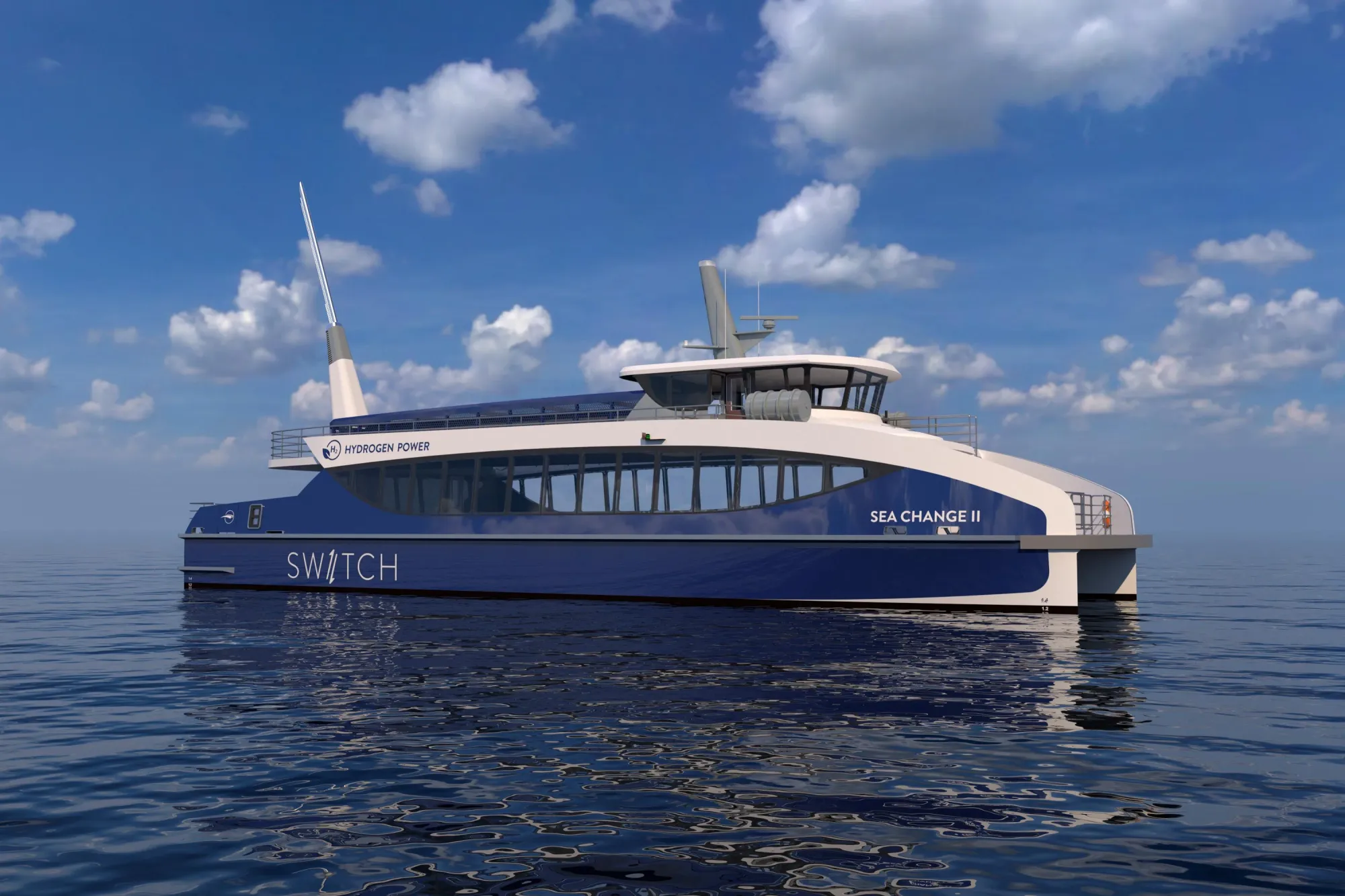
The maritime industry is testing whether hydrogen fuel cell technology can match the operational intensity of traditional diesel fleets without requiring massive grid overhauls. SWITCH Maritime has secured a Design Basis Agreement (DBA) from the United States Coast Guard (USCG) for the SWITCH-150, a 150-passenger hydrogen fuel cell-electric ferry. This regulatory milestone aims to validate a vessel design that maintains diesel-equivalent service speeds and daily bunkering schedules. By leveraging a hydrogen-based propulsion and storage system, the company is positioning the SWITCH-150 as a zero-emission alternative that avoids the costly shoreside charging infrastructure and power grid upgrades typically required by battery-electric vessels.
Regulatory Framework for Hydrogen Propulsion
The USCG Subchapter T regulations, which govern passenger vessels with capacities of 150 passengers or fewer, currently lack specific guidance for hydrogen fuel cell-electric propulsion and hydrogen storage. To navigate this regulatory gap, SWITCH Maritime and its project team worked directly with the USCG to establish a framework demonstrating safety and risk mitigation equivalency. This process utilized the International Maritime Organization (IMO) Interim Guidelines for the Safety of Ships Using Hydrogen as Fuel, which were approved in May 2026, to provide a structured foundation for the DBA.
The SWITCH-150 development builds on the technical and regulatory precedent set by the Sea Change, the first hydrogen fuel cell-electric ferry in the United States, which began passenger service in July 2024. The Sea Change successfully navigated the USCG’s Alternative Design Basis Approval Process, receiving its DBA in 2020 and its Certificate of Inspection in 2024. For the SWITCH-150, SWITCH Maritime is collaborating with naval architecture firm Incat Crowther on design and regulatory matrix development. The project also integrates specialized expertise from Hexagon Purus for hydrogen storage, PowerCell Group for fuel cell systems, and LH2 Shipping for propulsion safety, alongside SEAM for system integration and Hornblower Marine as an operational advisor.
Operational Integration and Infrastructure Requirements
A primary strategic driver for the SWITCH-150 is the ability to integrate into existing ferry operations without altering service schedules or increasing vessel dwell times. Unlike battery-electric alternatives that may require significant modifications to service frequency to accommodate charging, the SWITCH-150 is designed to utilize a daily bunkering schedule. This approach relies on mobile hydrogen refueling equipment rather than permanent, high-capacity shoreside charging stations, which the company suggests reduces the need for complex power grid upgrades.
The initial deployment of the SWITCH-150 is intended for New York City, with operations based at the Brooklyn Navy Yard. This project is supported by a $2 million grant from the New York State Energy Research and Development Authority (NYSERDA) through its Advanced Fuels and Thermal Energy Research Program. The grant aims to demonstrate the first hydrogen-powered ferry in New York State using clean hydrogen to minimize "well-to-wake" emissions. While the first unit is slated for New York, the company claims the propulsion system's performance and range are intended to support high-frequency commuter services across various United States maritime markets.
Key Takeaways
- SWITCH Maritime secured a USCG Design Basis Agreement for the SWITCH-150, a 150-passenger hydrogen fuel cell-electric ferry.
- The project is supported by a $2 million NYSERDA grant to demonstrate hydrogen-powered ferry operations in New York State.
- The vessel design aims to match diesel performance by utilizing mobile hydrogen refueling instead of fixed shoreside charging infrastructure.
EnergyInsyte's Take
In our view, the USCG's approval of the Design Basis Agreement represents a significant de-risking event for hydrogen-based maritime assets. By utilizing the IMO’s interim guidelines to bridge the gap in Subchapter T regulations, SWITCH Maritime is effectively creating a repeatable regulatory roadmap for future hydrogen vessels. This is a critical distinction; the primary barrier to zero-emission maritime adoption is often not the technology itself, but the lack of standardized safety frameworks for novel fuels.
Furthermore, the decision to prioritize mobile hydrogen bunkering over fixed electrical charging infrastructure suggests a strategic pivot toward minimizing capital expenditure on grid-side upgrades. For utility operators and port authorities, this model is far more palatable than the massive load increases required by large-scale battery-electric fleets. This development signals that the industry is moving past experimental proof-of-concept toward scalable, operationally compatible hydrogen solutions.
Questions & Answers
How does the SWITCH-150 avoid the infrastructure costs associated with battery-electric vessels?
The SWITCH-150 is designed to use mobile hydrogen refueling equipment rather than requiring the installation of costly shoreside charging infrastructure or significant power grid upgrades. This allows the vessel to maintain a daily bunkering schedule similar to traditional diesel operations.
What regulatory precedent is being used to approve this hydrogen vessel?
The project leverages the regulatory framework established by the Sea Change, which was the first hydrogen fuel cell-electric vessel to move through the USCG’s Alternative Design Basis Approval Process. Additionally, the process utilized the IMO’s Interim Guidelines for the Safety of Ships Using Hydrogen as Fuel.
What is the intended operational scale and location for the first deployment?
The first SWITCH-150 is intended to operate in New York City, based at the Brooklyn Navy Yard. While this is the initial deployment, the company states the propulsion system is designed for high-frequency commuter services throughout the United States.
Who are the primary technical partners involved in the SWITCH-150 development?
Key partners include Incat Crowther for naval architecture, Hexagon Purus for hydrogen storage, PowerCell Group for fuel cell manufacturing, LH2 Shipping for propulsion safety, SEAM for system integration, and Hornblower Marine as an operational advisor.
Source: SWITCH Maritime