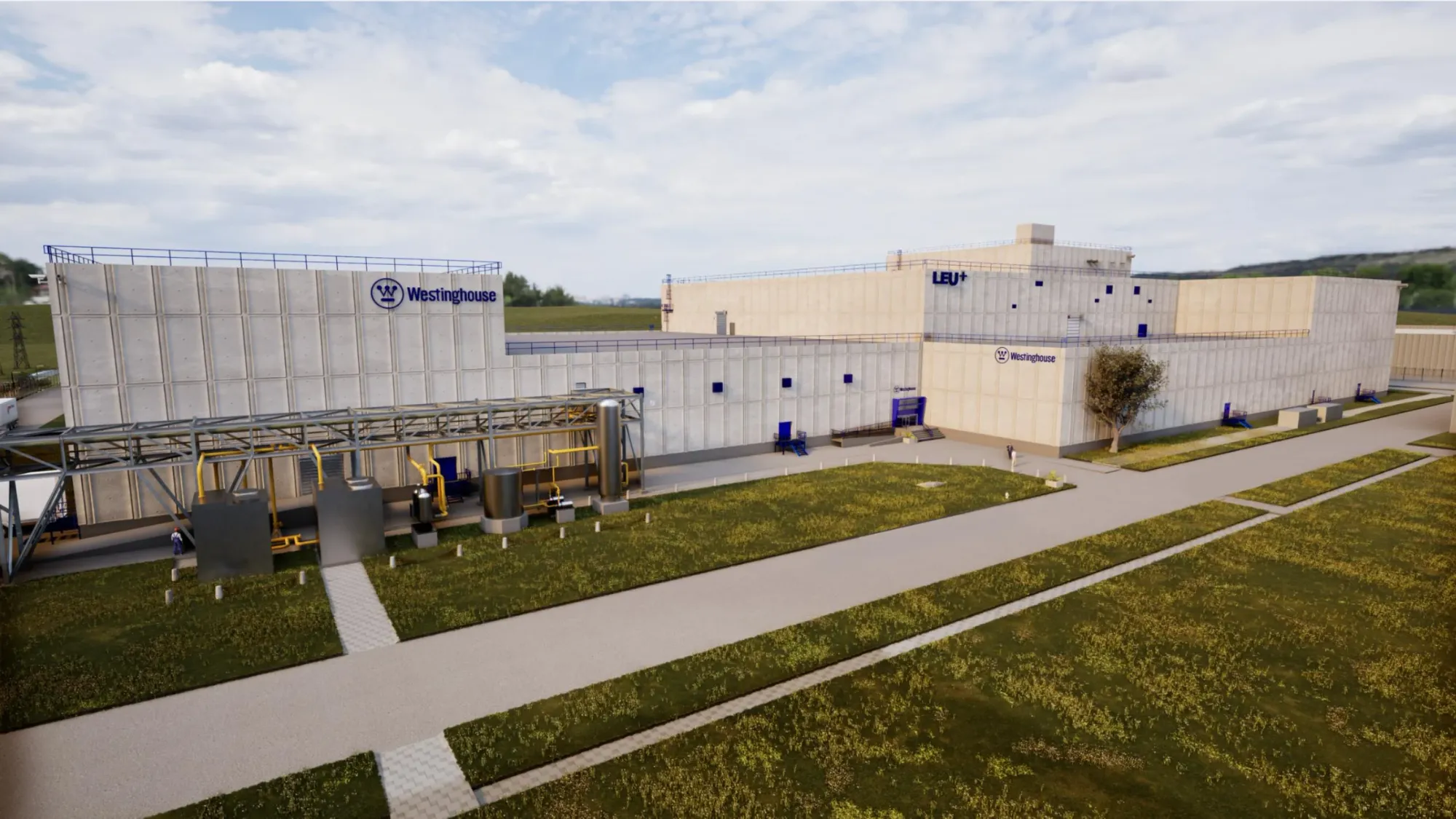
Westinghouse Electric Company is moving to secure the domestic nuclear fuel supply chain through an approximately $1 billion investment in its Columbia Fuel Fabrication Facility in Hopkins, South Carolina. This capital deployment aims to construct a fleet-scale factory dedicated to Low Enriched Uranium Plus (LEU+) fuel production, marking the first major U.S. nuclear fuel facility construction in over five decades. By scaling the manufacturing of LEU+—which features higher uranium enrichment levels between 5% and 8%—the company intends to support the industrialization of AP1000® reactors and provide the fuel necessary for advanced operating plant uprates. This strategic expansion aligns with the United States’ UPRISE program to meet rising baseload power demands.
Scaling LEU+ Production at Columbia Facility
The planned expansion at the Columbia Fuel Fabrication Facility represents Westinghouse's largest single manufacturing investment to date. Construction is currently underway, with the company targeting 2030 for the commencement of operations. The facility, which has been in operation since 1968, currently employs more than 1,200 people and produces fuel pellets, rods, and assemblies for a global customer base. This new building is specifically designed to transition LEU+ fuel from its initial 2025 successful deployment into a standardized, industry-wide commercial product.
Westinghouse is positioning this factory as a critical component of the broader American effort to restore domestic uranium enrichment and fuel fabrication capabilities. The company noted that the investment is supported by the Department of Energy’s tax credit program and local government cooperation. Beyond the technical output, the project carries significant regional economic weight. An economic impact study conducted by the University of South Carolina’s Darla Moore School of Business, commissioned by Westinghouse, projects that the investment will generate $4.9 billion in positive economic impact across South Carolina over the next 10 years. Of that total, approximately $3.8 billion is expected to flow through Richland County via construction, equipment procurement, and workforce development.
Driving Nuclear Fleet Efficiency and Uprates
The shift toward LEU+ fuel is intended to address the growing demand for reliable baseload electricity by enabling existing nuclear assets to produce more power. Westinghouse suggests that LEU+ fuel can unlock advanced operating plant uprates, providing a near-term mechanism to expand nuclear power output across the United States without requiring immediate new reactor builds. This capability is central to the company's strategy to support the long-term operation of the current nuclear fleet while simultaneously preparing for the deployment of next-generation technologies.
For plant operators, the higher enrichment levels of LEU+ (5% to 8%) are expected to offer greater operational flexibility. Specifically, the company indicates that this fuel can extend operating cycles, which may allow operators to lower overall operating costs and increase the value delivered to end-users. By industrializing this fuel type, Westinghouse aims to bridge the gap between current enrichment standards and the requirements of advanced reactor designs like the AP1000®. This move effectively links domestic manufacturing capacity directly to the technical requirements of both the existing fleet and the future global nuclear build pipeline.
Key Takeaways
- Westinghouse is investing approximately $1 billion to build a fleet-scale LEU+ fuel factory in Hopkins, S.C., with operations expected to begin in 2030.
- The new facility will produce Low Enriched Uranium Plus (LEU+) with enrichment levels between 5% and 8% to support plant uprates and extended operating cycles.
- The project is projected to contribute $4.9 billion in positive economic impact to South Carolina over the next 10 years.
EnergyInsyte's Take
In our view, this $1 billion commitment is a decisive move to capture the value created by the "nuclear renaissance" by controlling the fuel supply chain. While much of the industry discourse focuses on new reactor deployments, Westinghouse is identifying a more immediate revenue lever: maximizing the output of the existing fleet through LEU+ fuel. By targeting plant uprates and extended cycles, they are addressing the immediate needs of utilities facing rising baseload demand. Furthermore, by anchoring this production in South Carolina, Westinghouse is leveraging established infrastructure and a skilled workforce to mitigate the execution risks typically associated with large-scale nuclear projects. This is not just a manufacturing expansion; it is a strategic attempt to set the technical and commercial standard for the next era of nuclear fuel, ensuring that as the fleet evolves, the fuel supply remains domestic, secure, and highly optimized for efficiency.
Questions & Answers
How will LEU+ fuel impact the operational economics of existing nuclear plants?
LEU+ fuel, characterized by higher enrichment levels of 5% to 8%, is expected to enable advanced operating plant uprates and extend operating cycles. For utilities, this suggests a potential for increased power output and the ability to lower operating costs, thereby increasing the value of the generated electricity.
What is the strategic significance of the 2030 operational timeline for the U.S. energy market?
The 2030 timeline aligns with the broader industry need to scale domestic fuel production to meet rising baseload demand. By completing this factory, Westinghouse aims to provide the commercial-scale manufacturing necessary to support both the current operating fleet and the deployment of advanced reactors like the AP1000®.
How does this investment integrate with federal energy policy?
The investment is aligned with the United States’ UPRISE program and builds upon the Department of Energy’s multi-billion dollar effort to restore domestic uranium enrichment capabilities. Westinghouse also utilized the DOE’s tax credit program to support the achievement of this expansion.
What are the projected economic implications for the South Carolina region?
According to a study by the University of South Carolina’s Darla Moore School of Business, the investment is expected to generate $4.9 billion in economic impact for South Carolina over 10 years, with $3.8 billion of that impact directed toward Richland County through jobs, construction, and equipment.
Source: Westinghouse