General Atomics (GA) is positioning itself at the center of a strategic effort to resolve the long-standing economic and technical hurdles associated with used nuclear fuel management in the United States. By securing a contract under the U.S. Department of Energy’s Advanced Research Projects Agency-Energy (ARPA-E) NEWTON program, the company aims to develop high-efficiency hardware capable of powering the transmutation processes required to manage hazardous waste. This industrial involvement signals a shift toward exploring more practical, large-scale recycling and processing methods for the 90,000 metric tons of used fuel currently stored across American nuclear sites.
General Atomics to Develop RF Magnetron Combining Prototype
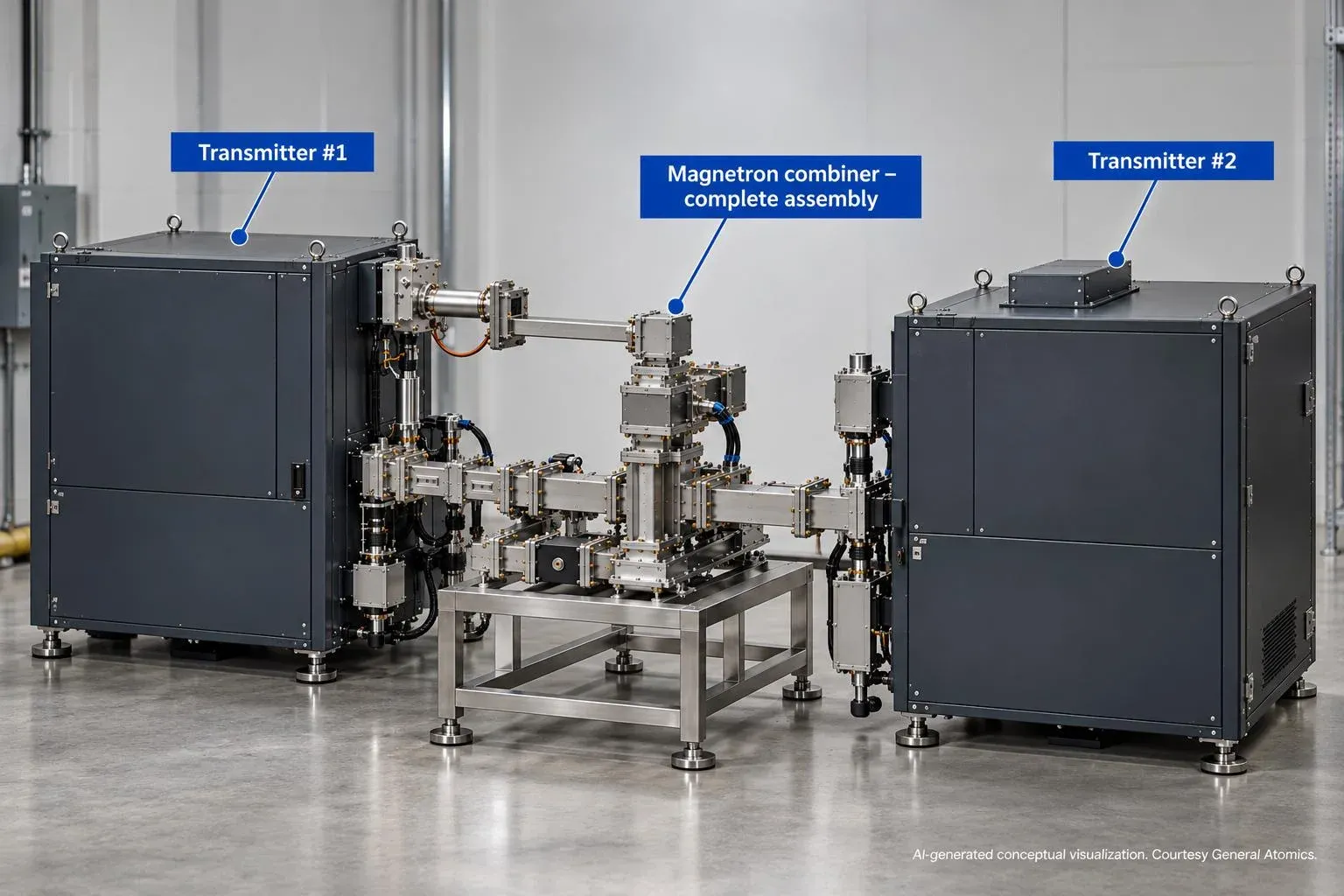
The core of the General Atomics mandate involves designing, procuring, and integrating a radio frequency (RF) system that utilizes magnetron combining technology. This system is intended to function as a high-power energy source for particle accelerators, which are the primary tools used in the transmutation process. Transmutation works by directing high-energy particles at hazardous materials within used fuel, triggering reactions that transform them into forms with significantly shorter hazardous lifespans. While scientifically viable, the massive electricity requirements of current accelerators have historically acted as a primary barrier to commercial-scale deployment.
GA is working alongside a collaborative group including Jefferson Lab, Stellant Systems, and Oak Ridge National Laboratory to address these energy consumption issues. The team's objective is to combine the microwave energy from multiple magnetrons into a single, high-power source. If the prototype achieves its goal of increasing efficiency, it could lower the operational costs and electricity demands of future accelerator systems. This development is intended to move the technology toward practical, large-scale operation, potentially providing a domestic alternative to the fuel recycling models currently utilized in countries like France.
Addressing the 90,000 Metric Ton Spent Fuel Challenge
The scale of the technical challenge is underscored by Department of Energy data, which indicates that U.S. nuclear reactors have generated more than 90,000 metric tons of used nuclear fuel, with an annual increase of approximately 2,000 metric tons. Currently, much of this material remains stored at nuclear power plants nationwide. While the ability to recover usable materials from spent fuel exists, high costs and significant government investment requirements have historically limited the commercial viability of recycling within the United States.
The NEWTON program—short for Nuclear Energy Waste Transmutation Optimized Now—is specifically targeting these cost and efficiency barriers. By making particle accelerators smaller, cheaper, and more efficient, the program seeks to reduce the volume of waste destined for permanent disposal. Beyond the immediate scope of nuclear waste, the development of more efficient accelerators could have broader industrial applications. These include the production of medical isotopes and the breakdown of persistent chemical compounds, such as PFAS, which are often referred to as "forever chemicals."
Key Takeaways
- General Atomics is developing a radio frequency (RF) system using magnetron combining to power transmutation accelerators.
- The U.S. nuclear fleet has produced over 90,000 metric tons of used fuel, with 2,000 metric tons added annually.
- The NEWTON program, led by ARPA-E, aims to lower the electricity consumption and operating costs of nuclear waste processing.
EnergyInsyte's Take
In our view, General Atomics’ involvement in the NEWTON program represents a critical attempt to transition nuclear waste management from a storage-centric model to a processing-centric model. For decades, the "solution" to spent fuel has been containment, but the sheer volume of accumulated material—90,000 metric tons—makes long-term storage a mounting liability for the industry. This project signals that the path to a sustainable nuclear renaissance depends heavily on solving the "back-end" of the fuel cycle. If GA can successfully demonstrate that magnetron combining can reduce the massive electricity overhead of particle accelerators, it could fundamentally alter the unit economics of transmutation. This would move the technology from a theoretical scientific endeavor toward a commercially viable industrial process, potentially unlocking new revenue streams in isotope production and chemical remediation.
Questions & Answers
How does the NEWTON program intend to lower the cost of nuclear waste processing?
The program focuses on improving the efficiency of particle accelerators used in transmutation. General Atomics is developing an RF system that combines the power of multiple magnetrons to create a high-power source, aiming to reduce the massive electricity consumption that currently makes large-scale waste processing cost-prohibitive.
What is the strategic significance of magnetron combining for the nuclear industry?
Magnetron combining aims to create more efficient, smaller, and cheaper particle accelerators. By lowering the energy requirements for transmutation, this technology could make it more practical to transform hazardous nuclear waste into more manageable forms, potentially reducing the amount of material requiring permanent disposal.
Beyond nuclear waste, what other markets could benefit from this technology?
The development of more efficient, lower-cost accelerators has potential applications in medical isotope production and the breakdown of persistent environmental contaminants, such as PFAS (per- and polyfluoroalkyl substances).
What is the current state of used nuclear fuel management in the United States?
The U.S. has accumulated over 90,000 metric tons of used nuclear fuel, with roughly 2,000 metric tons produced each year. Much of this fuel remains stored at nuclear power plants, as high costs and investment requirements have limited the commercial implementation of fuel recycling technologies in the country.
Source: General Atomics