Helion is attempting to de-risk the fusion energy supply chain by localizing the production of specialized high-voltage semiconductors. The Washington-based fusion company has signed a letter of intent with the U.S. Department of Commerce to receive up to $175 million in funding through the CHIPS Research and Development Office. This federal support, paired with $50 million in private investment, aims to establish domestic R&D and manufacturing capabilities for the high-power pulsed electrical systems essential to Helion's fusion architecture.
Helion Semiconductor R&D and Manufacturing Expansion
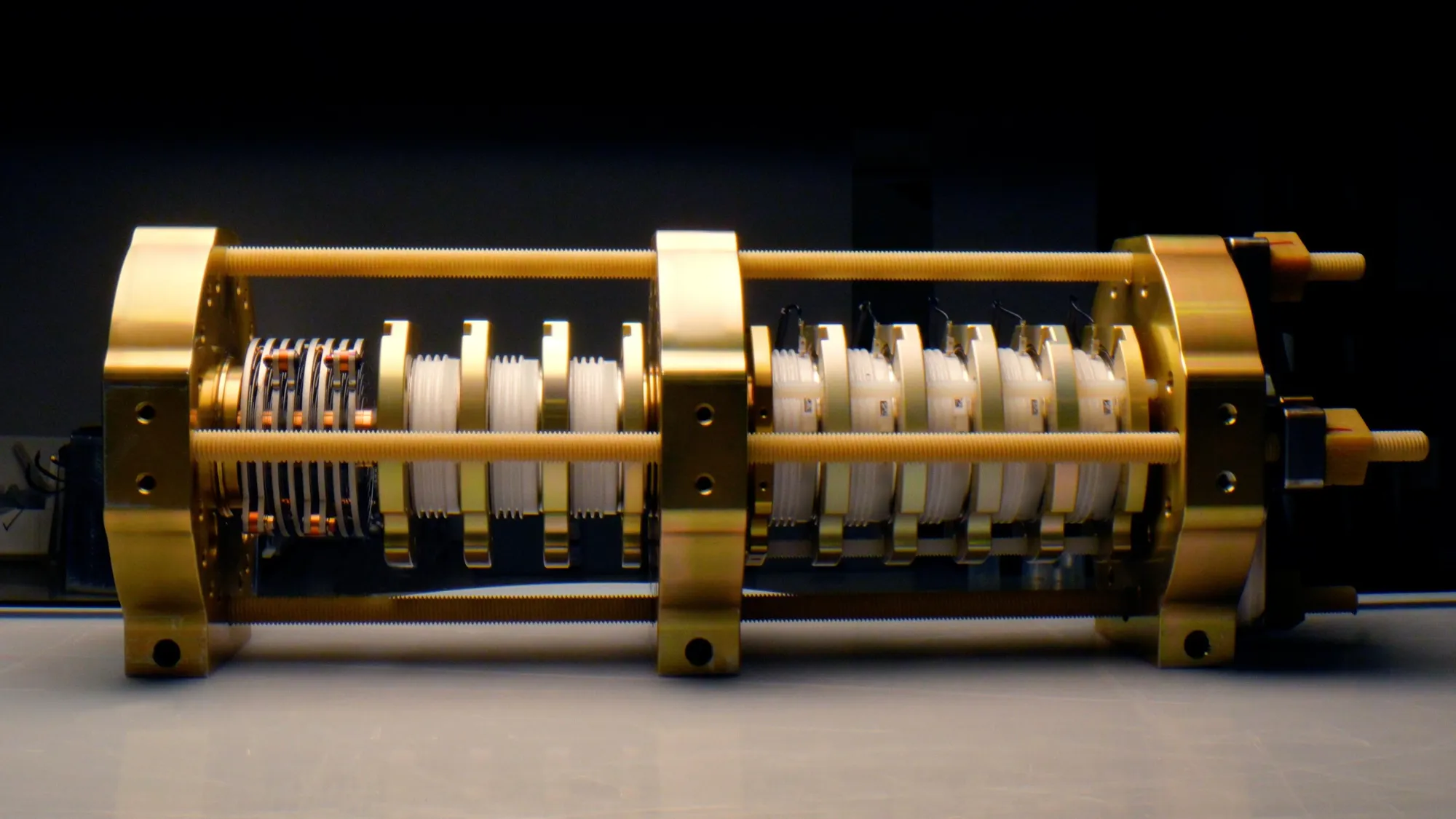
The $225 million total investment package targets the development of next-generation semiconductor technologies required for commercial fusion energy. Helion is positioning this initiative to address a specific technical bottleneck: the company's fusion systems require high-power pulsed electrical systems capable of repeatedly switching and recovering large energy volumes. Currently, the company states that semiconductors meeting these specific performance requirements are only available from overseas manufacturers. By developing these components domestically, Helion intends to improve reliability, reduce costs, and mitigate global supply-chain risks as it moves toward commercial deployment.
The funding is strategically partitioned to build a comprehensive domestic ecosystem. More than $100 million is earmarked for semiconductor and advanced packaging research and development in Everett, Washington, which is expected to create over 100 jobs and establish power module manufacturing capabilities. An additional $80 million will support R&D for next-generation semiconductor tooling, design, and process development in Burlington, Vermont, in collaboration with an industry partner. The remaining funds are designated for manufacturing automation and further packaging enhancements.
Strengthening Domestic Fusion and Power Supply Chains
This Department of Commerce initiative links semiconductor innovation directly to national energy security and grid infrastructure. According to Bill Frauenhofer, Executive Director of Semiconductor Investment and Innovation at the Department of Commerce, accelerating this R&D domestically could support breakthroughs in power conversion and delivery for defense, grid transmission, and advanced energy generation. The project seeks to transition high-voltage semiconductor technology from research into mass-deployable, efficient packages that integrate multiple devices.
The financial structure of the agreement includes a unique provision for the U.S. taxpayer. Upon entering a definitive award agreement, the U.S. Department of Commerce would receive a $175 million non-voting interest in Helion, based on the company's most recent Series G preferred stock valuation. This move is intended to enhance the return on the federal investment. This development follows a significant year for Helion, which included a $500 million Series G investment round and the company's claim of being the first private fusion firm to demonstrate deuterium-tritium (D-T) fusion.
Key Takeaways
- Helion signed a letter of intent for up to $175 million in CHIPS R&D funding, supplemented by $50 million in private capital.
- The investment will establish semiconductor research and power module manufacturing in Everett, Washington, and tooling R&D in Burlington, Vermont.
- The U.S. Department of Commerce is slated to receive a $175 million non-voting interest in Helion as part of the award agreement.
EnergyInsyte's Take
In our view, this move signals a critical shift in how fusion energy is being treated: not just as a physics challenge, but as a specialized semiconductor manufacturing challenge. By leveraging the CHIPS Act, Helion is effectively outsourcing the heavy lifting of supply-chain de-risking to federal policy. This is a sophisticated strategic play to ensure that the "bottleneck" components—the high-voltage switches—are not subject to geopolitical volatility. If Helion successfully integrates these domestic power modules, it provides a blueprint for other deep-tech energy sectors to utilize semiconductor policy to secure their own hardware lifecycles.
Questions & Answers
How does this funding address Helion's current supply chain vulnerabilities?
Helion currently relies on overseas manufacturers for the high-power pulsed electrical semiconductors required for its fusion systems. The funding aims to develop domestic, high-voltage semiconductor technology to improve reliability and remove these global supply-chain constraints.
What is the specific financial arrangement between Helion and the U.S. government?
Beyond the $175 million in CHIPS funding, the U.S. Department of Commerce is expected to receive a $175 million non-voting interest in Helion, based on the company's most recent Series G preferred stock valuation, to enhance taxpayer returns.
Where will the physical manufacturing and R&D activities be located?
The project will focus on Everett, Washington, for semiconductor and advanced packaging R&D and power module manufacturing, and Burlington, Vermont, for semiconductor tooling, design, and process development.
What technical capabilities is the semiconductor R&D specifically targeting?
The R&D is focused on next-generation, high-voltage semiconductors designed to deliver higher efficiency, longer operating lifetimes, and more efficient cooling for the high-power pulsed electrical systems used in fusion.
Source: Helion