NanoTech Inc. is attempting to bridge the performance gap between building design intent and actual utility meter readings by introducing a physics-based digital simulation environment. The company launched Roovie, a "world model" designed to allow AI agents to test design, operational, and capital investment decisions within a simulated environment before real-world capital is deployed. By utilizing an original heat balance engine validated to ASHRAE Standard 140, NanoTech aims to move building analysis away from manual, weeks-long scenario modeling toward automated, high-speed testing. This strategic shift targets the inefficiencies found in fragmented workflows where architects, engineers, and operators use disconnected tools, potentially allowing for more accurate underwriting of energy savings by utilities, lenders, and energy service companies.
Roovie Physics Engine and AI Agent Integration
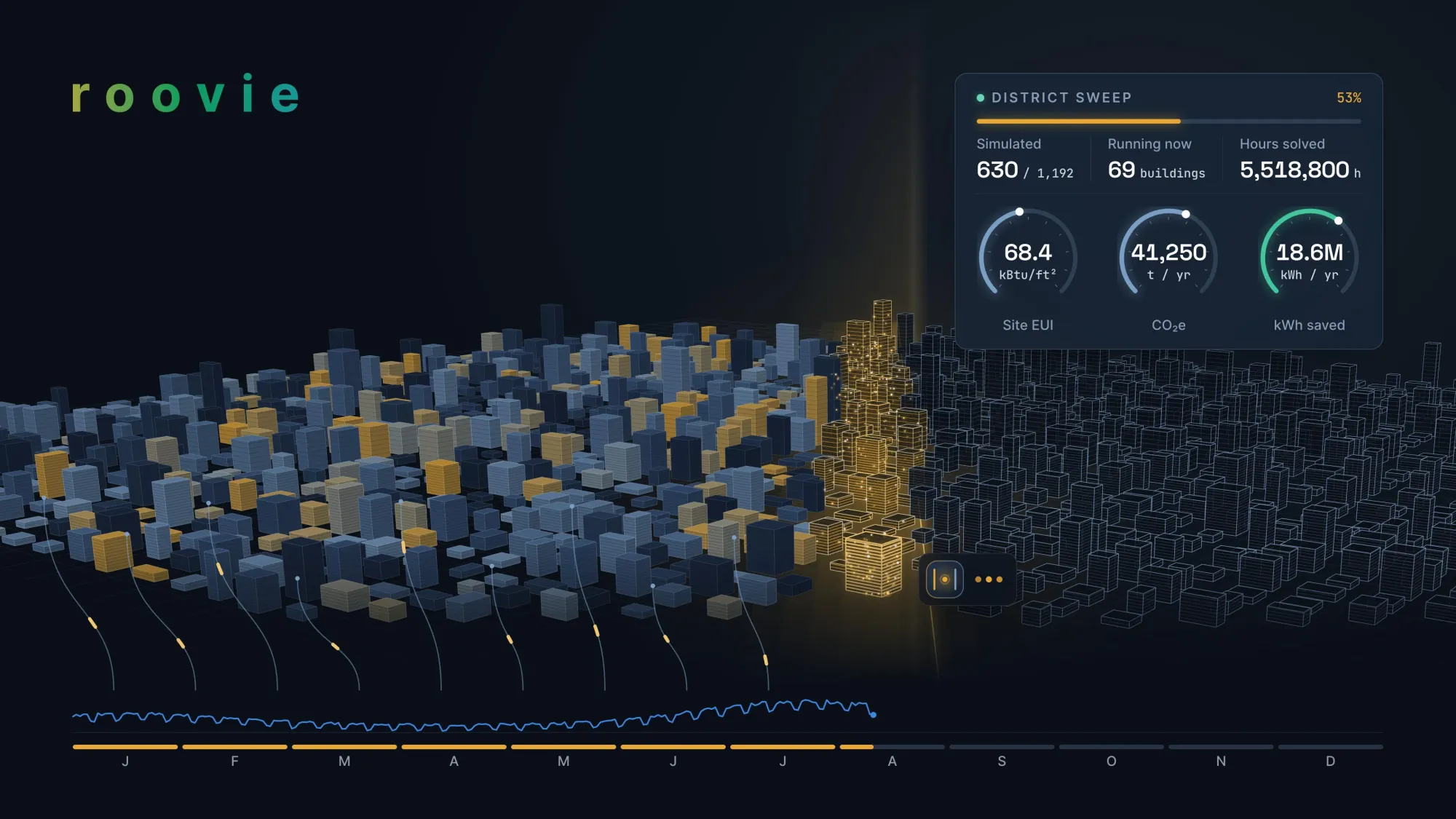
NanoTech is positioning Roovie as a proving ground where AI agents execute iterative testing of building envelopes, mechanical systems, and control logic. Unlike many contemporary digital twins that rely on learned approximations of physics, Roovie utilizes a heat balance engine written from first principles. This engine is validated to ASHRAE Standard 140 and is listed on the IBPSA public software list. The company states that the system simulates every wall, window, and system for every hour of the year, providing enough computational speed to allow agents to test hundreds of scenarios across multiple buildings simultaneously.
The platform functions by setting specific financial and environmental goals—such as energy cost, emissions, capital budget, and payback periods—as "rewards" for the AI agents. Crucially, the company has implemented "guardrails" to ensure that optimization does not compromise essential building functions. Constraints like occupant comfort, ventilation, and code minimums are treated as non-negotiable requirements rather than variables. If a proposed scenario achieves an energy reduction target but violates a comfort or ventilation constraint, the system rejects the scenario entirely. This approach seeks to prevent the common industry pitfall where single-number optimizations, such as aggressive energy reduction, lead to increased occupant complaints or long-term operational failures.
Calibrating Digital Models to Real-World Utility Data
A central component of the Roovie deployment is the attempt to ensure digital models reflect actual building performance through rigorous calibration. NanoTech is linking its simulation results directly to physical reality by calibrating existing building models against 12 months of actual utility bills, targeting ASHRAE Guideline 14 standards. The company further integrates building automation systems and weather data to monitor performance daily, allowing the model to be recalibrated whenever a building's actual performance drifts from the simulation.
This calibration process is intended to provide a continuous feedback loop from the initial design phase through subsequent capital planning cycles. By using a single world model for load calculations, HVAC sizing, daylight studies, and compliance checks, NanoTech suggests that all stakeholders—from architects to facility managers—can observe how individual changes impact the broader system. For large-scale entities, such as utilities or real estate portfolio managers, this capability is intended to transform energy analysis from a localized, building-by-building service into a scalable method for managing performance across entire campuses or urban environments. The software is currently entering a beta phase with select design, engineering, energy services firms, utilities, and government entities.
Key Takeaways
- NanoTech launched Roovie, a physics-based world model using an ASHRAE Standard 140 validated heat balance engine to simulate building behavior.
- The platform utilizes AI agents to test design and operational scenarios against multi-variable goals including cost, emissions, and payback, while maintaining non-negotiable guardrails for occupant comfort and code compliance.
- Roovie models are calibrated to real-world performance using 12 months of utility bills and ASHRAE Guideline 14 targets to ensure simulation accuracy.
EnergyInsyte's Take
In our view, NanoTech’s pivot from a materials-focused company to a software-driven intelligence provider signals a growing recognition that hardware solutions, like thermal coatings, require high-fidelity digital validation to achieve market scale. By building a physics-based "proving ground" rather than a simple predictive model, NanoTech is addressing a critical pain point in energy management: the unreliability of traditional energy modeling. The integration of ASHRAE-validated physics with AI-driven scenario testing could provide the technical rigor required by lenders and utilities to more confidently underwrite decarbonization projects. However, the ultimate success of Roovie will depend on whether the "meter-to-model" calibration can consistently overcome the inherent complexities of aging building infrastructure and sensor inaccuracies. If NanoTech can successfully close the gap between simulated savings and actual utility bills, they may establish a new standard for how capital is deployed in building retrofits.
Questions & Answers
How does Roovie differentiate its simulation technology from standard AI-driven building models?
Roovie distinguishes itself by using a physics-based heat balance engine validated to ASHRAE Standard 140, rather than relying on learned approximations of physics. This allows the system to simulate specific building geometries, envelopes, and systems for every hour of the year, providing a more rigorous foundation for AI agents to test decisions.
What role do "guardrails" play in the Roovie decision-making process?
Guardrails act as non-negotiable constraints within the simulation. While AI agents optimize for goals like energy cost and emissions, they are prohibited from trading off essential requirements such as occupant comfort, ventilation, and building code minimums. Any scenario that violates these constraints is rejected by the system.
How does NanoTech ensure that the digital world models reflect actual building performance?
The company calibrates its models using 12 months of real utility bills against ASHRAE Guideline 14 targets. Additionally, the models are compared daily against building automation systems and weather data, allowing for continuous recalibration if the building's actual performance begins to drift from the model.
For which stakeholders is the Roovie platform intended to provide value?
The platform is designed to serve a broad range of stakeholders, including architects, engineers, energy modelers, building owners, operators, ESCOs, utilities, and lenders. It aims to provide a unified data source that allows these different groups to see how their specific choices affect the building's overall performance and financial goals.
Source: NanoTech