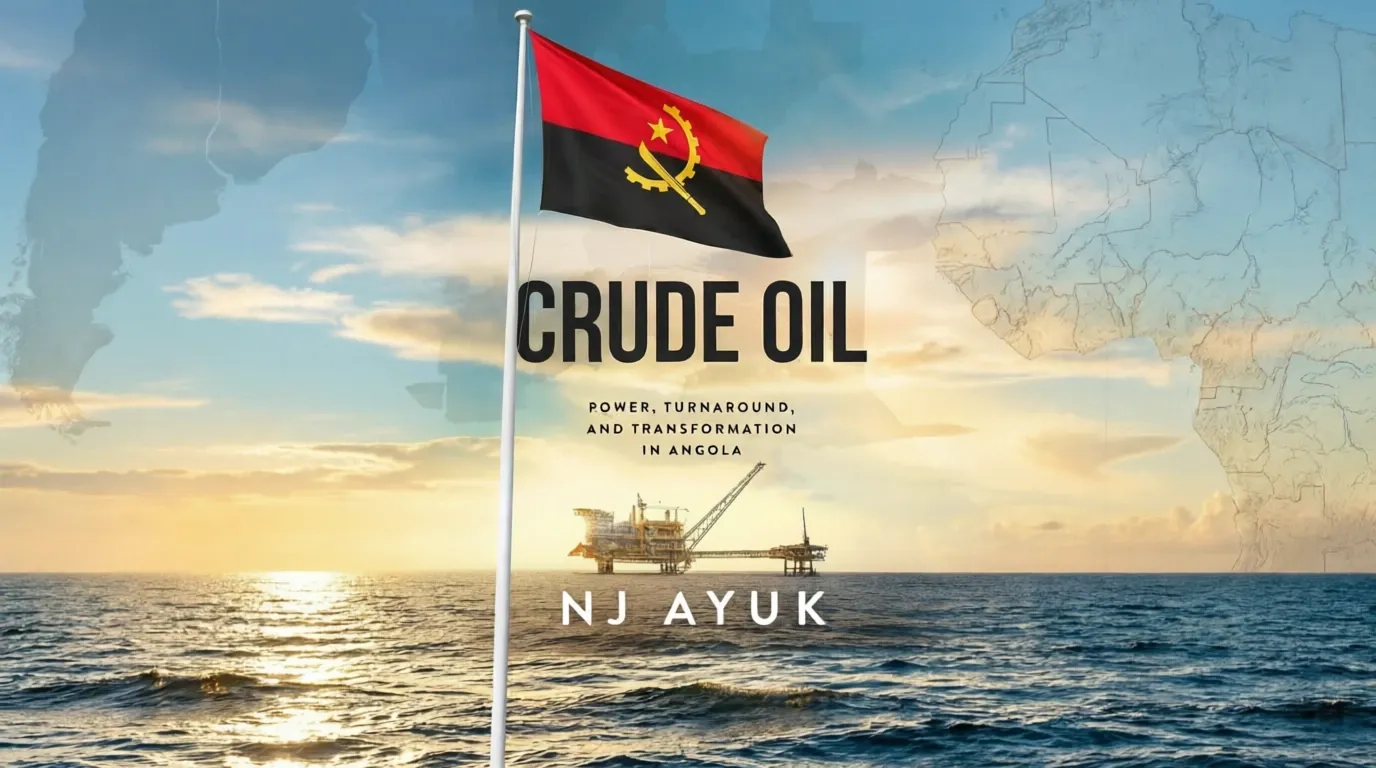
NJ Ayuk, Executive Chairman of the African Energy Chamber, has released a new book titled Crude Oil: Power, Turnaround and Transformation in Angola. Following its May 20, 2026, launch, the work reached the Amazon Top 3 new releases list. The publication examines how policy reforms and regulatory shifts address structural challenges within the Angolan oil and gas industry to influence long-term capital flows and energy access.
Policy Reform and Angolan Energy Evolution
The book positions Angola as a primary case study for how institutional changes and regulatory consistency can mitigate industry challenges. Ayuk explores the intersection of transparency and investment competitiveness, specifically how these factors drive capital deployment and local company participation. By blending historical context with contemporary analysis, the text investigates how governance issues impact economic outcomes. Furthermore, the work evaluates how recent policy shifts influence Angola's management of diverse resources, including crude oil, natural gas, renewable energy, and critical minerals. Ayuk suggests that the nation's history demonstrates the vital role that investment conditions play in shaping long-term energy development and broader economic growth for resource-rich countries seeking to strengthen their national energy systems.
Offshore Production and Gas Diversification Trends
As of 2026, the Angolan petroleum sector is navigating a critical juncture, balancing mature offshore production with aggressive diversification programs. Current production levels remain stable at approximately one million barrels per day. This output is sustained by ongoing investments in deepwater offshore projects designed to offset the natural decline of mature fields. Beyond crude oil, the country is advancing significant non-associated gas projects, specifically the Quiluma and Maboqueiro developments. These projects signal a strategic transition toward a more integrated gas sector. While crude oil remains the cornerstone of Angola's fiscal stability, the government is prioritizing downstream expansion and investment competitiveness to reduce long-term economic exposure to commodity price volatility.
Key Takeaways
- Angola's oil production is currently maintaining levels near one million barrels per day through deepwater investments.
- The Quiluma and Maboqueiro projects represent key advancements in Angola's non-associated gas sector.
- NJ Ayuk's new analysis focuses on how regulatory reforms influence capital flows and resource governance.
EnergyInsyte's Take
In our view, the focus on the Quiluma and Maboqueiro gas projects signals a necessary strategic pivot for Angola. While the one million barrels per day baseline provides essential fiscal stability, relying solely on maturing offshore oil fields presents significant long-term risk. This move toward an integrated gas sector and the inclusion of critical minerals in the governance discussion suggests that Angola is actively attempting to decouple its economic health from crude oil volatility. Success will depend entirely on the execution of the regulatory reforms Ayuk highlights.
Source: EINPresswire