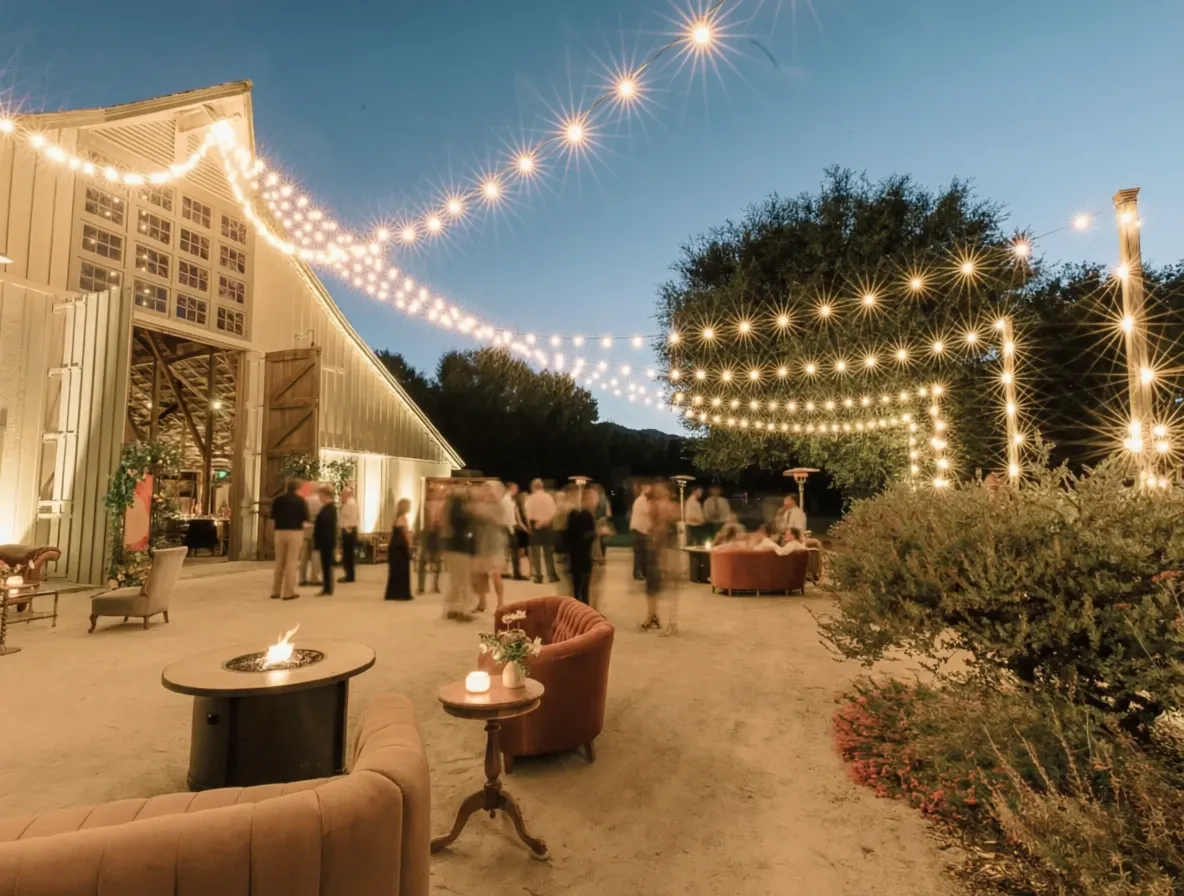
The landscape of temporary event infrastructure is undergoing a profound transformation, driven by a convergence of economic necessity and rapid technological advancement. Festive Lights, a prominent United Kingdom-based supplier specializing in both domestic and commercial decorative lighting, has released a comprehensive industry overview detailing emerging trends in off-grid illumination for the summer season. The report identifies a decisive shift toward solar and battery-powered lighting architectures, a movement fueled by a growing consumer preference for DIY event styling.
As global economic pressures, particularly rising inflation, continue to escalate the overhead costs associated with traditional commercial venues, event organizers are increasingly pivoting toward alternative locations. Private gardens, agricultural land, and remote rural spaces are becoming the preferred stages for weddings, anniversaries, and community celebrations. This decentralization of event locations necessitates a new class of reliable, self-contained power solutions. The modern organizer requires infrastructure that can bypass the logistical complexities of heavy-duty diesel generators and the high costs of hiring professional electrical technicians. By leveraging high-efficiency LED technology and sophisticated energy storage, individuals are now capable of implementing complex, professional-grade lighting arrangements in locations entirely isolated from the standard electrical grid. This technological evolution is fundamentally altering the logistical requirements of temporary outdoor venues, providing a scalable, cost-effective, and silent alternative to traditional power distribution methods for large-scale, self-managed summer gatherings.
Solar and Lithium-Ion Advancements in Off-Grid Power
The current industry transition is underpinned by significant technical progression in battery and solar technologies, moving the market away from low-yield, unreliable units toward robust, high-lumen systems capable of sustaining long-duration events. Modern battery-operated event lights have largely transitioned to utilizing advanced lithium-ion cells. These cells are prized for their high energy density and, perhaps more importantly, their ability to provide a consistent voltage discharge. This chemical stability is a critical factor for event planners; it ensures that lighting installations maintain a steady, unwavering luminosity throughout the night, rather than suffering from the progressive dimming often associated with older battery chemistries as energy reserves deplete.
Parallel advancements in solar-powered options have elevated them from mere supplementary decorative accents to viable solutions for critical event lighting. The integration of highly sensitive monocrystalline photovoltaic panels has revolutionized energy harvesting capabilities. Unlike older polycrystalline models, these advanced panels can efficiently capture solar energy even during the overcast or diffused light conditions frequently encountered during summer weather patterns.
Furthermore, the implementation of intelligent dusk-to-dawn photosensors has introduced a level of automation previously reserved for professional municipal lighting. These sensors monitor ambient light levels and activate lighting arrays only when environmental light drops below a specific, pre-set threshold. This automated energy management is vital for preserving stored battery life and eliminates the need for manual intervention during the height of a reception.
Stephen Alty, General Manager at Festive Lights, emphasized the impact of these developments, noting that the current generation of high-capacity storage cells and sensitive photovoltaic receptors means organizers no longer have to compromise on scale or duration when planning events away from primary electrical infrastructure. These independent, self-contained power nodes now support reliable, professional-level environmental styling. This shift effectively removes the historical obstacle of power distribution and accessibility, allowing for sophisticated, high-impact designs in remote locations without the logistical burden of traditional fuel-based power generation or the hazards of extensive, heavy-duty cabling requirements.
Engineering Standards for Daisy-Chaining and Weatherproofing
As DIY event planners increase the complexity and scale of their installations, the mechanics of "daisy-chaining"—the end-to-end connection of sequential lighting strings—have become a critical area of engineering development. In traditional high-voltage setups, attempting to create long, continuous chains presents significant risks, including circuit overloading and potential fire hazards. However, the contemporary market has addressed these concerns through the development of low-voltage connectable systems equipped with specialized transformers and weather-sealed connectors.
To combat the phenomenon of voltage drop—where lights at the end of a long chain appear noticeably dimmer due to wire resistance—manufacturers are now utilizing thicker gauge copper wiring and proprietary coaxial connectors. These engineering principles allow consumers to construct customized, expansive lighting networks that can span hundreds of meters across complex structures, such as multi-pole marquees, without requiring a single connection to a localized main power grid.
Safety and environmental resilience remain paramount, as event equipment is frequently exposed to unpredictable elements, including rain, high humidity, and intense UV radiation. Industry standards now place a heavy emphasis on Ingress Protection (IP) ratings to prevent electrical short circuits and material degradation. For summer outdoor events, an IP44 rating is considered the absolute minimum requirement, providing essential protection against water splashes. However, for installations subject to continuous exposure and heavy rainfall, IP65-rated fixtures are the professional standard; these units are dust-tight and protected against low-pressure water jets. To further mitigate operational risks, the use of weatherproof connection boxes, such as the DRiBOX, has become standard practice to ensure that extension leads and transformers remain dry and functional. This modular, highly durable approach ensures that unexpected weather events do not result in catastrophic electrical failure or a total loss of site illumination.
Key Takeaways
- Consistent Performance: Modern off-grid lighting utilizes lithium-ion cells to ensure consistent voltage discharge and steady luminosity throughout the entire duration of an event.
- Automated Harvesting: Solar-powered systems now incorporate monocrystalline photovoltaic panels and dusk-to-dawn photosensors to automate energy management and maximize harvesting efficiency.
- Critical Safety Standards: Professional-grade outdoor installations require a minimum of an IP44 rating, while IP65-rated fixtures are strongly recommended for equipment facing continuous exposure to heavy rainfall.
EnergyInsyte's Take
In our view, the data provided by Festive Lights signals a significant democratization of event infrastructure through the deployment of decentralized, low-voltage energy solutions. The shift from heavy, fossil-fuel-dependent generators to modular, lithium-ion and solar-powered nodes represents more than just a passing consumer trend; it is a fundamental change in how temporary power is deployed in non-commercial settings. This transition is driven by a convergence of economic necessity—as inflation pushes organizers toward private, off-grid venues—and rapid advancements in energy density and photovoltaic efficiency.
This evolution signals that the boundary between professional event production and DIY execution is rapidly blurring. As technology matures to include smart-home integration and mesh-network controls, the ability to manage complex, large-scale electrical loads without the need for professional technicians will continue to expand. For the broader energy sector, this highlights a growing micro-scale demand for high-efficiency, portable energy storage and resilient, weather-hardened electrical components. The move toward silent, emission-free, and modular lighting grids aligns perfectly with broader global shifts toward localized, sustainable energy management in both the consumer and small-scale commercial sectors.
Source: https://www.einpresswire.com/