York Space Systems (NYSE: YSS) announced the closing of its acquisition of Solestial, Inc. on June 4, 2026. The deal gives York a domestically sourced, flight‑proven solar technology that the company says reduces exposure to Chinese‑controlled materials—a growing concern for satellite manufacturers as trade restrictions tighten and national‑security programs demand assured supply lines. By bringing Solestial’s silicon‑based cells fully under York’s umbrella, the company aims to create a complete U.S. solar‑cell production ecosystem, from raw material sourcing to final integration on orbiting platforms.
Acquisition Details and Technology Overview
York completed the transaction by issuing 1,703,577 York shares at a negotiated price of $34.00 per share, resulting in a purchase price of roughly $67 million paid in a mix of cash and stock. The shares were issued under exemptions from registration in the Securities Act, allowing a swift close. Solestial will operate as a wholly‑owned subsidiary, continue supplying its solar cells to external customers, and deepen integration with York’s spacecraft portfolio.
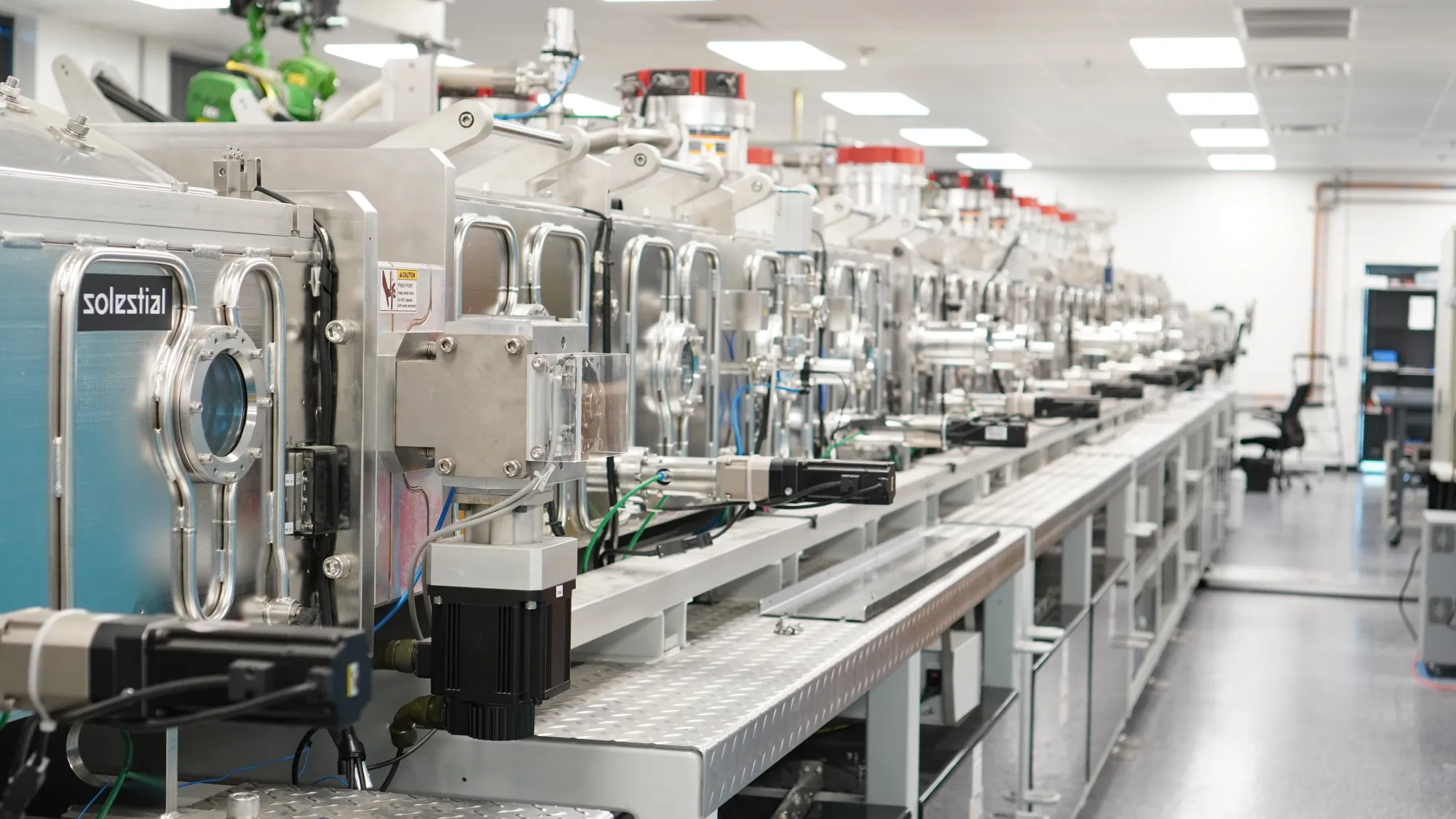
Solestial’s thin, flexible silicon solar cells are engineered specifically for the harsh space environment. Independent testing by the French Alternative Energies and Atomic Energy Commission (CEA) verified that the cells self‑heal radiation damage at operating temperatures as low as 65 °C. On‑orbit telemetry confirmed that after one year in low‑Earth orbit the cells showed no additional degradation compared with adjacent III‑V multijunction cells, a performance gap that “outlasts terrestrial solar alternatives,” according to Solestial CEO Margo de Naray. The technology also differs from legacy III‑V solutions, which typically require lead times exceeding two years and lack the radiation‑curing capability that enables faster, more reliable production cycles.
In addition to the self‑healing characteristic, Solestial’s supply chain is approximately 95 % U.S.–based, drawing raw silicon and other inputs from domestic manufacturers rather than the Chinese‑controlled sources that dominate the broader solar market. This domestic orientation aligns with York’s strategic objective of eliminating geopolitical risk while positioning the combined entity to scale volume production for the accelerating demand in broadband constellations, remote‑sensing fleets, and defense‑grade satellites.
Strategic Rationale for Energy and Defense Stakeholders
York’s CEO Dirk Wallinger emphasized that controlling the supply chain is central to meeting program timelines for national‑security, civil, and commercial customers. The announcement cites that China controls 99 % of gallium and more than 60 % of germanium used in legacy III‑V cells, and 93 % of polysilicon for terrestrial panels. By sourcing raw material and production entirely within the United States—approximately 95 % of Solestial’s supply chain is already U.S.‑based—York aims to mitigate geopolitical risk and avoid the “supply chain vulnerabilities that put others at risk.”
For utilities and grid operators, the move signals a potential shift toward more reliable power sources for satellite‑based services, such as communications and Earth observation, that underpin modern grid management. A secure, domestically produced solar supply could shorten procurement cycles and reduce exposure to export controls, aligning with broader energy security objectives.
Market Context and Investment Implications
The acquisition arrives as demand for satellite power grows, driven by expanding constellations for broadband, remote sensing, and defense applications. Legacy III‑V solutions face scalability challenges, while Solestial’s silicon cells promise faster production and lower lead times. York expects the integrated capability to “directly benefit customers across national security, civil, and commercial programs,” suggesting potential for increased contract capture in both government and commercial sectors.
Financially, the $67 million transaction represents a modest cash outlay relative to York’s market capitalization, funded through a mix of cash and newly issued shares exempt from registration under the Securities Act. The deal underscores York’s strategy of owning critical subsystems rather than relying on foreign‑dependent suppliers, a stance that may appeal to investors seeking reduced supply‑chain risk.
Key Takeaways
- York closed the acquisition of Solestial on June 4, 2026, issuing 1,703,577 shares at $34.00 each for an approximate $67 million purchase price.
- Solestial’s silicon solar cells self‑heal radiation damage at temperatures as low as 65 °C and showed no degradation after one year in low‑Earth orbit.
- About 95 % of Solestial’s supply chain is already U.S.-based, addressing reliance on Chinese‑controlled gallium, germanium, and polysilicon.
EnergyInsyte's Take
York’s purchase of Solestial removes a key foreign dependency for space‑based power generation, a factor that could streamline satellite procurement for energy‑related applications. However, the commercial scalability of the silicon cells remains to be demonstrated, and buyers should monitor how quickly York can translate the technology into volume production for upcoming missions.
Source: Businesswire