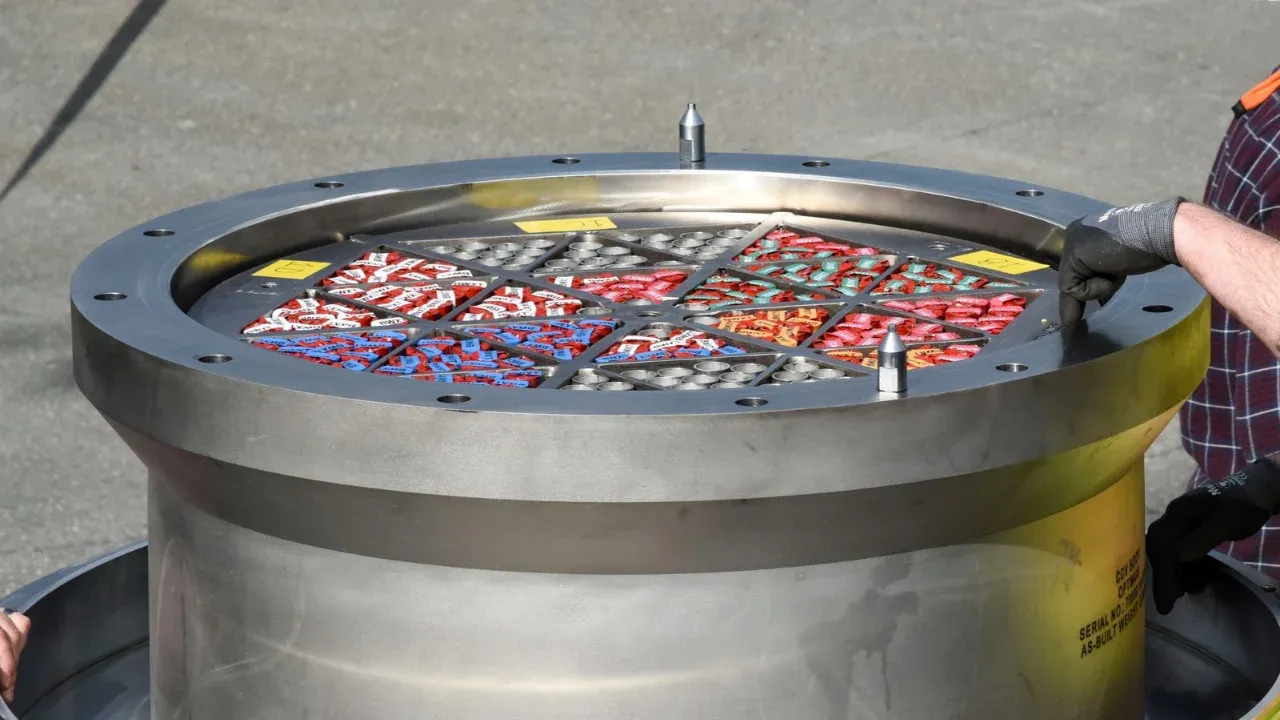
Securing a reliable fuel supply chain is a critical hurdle for the commercialization of microreactor technology. BWXT Technologies, Inc. is addressing this requirement through a new multi-year commercial agreement with Antares Nuclear, Inc. to produce tri-structural isotropic (TRISO) nuclear fuel. The deal establishes a framework for an initial allocation of 1 MTU (metric ton uranium), with provisions to increase volume as Antares scales its advanced reactor program. This partnership aims to bridge the gap between reactor demonstration and the deployment of commercial power units.
BWXT and Antares TRISO Production Framework
The agreement utilizes BWXT’s existing TRISO fabrication line located at its Lynchburg, Virginia, facility. This specific production line is already tasked with manufacturing fuel for the Department of War’s Project Pele and Antares’ own Mark-0 reactors. By leveraging this established infrastructure, BWXT is positioning itself to provide sustained, predictable fuel volumes for Antares as the company moves toward its electricity-producing Mark-1 reactor. The contract is structured around future task orders, which will dictate specific technical requirements, delivery schedules, and quantities as the Antares reactor program matures. This approach allows for flexibility in supply as deployment needs evolve.
Scaling Antares Microreactor Deployments
Antares is positioning this agreement to de-risk its upcoming deployment schedule, which includes a target to power its Mark-1 reactor by 2027. The company previously utilized BWXT-produced fuel to achieve a criticality milestone for its Mark-0 microreactor. With the fuel supply secured through the end of the decade, Antares intends to proceed with initial production deployments to U.S. military installations starting in 2028. The company, which has secured over $600 million in funding since its 2023 founding, is focusing on compact microreactors designed for defense and space applications where traditional energy infrastructure is unavailable. This agreement provides a technical and logistical foundation for those high-stakes environments.
Key Takeaways
- BWXT will provide an initial 1 MTU of TRISO fuel under a multi-year commercial agreement with Antares.
- Fuel production will occur at the BWXT facility in Lynchburg, Virginia, using a line currently supporting Project Pele.
- Antares aims to utilize this fuel for its Mark-1 reactor in 2027 and begin military deployments in 2028.
EnergyInsyte's Take
In our view, this agreement highlights the growing importance of "fuel-ready" infrastructure in the advanced fission sector. While much of the industry focus remains on reactor design, the BWXT-Antares deal signals that the real bottleneck for microreactors is the specialized manufacturing capacity required for TRISO fuel. By locking in a multi-year supply through an established fabrication line, Antares is attempting to mitigate the execution risks that often plague first-of-a-kind deployments. For the broader market, this illustrates that the commercial viability of microreactors is increasingly dependent on the ability of specialized manufacturers like BWXT to scale production alongside reactor development.
Questions & Answers
How does this agreement impact Antares' deployment timeline?
The agreement aims to support Antares' goal of powering its Mark-1 reactor in 2027 and commencing initial production deployments to U.S. military installations in 2028 by securing fuel through the end of the decade.
What is the specific scale of the initial fuel commitment?
The multi-year framework includes an initial allocation of 1 MTU (metric ton uranium), with the capacity to increase this volume as deployment requirements for the Antares reactor program evolve.
Which manufacturing facility will handle the TRISO production?
The fuel will be manufactured at BWXT’s facility in Lynchburg, Virginia, utilizing a fabrication line that also supports the Department of War’s Project Pele and Antares’ Mark-0 reactors.
What role does this agreement play in Antares' technical progression?
The agreement builds on previous technical successes, such as Antares achieving criticality for its Mark-0 reactor using BWXT fuel, and provides a predictable supply chain as the company moves from demonstration to production.
Source: BWXT