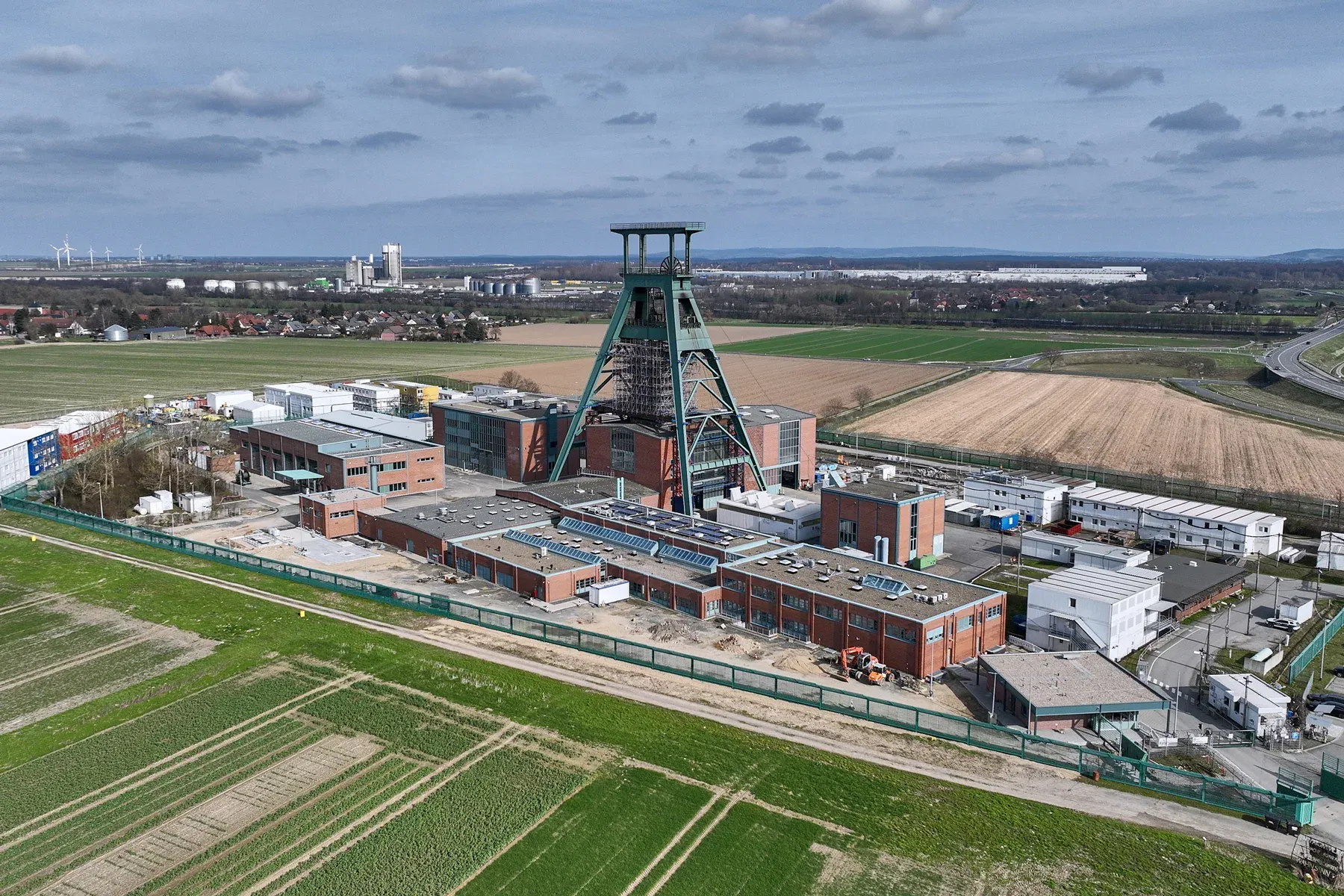

Deep Fission, Inc. (Nasdaq: FISN) is attempting to accelerate the regulatory and public acceptance of underground nuclear deployment by making its complete Nuclear Safety Design Agreement (NSDA) public. This move marks the first time a company within the U.S. Department of Energy (DOE) Reactor Pilot Program has released its full safety framework. The company is positioning this transparency as a strategic differentiator for its Gravity™ Nuclear Reactor project in Parsons, Kansas. By providing direct visibility into the safety case approved by the DOE, Deep Fission aims to validate its approach to small modular pressurized water reactors (SMRs) designed for installation approximately one mile underground.
DOE Approval of the Gravity Reactor NSDA
The release of the NSDA establishes the foundational safety framework for the Gravity™ Nuclear Reactor, detailing the design requirements, planned safety analysis approach, and the regulatory engagement process. While the public release of such documentation is not a regulatory requirement, Deep Fission is utilizing this transparency to demonstrate the technical rigor behind its underground deployment model. The DOE's approval of the NSDA represents the initial step in a multi-stage safety review process for the Reactor Pilot Program. It is important to note that additional documentation and reviews remain necessary before the company can receive potential DOE authorization for operations.
The Gravity™ design utilizes standard, low-enriched uranium fuel and pressurized water reactor technology, a method with a 70-year operating history. Deep Fission is deviating from traditional above-ground containment by placing the reactor one mile underground. The company intends for the surrounding geology and a hydrostatic column of water to provide passive cooling, shielding, and pressure control. The published NSDA contains limited redactions regarding security-sensitive design details, adhering to standard practices for advanced reactor safety filings. As the engineering process continues, Deep Fission has indicated that design elements may evolve, and the company plans to share updates as the safety case progresses through subsequent DOE review stages.
Transitioning the Parsons Pilot to Commercial Operation
The Parsons, Kansas project is being developed under the DOE Reactor Pilot Program, a framework established by Executive Order 14301. This program authorizes the DOE to approve the design, construction, and initial testing of pilot advanced reactors outside of DOE national laboratories, while the Nuclear Regulatory Commission (NRC) maintains an observational role. A critical distinction of the Parsons project is its intended lifecycle; unlike a standard standalone criticality test, Deep Fission is designing the unit with the specific intent to transition from a DOE-authorized pilot to a fully commercial power plant.
This transition is contingent upon successful demonstration and subsequent NRC licensing. If successful, the same reactor unit used for initial testing would be converted to full commercial operation rather than being decommissioned. This strategy seeks to bridge the gap between experimental pilot testing and scalable commercial deployment. Deep Fission is targeting reliable, low-carbon baseload power to serve utilities, industrial customers, and data centers. By integrating established pressurized water technology with a novel borehole deployment model, the company is testing whether deep geological placement can simplify construction and enhance safety profiles for future SMR deployments across the energy market.
Key Takeaways
- Deep Fission has released its complete, DOE-approved Nuclear Safety Design Agreement (NSDA) for the Gravity™ Nuclear Reactor, the first in the DOE Reactor Pilot Program to do so.
- The Gravity™ reactor design utilizes standard low-enriched uranium and pressurized water technology, positioned approximately one mile underground for passive cooling and shielding.
- The Parsons, Kansas pilot project is designed to potentially transition from a DOE-authorized test unit to a commercially licensed power plant under NRC oversight.
EnergyInsyte's Take
In our view, Deep Fission’s decision to publish its NSDA is a calculated move to de-risk the "social license" aspect of advanced nuclear deployment. By moving away from the typical opacity of nuclear safety filings, the company is attempting to preemptively address public skepticism regarding underground reactors. This transparency serves a dual purpose: it builds credibility with regulators and provides a blueprint for how SMR developers might navigate the complex intersection of DOE pilot programs and NRC commercial licensing. However, the ultimate success of this strategy hinges entirely on the technical performance of the hydrostatic pressure control and the company's ability to successfully navigate the transition from DOE authorization to full NRC commercial licensing. If the Parsons pilot can prove that a single unit can move from testing to revenue-generating operation, it could fundamentally alter the capital expenditure models for the next generation of baseload nuclear assets.
Questions & Answers
How does the Gravity™ reactor design differ from traditional pressurized water reactors?
While the Gravity™ reactor utilizes standard pressurized water technology and low-enriched uranium, it replaces large above-ground containment structures with a borehole deployment approximately one mile underground. The design relies on the surrounding geology and a hydrostatic column of water to provide passive shielding, cooling, and pressure control.
What is the strategic intent behind the Parsons, Kansas pilot project?
Unlike typical pilot tests that end in decommissioning, Deep Fission intends for the Parsons unit to serve as a direct precursor to commercial operation. The goal is to use the same reactor unit that undergoes DOE-authorized testing to eventually operate as a commercially licensed power plant, subject to NRC approval.
What regulatory framework governs the development of the Gravity™ reactor?
The project is being developed under the DOE Reactor Pilot Program, established by Executive Order 14301. This allows the DOE to approve design and construction outside of national laboratories, with the NRC observing the process to facilitate a potential transition to commercial power.
Does the publication of the NSDA guarantee regulatory approval for operations?
No. The NSDA is the initial step in the safety review process. The company must complete additional documentation and reviews to secure potential DOE authorization for operations, and must ultimately obtain NRC licensing to transition to commercial power.
Source: Businesswire