


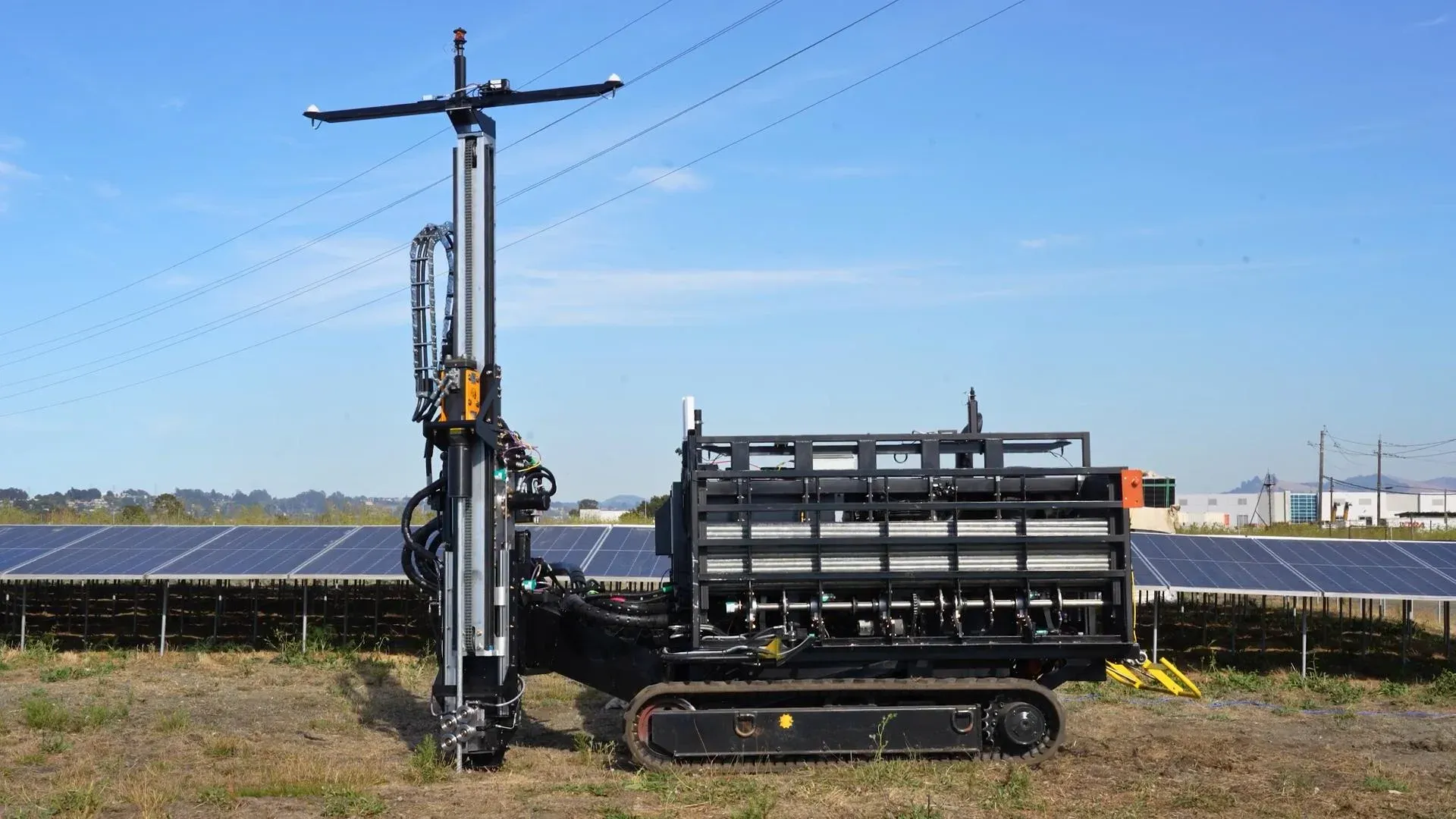
The bottleneck in global energy expansion is shifting from the capacity to generate power to the physical ability to deploy it. Planted, an autonomous power deployment company, has raised $31.8 million to address this gap by treating power plant construction as a manufacturing challenge rather than a bespoke construction process. The funding round, co-led by Piva Capital and RA Capital Management’s Planetary Health team, includes participation from Breakthrough Energy Ventures, Gigascale Capital, Google, and Khosla Ventures. This capital injection is intended to scale the company's robotic fleet and support the launch of Sage, a next-generation robot expected to enter the field in late 2026.
Scaling Robotic Fleets and the Sage Launch
Planted is positioning its growth around the transition from manual field assembly to a production-line model. The company intends to use the new capital to expand its existing robotic fleet, which is reportedly fully committed through 2027. A central component of this expansion is the introduction of Sage, a new robotic unit designed to more than double field productivity compared to the current fleet. According to the company, this technological leap is a primary step toward achieving a 10x increase in field crew output.
The company’s deployment strategy relies on treating each robot as a modular unit of capacity; as more units are manufactured and fielded, deployment capacity increases proportionally. To manage this, Planted has implemented a reservation system for its hardware. While current capacity is spoken for through 2027, the company has already opened reservations for 2028, allowing customers to secure priority for 2027 capacity as new Sage units are brought online. This approach aims to provide a predictable, scalable mechanism for industrial energy buyers who face rigid delivery timelines.
High-Density Solar and Rapid Deployment Metrics
To bypass the labor and land constraints currently slowing the energy transition, Planted utilizes a system that integrates planning software, high-density terrain-following solar arrays, and energy storage. This technical configuration allows for deployment on land with slopes of up to 27% without the need for traditional grading. The company claims this method delivers twice the energy per acre compared to legacy trackers, resulting in a smaller physical footprint and a lower landscape profile.
The business case for this automated approach is built on significantly compressed project timelines. Planted highlights a recent 28 MW behind-the-meter project for a neocloud data center, which moved from the initial call to power in just ten months, with field construction lasting under three months. The company is currently scaling its operational volume, having deployed more than 10 MW in 2025, and is targeting 100 MW in 2026. This represents a projected 10x year-over-year increase in deployment, supported by a project pipeline exceeding 20 GW.
Key Takeaways
- Planted raised $31.8 million in a round co-led by Piva Capital and RA Capital Management to scale its autonomous solar deployment systems.
- The company plans to launch Sage, a next-generation robot in late 2026, which is expected to more than double current field productivity.
- Planted targets a deployment increase from 10 MW in 2025 to 100 MW in 2026, supported by a project pipeline of over 20 GW.
EnergyInsyte's Take
In our view, Planted is attempting to solve the "deployment gap" by decoupling solar installation from the volatile and shrinking pool of skilled manual labor. By reframing power plant construction as a manufacturing problem, the company is moving away from the traditional, site-specific engineering model that characterizes much of the current renewable sector. This shift toward "productized" infrastructure is particularly relevant for high-demand sectors like data centers, where the ability to deliver firmed, behind-the-meter power on a predictable schedule is more critical than the lowest possible capital cost. If the Sage robot can deliver the promised doubling of productivity, Planted may successfully demonstrate that autonomous hardware can mitigate the interconnection and labor bottlenecks that currently threaten global decarbonization timelines. However, the company's ability to hit its 10x growth target in 2026 will depend entirely on its ability to manufacture and field these robotic units at the necessary pace.
Questions & Answers
How does Planted's technology address land use constraints for solar developers?
Planted utilizes high-density, terrain-following solar arrays and field robotics that allow for installation on slopes up to 27% without requiring land grading. The company claims this system delivers twice the energy per acre compared to legacy trackers, enabling a smaller project footprint.
What is the strategic significance of the Sage robot for Planted's capacity?
The Sage robot, scheduled for a late 2026 field entry, is designed to more than double field productivity compared to Planted's current robotic fleet. This is a critical component of the company's goal to achieve a 10x gain in field crew output and accelerate the time to power for its customers.
How is Planted managing the demand for its autonomous deployment services?
Because the company's existing robotic fleet is fully committed through 2027, Planted has moved to a reservation-based capacity model. Customers can currently reserve capacity for 2028, with early commitment providing priority access to 2027 capacity as new Sage units are fielded.
What specific market segment is Planted targeting with its "powered land" offering?
Starting in 2027, Planted intends to provide "powered land"—sites that include their own clean power and compact footprints. This is aimed at large industrial energy buyers, such as data center operators, who require reliable power and cannot wait for traditional grid interconnection.
Source: Businesswire


