Westinghouse Electric Company is accelerating its microreactor commercialization timeline by validating core physics under extreme thermal conditions. The company successfully completed zero-power high-temperature criticality testing for its eVinci™ microreactor, a move designed to replace theoretical modeling with empirical evidence. This testing, conducted in partnership with Los Alamos National Laboratory and the Nevada National Security Site (NNSS), marks a significant step in reducing technical risk for small modular reactor deployment in remote or high-demand environments.
eVinci High-Temperature Criticality Testing Results
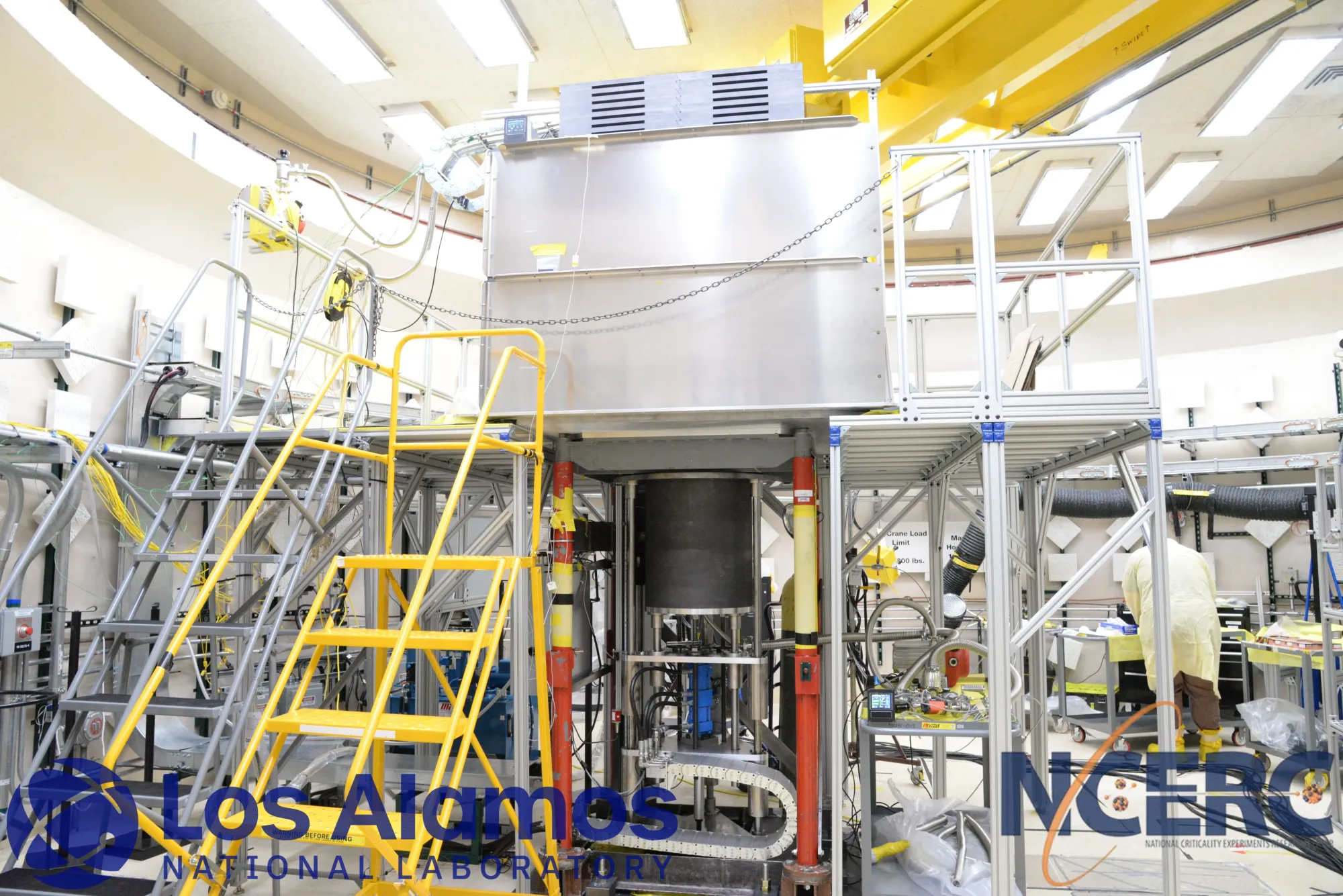
On September 3, 2026, Westinghouse researchers achieved criticality at 663°C during testing at the National Criticality Experiments Research Center (NCERC). Following this, the team performed a subcritical reactivity measurement at a peak core temperature of 1,011°C, which the company noted as a record high temperature for a reactivity measurement at the NCERC facility. This experimental work aims to observe how the eVinci design behaves as representative materials are heated toward actual operating conditions. By capturing temperature-dependent data, Westinghouse intends to strengthen its analytical models and refine the prototype design. The company is utilizing advanced simulation, digital engineering, and proprietary artificial intelligence tools to transition these findings into a deployable commercial product. This iterative "build-test-learn" approach is intended to provide greater confidence in the performance and cost structures of the microreactor technology before full-scale manufacturing begins.
Strategic Implications for Remote Energy Infrastructure
The eVinci microreactor is being positioned to address energy resilience requirements in challenging environments, specifically targeting defense applications and space operations. The technology utilizes a compact architecture featuring heat pipe technology, TRISO fuel, and a graphite core. According to Westinghouse, the design is intended to provide continuous electricity 24 hours a day, seven days a week, for an eight-year duration without the need for refueling. This capability suggests a shift toward long-duration, autonomous power solutions for sites where traditional grid connection or frequent fuel logistics are unfeasible. By validating core behavior at temperatures exceeding 1,000°C, Westinghouse is attempting to prove the thermal stability required for such high-reliability mission profiles. The successful execution of these tests at the NCERC, a National Nuclear Security Administration (NNSA) capability, underscores the involvement of federal research entities in validating the next generation of distributed nuclear assets.
Key Takeaways
- Westinghouse reached criticality at 663°C and achieved a peak core temperature of 1,011°C during eVinci testing.
- The eVinci microreactor design utilizes TRISO fuel, heat pipe technology, and a graphite core to enable eight years of operation without refueling.
- Testing was conducted at the National Criticality Experiments Research Center (NCERC) in partnership with Los Alamos National Laboratory and the Nevada National Security Site.
EnergyInsyte's Take
In our view, this milestone is less about the achievement of criticality itself and more about the mitigation of "thermal uncertainty" in microreactor development. By pushing reactivity measurements to a record 1,011°C, Westinghouse is attempting to bridge the gap between digital twins and physical reality. For industrial and defense stakeholders, the primary value proposition lies in the claimed eight-year refueling cycle. If the empirical data from this high-temperature testing confirms the stability of the heat pipe and TRISO fuel architecture, it could significantly lower the operational risk profile for deploying nuclear assets in disconnected or austere environments.
Questions & Answers
How does the eVinci design support long-term autonomous operation?
The eVinci microreactor utilizes a combination of heat pipe technology, TRISO fuel, and a graphite core. Westinghouse claims this architecture is designed to provide continuous electricity for eight years without refueling.
What specific technical data was gained from the September 2026 testing?
The testing provided high-quality, temperature-dependent data by reaching criticality at 663°C and performing subcritical reactivity measurements at a peak core temperature of 1,011°C. This data is intended to strengthen analytical models and accelerate prototype design.
Which organizations supported the high-temperature criticality testing?
The work was completed in partnership with Los Alamos National Laboratory and the Nevada National Security Site (NNSS) at the National Criticality Experiments Research Center (NCERC).
What are the primary target markets for this microreactor technology?
Westinghouse is positioning the eVinci microreactor to provide resilient energy in remote and challenging environments, specifically highlighting defense applications and space.
Source: Businesswire