
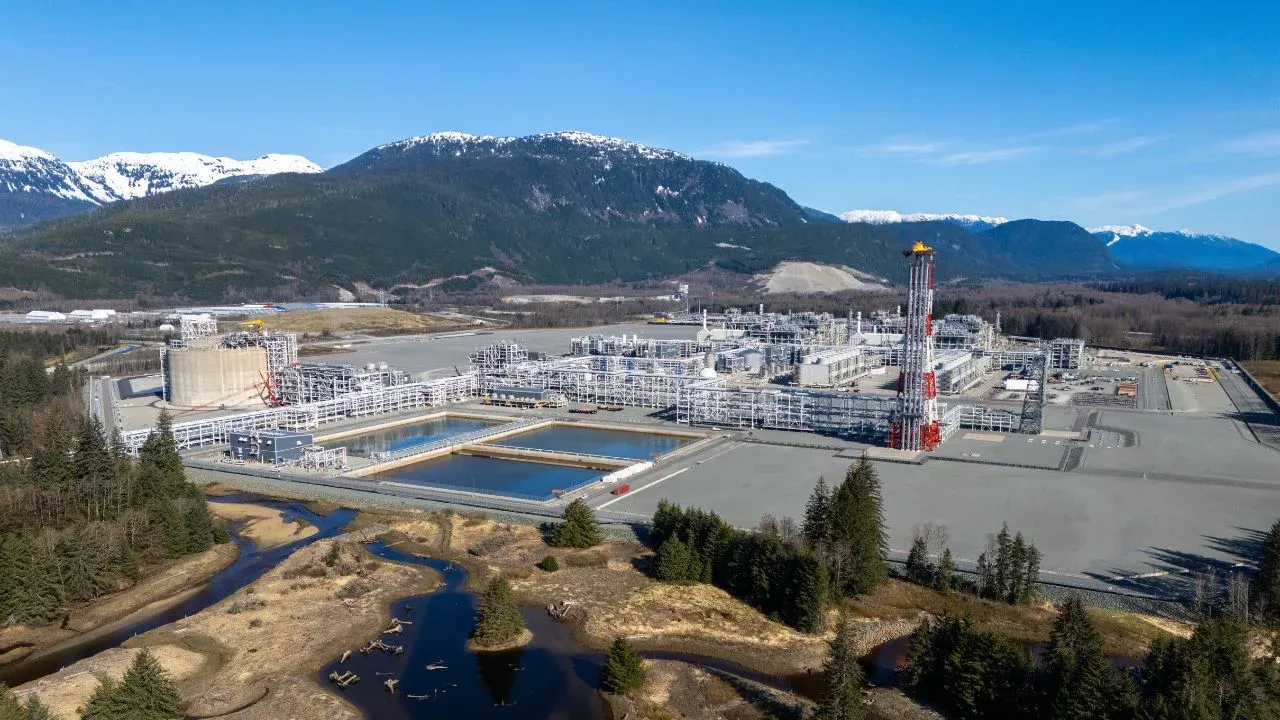
Fluor Corporation’s joint venture with JGC Corporation, JGC Fluor BC LNG II (JFJV2), received a limited notice to proceed (LNTP) for the proposed Phase 2 expansion of the LNG Canada export facility in Kitimat, British Columbia. The LNTP allows the partners to begin early planning and key activities ahead of a final investment decision, signaling the next step for a project that already supplies roughly 14 million tonnes of LNG annually.
JFJV2 Receives LNTP for Phase 2 Expansion
Fluor announced that JFJV2 has been granted an LNTP to advance Phase 2 of the LNG Canada plant. The joint venture, equally owned by Fluor Canada Ltd and JGC Constructors (No 2) BC Ltd, previously delivered Phase 1, completing two processing trains, storage tanks, a rail yard, water‑treatment facilities, flare stacks and a marine terminal in 2025. Pierre Bechelany, Fluor’s Business Group President of Energy Solutions, said the LNTP “enables us to initiate early planning and move forward with key activities to support a proposed Phase 2 final investment decision by LNG Canada.” The LNTP does not constitute a final investment decision; it merely authorizes preparatory work.
Strategic Relevance for Canadian LNG Supply
The LNG Canada facility, located on an ice‑free west‑coast harbor, benefits from abundant, low‑cost natural gas and operates under a 40‑year license. With an annual capacity of about 14 million tonnes, it is Canada’s first large‑scale LNG export project. Phase 2 would double that capacity, potentially raising annual output to roughly 28 million tonnes if LNG Canada proceeds with a final investment decision. The expansion would deepen Canada’s role as a supplier of lower‑carbon natural gas to global markets, aligning with the joint venture’s existing infrastructure and the owners’ market positions.
Ownership Structure and Market Context
LNG Canada is owned by Shell (40%), PETRONAS (25%), PetroChina (15%), Mitsubishi Corporation (15%) and KOGAS (5%). The JFJV2 partnership, with 50% Fluor Canada and 50% JGC Constructors (No 2) BC Ltd, was central to Phase 1 delivery and now positions both firms to capture additional engineering, procurement, construction and commissioning work should Phase 2 move forward. The LNTP does not disclose a timeline for the final investment decision, and the joint venture has not released cost estimates for the expansion.
Key Takeaways
- Fluor’s JFJV2 joint venture received a limited notice to proceed for Phase 2 of the LNG Canada export facility.
- Phase 2 would double the plant’s annual production capacity from approximately 14 million to 28 million tonnes of LNG, pending a final investment decision.
- The joint venture previously delivered Phase 1, completing two processing trains and supporting infrastructure in 2025.
EnergyInsyte's Take
The LNTP gives Fluor and JGC a foothold to shape the next phase of Canada’s flagship LNG export project, but the ultimate scale depends on LNG Canada’s forthcoming investment decision. Executives should monitor the timing of that decision and any cost signals, as they will determine the extent of additional engineering and construction opportunities in the region.
Source: Businesswire