
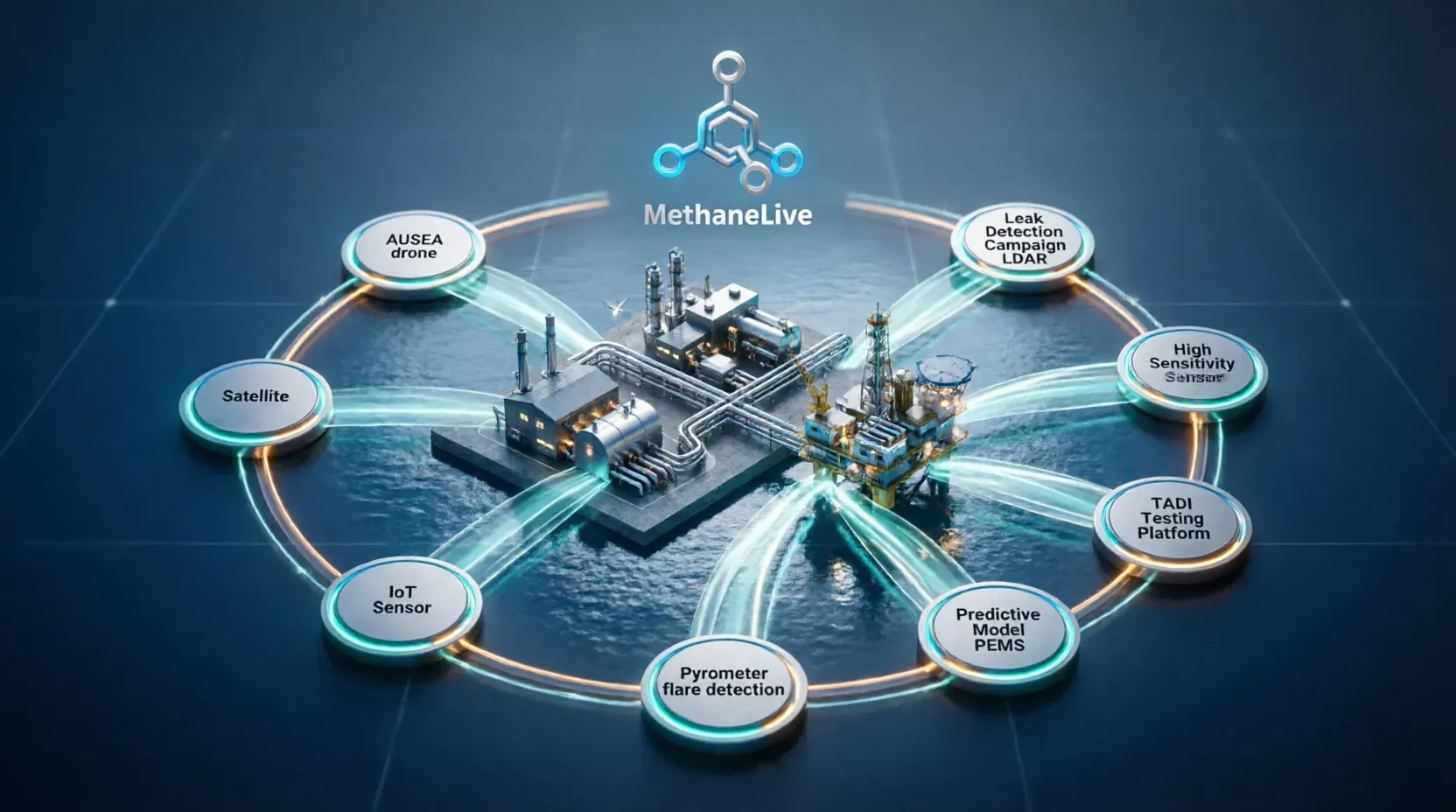
TotalEnergies unveiled MethaneLive, a global methane‑emissions monitoring centre, during the 10th‑anniversary celebrations of VivaTech. The launch highlighted the company’s ambition to turn the massive flow of real‑time sensor data into a decisive operational advantage. By installing a permanent network of 13,000 methane sensors across every operated on‑shore and off‑shore upstream asset in 2025, TotalEnergies now captures continuous, high‑resolution measurements of methane concentrations at the source. Advanced analytics and proprietary algorithms ingest this torrent of data, automatically flagging abnormal spikes, pinpointing the equipment or process responsible, and recommending corrective actions within minutes. The platform is positioned as a cornerstone of TotalEnergies’ near‑zero methane target for 2030, providing the visibility and speed needed to eliminate fugitive emissions that would otherwise remain hidden in traditional periodic surveys.
TotalEnergies Introduces MethaneLive at VivaTech
The MethaneLive centre, officially opened in early 2026 at VivaTech, aggregates the sensor streams into a single, cloud‑based dashboard that is accessible to field operators, maintenance planners, and senior engineers alike. Since the network’s deployment, the centre has already identified 35 fugitive methane releases that would have been difficult to detect without continuous monitoring. Each detection triggers an automated alert, a visual map of the affected asset, and a diagnostic workflow that guides technicians to the most likely root cause—whether a valve leak, a compressor seal failure, or an unexpected venting event.
Beyond immediate leak detection, MethaneLive is being built to host future agentic AI tools. These AI agents will learn from the historical record of emissions, equipment performance, and maintenance outcomes to prioritize the highest‑risk equipment, suggest pre‑emptive interventions, and continuously refine detection thresholds. The integration of such AI is expected to expand the system’s coverage from the current 13,000 sensors to tens of thousands of additional data points as the company scales its digital infrastructure.
Implications for Emissions Management in Oil & Gas
TotalEnergies has publicly committed, since 2022, to achieving near‑zero methane emissions at its operated upstream sites by 2030. The company frames this ambition around two pillars: accurate measurement and relentless reduction. MethaneLive operationalizes the measurement pillar by delivering real‑time, site‑wide visibility, while the rapid remediation of detected leaks addresses the reduction pillar.
Namita Shah, President of OneTech, emphasized that “the use of real‑time data is a concrete driver that helps make our operations more reliable, safer, more efficient, and more sustainable.” By converting raw sensor readings into actionable insights, MethaneLive not only improves safety—preventing hazardous accumulations of methane—but also enhances operational efficiency. Early leak detection reduces unplanned shutdowns, lowers repair costs, and minimizes product loss. Moreover, the platform strengthens compliance with emerging regulatory frameworks that increasingly demand continuous emissions monitoring and transparent reporting.
Data, AI and Computing Investments Supporting the Initiative
MethaneLive is a flagship element of a broader data‑and‑AI strategy that TotalEnergies is rolling out across its entire asset base. Today, nearly 3,000 pieces of equipment are already under continuous digital surveillance, with AI models analyzing vibration, temperature, pressure, and flow data to spot early warning signs of equipment degradation. This predictive maintenance approach improves asset availability, curtails unplanned outages, and contributes to safety outcomes.
To scale these capabilities, TotalEnergies has forged data partnerships with Emerson and Cognite—agreements announced at VivaTech 2025 that facilitate seamless data ingestion, standardization, and secure sharing across the enterprise. The partnerships also enable the integration of third‑party analytics tools, accelerating the development of new AI use cases.
A critical enabler of this digital expansion is the upcoming Pangea 5 supercomputer, slated for deployment in 2027. Pangea 5 will boost the company’s computing power sixfold, providing the horsepower needed for large‑scale AI training, high‑resolution subsurface simulations, and real‑time optimization of renewable‑energy assets. The enhanced compute environment will allow MethaneLive’s AI agents to process the full sensor dataset faster, run more sophisticated anomaly‑detection models, and support cross‑domain analytics that link methane emissions to production schedules, weather patterns, and equipment health.
Beyond upstream monitoring, the same data‑centric architecture is being applied to refinery performance analysis, exploration‑production workflows, and the growing demand for AI‑driven services in the data‑center market. By consolidating these initiatives under a unified digital platform, TotalEnergies aims to create network effects where improvements in one domain (e.g., predictive maintenance) reinforce gains in another (e.g., emissions detection).
Key Takeaways
- MethaneLive monitors 13,000 sensors across all TotalEnergies upstream sites, making it the only oil‑&‑gas operator with such a comprehensive real‑time system.
- Since its early‑2026 launch, MethaneLive has detected 35 fugitive methane emissions and enabled corrective maintenance.
- The platform is integrated into a wider AI push that includes a six‑fold computing boost from the upcoming Pangea 5 supercomputer and data partnerships with Emerson and Cognite.
EnergyInsyte's Take
MethaneLive gives TotalEnergies a concrete tool to meet its 2030 near‑zero methane target, while also showcasing how real‑time data can be leveraged for operational safety and cost control. Executives should watch how the planned AI extensions and expanded computing capacity translate into measurable emission reductions and whether the model becomes adoptable across the broader upstream sector.
Source: Businesswire