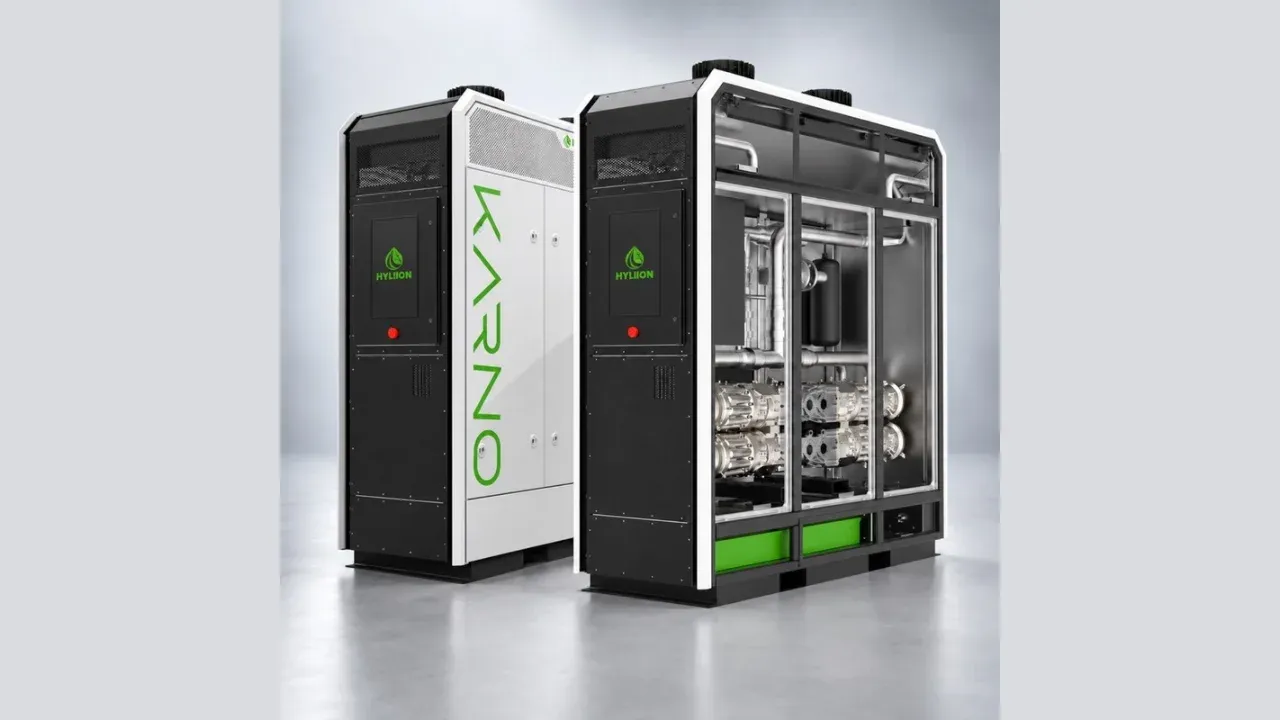
Hyliion Holdings Corp. is positioning its modular power technology to address the surging electricity demands driven by artificial intelligence and decentralized infrastructure requirements. The company announced that its KARNO Power Module has been named to TIME’s Best Inventions of 2026. This recognition highlights the company's attempt to move power generation away from centralized grids toward scalable, locally deployable systems designed for high-stakes environments like data centers and military operations.
KARNO Linear Heat Generator Architecture
The KARNO Power Module departs from traditional power generation by abandoning internal combustion engines and rotating turbines. Instead, Hyliion utilizes a proprietary linear heat generator architecture that relies on advanced additive manufacturing. This technical shift aims to provide a compact, scalable system capable of delivering power from hundreds of kilowatts to multi-megawatt installations. The company is marketing the technology as a fuel-flexible and low-emission solution, intended to provide prime power and energy arbitrage opportunities. By utilizing modularity, Hyliion intends to offer a system that can be deployed directly at the point of consumption, potentially bypassing some of the constraints associated with traditional grid-scale infrastructure and long-distance transmission.
Defense Contracts and AI Power Demand
Hyliion is heavily linking its technology's development to the growing energy needs of the AI sector and national defense. The company has already secured a contract to power the U.S. Navy’s USX-1 Defiant autonomous vessel, demonstrating a move into mobile and marine applications. Furthermore, Hyliion expects to be awarded nearly $50 million in new U.S. military programs in 2026. This dual-track strategy targets both the stationary requirements of data centers—which face massive load growth—and the mobile requirements of modern military hardware. By focusing on these critical, high-reliability sectors, Hyliion is testing whether specialized, modular hardware can capture market share from conventional utility-scale providers and traditional diesel generators.
Key Takeaways
- The KARNO Power Module uses a proprietary linear heat generator architecture enabled by additive manufacturing.
- Hyliion expects to be awarded nearly $50 million in new U.S. military programs in 2026.
- The technology is designed for scalability ranging from hundreds of kilowatts to multi-megawatt installations.
EnergyInsyte's Take
In our view, Hyliion is attempting to bridge the gap between centralized utility models and the localized, high-density power requirements of the AI era. By targeting the U.S. Navy and data centers, the company is bypassing the slow-moving traditional utility market in favor of high-margin, mission-critical applications. The success of the KARNO module will likely depend on whether its additive manufacturing approach can achieve the cost-effectiveness and reliability required to compete with established rotating turbine and combustion engine technologies in the field.
Questions & Answers
How does the KARNO architecture differ from standard generators?
Unlike conventional generators that utilize internal combustion engines or rotating turbines, the KARNO module employs a proprietary linear heat generator architecture supported by advanced additive manufacturing.
Which specific sectors is Hyliion targeting for deployment?
The company is initially targeting data center, military, commercial, and industrial applications, with plans to expand into mobile applications such as vehicles and marine vessels.
What is the projected financial impact regarding military contracts?
Hyliion expects to be awarded nearly $50 million in new U.S. military programs during the 2026 calendar year.
What scale of power can the KARNO module provide?
The technology is designed to be scalable, with the capability to deliver power ranging from hundreds of kilowatts to multi-megawatt installations.
Source: Hyliion