What Happened
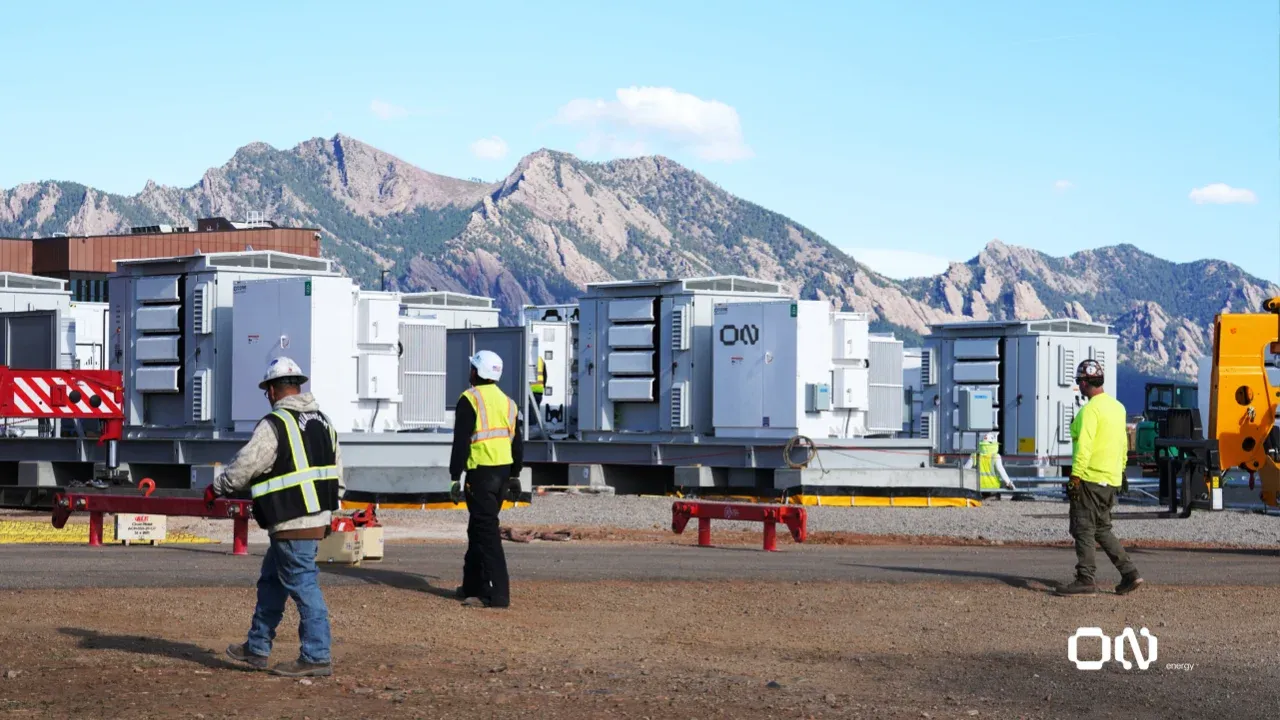
ON.energy said independent testing at the U.S. Department of Energy’s National Laboratory of the Rockies (NLR) validated the performance of its AI UPS™ for AI data centers under real-world grid conditions. The company said the medium-voltage system was tested at 13.2 kV using NLR’s 7 MW and 20 MW controllable grid interface, with GPS-synchronized data acquisition, and that the results were benchmarked against ERCOT’s proposed large electronic load (LEL) ride-through requirements.
The testing covered voltage ride-through requirements while maintaining AI workload transients. ON.energy said the system met or exceeded the relevant conditions, including zero-voltage ride-through and overvoltage performance.
Project or Policy Context
The results arrive as NERC issues a level 3 alert and ERCOT advances NOGRR 282, a proposed revision that would establish frequency and voltage ride-through requirements for Large Electronic Loads, including AI data centers and hyperscale compute facilities.
ERCOT’s Reliability and Operations Subcommittee approved the measure on April 2, 2026, with potential Board endorsement in June and PUCT ratification by July. Under ERCOT’s current interim energization framework for large loads, demonstration of ride-through capability is already a condition for interconnection approval.
Market Relevance
For data center operators, the core issue is no longer just backup power. Interconnection rules are moving toward proof that large loads can stay connected through grid disturbances without creating instability.
ON.energy framed the validation as evidence that AI UPS can help operators meet those requirements while keeping AI workloads running. The company said the system is “a fully inline grid-safe medium-voltage system purpose-built for AI factories” and can also support peak shaving, demand response, energy arbitrage, and ancillary market participation.
That combination matters because it links compliance and grid support to operating economics. In markets with tighter interconnection scrutiny, equipment that helps satisfy ride-through rules while also enabling revenue-related services may be more relevant to project execution and financing decisions.
Infrastructure Impact
ON.energy said the testing confirmed three key performance areas: zero-voltage ride-through, overvoltage tolerance, and AI workload transient handling. In the company’s summary, the system “rides through a complete zero-voltage event while keeping load voltage stable” and handles “±70% GPU transients without registering on the grid.”
For utilities, grid operators, and large-load developers, those claims point to a practical infrastructure question: whether AI facilities can be added without worsening reliability or forcing exceptions in interconnection policy. The company said the validation was intended to match what AI data centers face at interconnection.
The company did not disclose further details in the announcement.
Key Takeaways
- ON.energy said independent NLR testing validated AI UPS performance at 13.2 kV for AI data center ride-through conditions.
- The results were benchmarked against ERCOT’s proposed NOGRR 282 requirements for Large Electronic Loads.
- ON.energy said AI UPS also supports grid and market functions including peak shaving, demand response, energy arbitrage, and ancillary services.
EnergyInsyte's Take
This announcement is less about product positioning than about grid-readiness. As ERCOT and other operators tighten requirements for large loads, AI data center developers will need equipment that addresses both reliability and compliance at the interconnection stage.
The main business implication is that ride-through capability is becoming an infrastructure requirement, not an optional feature. Buyers, utilities, and investors should watch whether these results are reproducible across sites, how interconnection authorities treat similar systems, and whether the revenue-service claims hold under actual operating constraints.
The key uncertainty is scale: one validation does not resolve how broadly the approach can be deployed, what it costs, or how it performs across different grid conditions. But the direction is clear. Grid-safe design is moving closer to the center of AI infrastructure planning.
Source: Businesswire