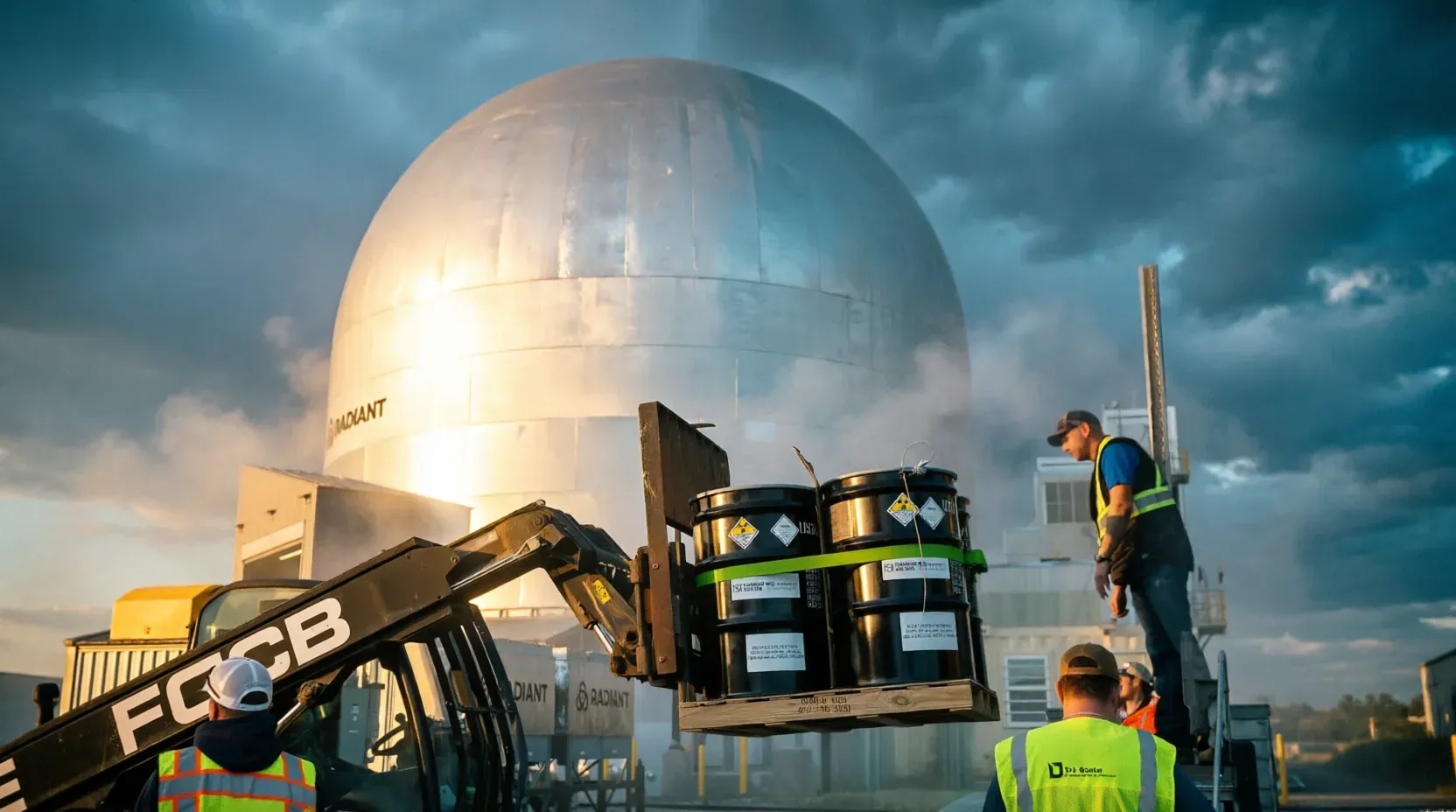
Radiant, a developer of advanced nuclear technologies, received its first shipment of tri‑structural ISOtropic (TRISO) fuel at Idaho National Laboratory’s Demonstration of Microreactor Experiments (DOME) facility. The fuel, fabricated by Standard Nuclear in Oak Ridge, Tennessee, will power Radiant’s Kaleidos reactor for a full‑power, full‑temperature test slated for this summer, a step toward commercial delivery by 2028.
Radiant Receives First TRISO Fuel Shipment at INL's DOME Facility
The shipment marks the start of Radiant’s five‑phase testing program at the National Reactor Innovation Center’s DOME facility. The TRISO fuel, made to Radiant’s specifications earlier this year, will be used to bring the Kaleidos reactor online, progressing through zero‑power criticality, 1 MW thermal, full power, and full heat. The final test aims for a minimum of 150 hours of uninterrupted full‑power operation, a milestone the company says is “crucial in proving commercial readiness.” Dr. Rita Baranwal, Radiant’s chief nuclear officer, called the receipt of “freshly fabricated, modern‑pedigree, custom‑made fuel” a key step toward delivering a commercial product within 18 months.
Five‑Phase Testing Program Targets 150+ Hours at Full Power
Radiant’s testing plan is structured to collect reactor and fuel performance data across five phases. After initial low‑power criticality, the program will raise power to 1 MW thermal and then to full power, maintaining full‑temperature conditions while monitoring fuel behavior. The ultimate goal is to operate the reactor for at least 150 hours at full power without operator intervention. Radiant says the data will accelerate its licensing process with the U.S. Nuclear Regulatory Commission (NRC) and support its Part 70 license application for an R‑50 manufacturing facility in Tennessee, which is currently under accelerated NRC review.
Part 70 License Application Tied to Fuel Testing Results
The performance data gathered at DOME will also feed into Radiant’s Part 70 license request for the R‑50 plant, which would allow the company to handle and load TRISO fuel for Kaleidos reactors before shipping to customers nationwide. Approval of the license would enable standardized, mass‑production of the reactors, which Radiant describes as “scalable, reliable energy solutions that can be transported by land, sea, and air.” The company has not disclosed a timeline for NRC decision on the license.
Key Takeaways
- Radiant received its first TRISO fuel shipment, fabricated by Standard Nuclear, at INL’s DOME facility to power the Kaleidos reactor.
- The five‑phase program will culminate in at least 150 hours of full‑power, full‑temperature operation without operator intervention, targeting a summer test.
- Fuel performance data will support Radiant’s Part 70 license application for an R‑50 manufacturing facility in Tennessee, currently under accelerated NRC review.
EnergyInsyte's Take
The fuel delivery moves Radiant closer to a demonstrable full‑power run, a prerequisite for its 2028 commercial rollout. However, the NRC’s timeline for the Part 70 license remains uncertain, and the ability to sustain 150 hours of unattended operation will be the first real proof point of the reactor’s commercial viability. Energy executives should monitor the summer test results and the NRC’s licensing actions to gauge when scalable, transportable microreactors might become a viable addition to the energy mix.
Source: Businesswire