The push for high-resolution methane monitoring is moving toward larger, more agile orbital assets to capture smaller emission sources. SFL Missions Inc. has secured a contract from Montreal-based GHGSat to develop the GHGSat-D2 demonstration satellite, a project designed to enhance the precision and frequency of greenhouse gas measurements from space. This development marks a strategic shift from the smaller microsatellite architectures previously used by GHGSat toward a more robust platform capable of supporting advanced sensor technology. By transitioning to a larger satellite bus, the partnership aims to improve the detection of low-level emissions and increase the daily coverage area for industrial monitoring.
Scaling Up with the DEFIANT-XL Bus
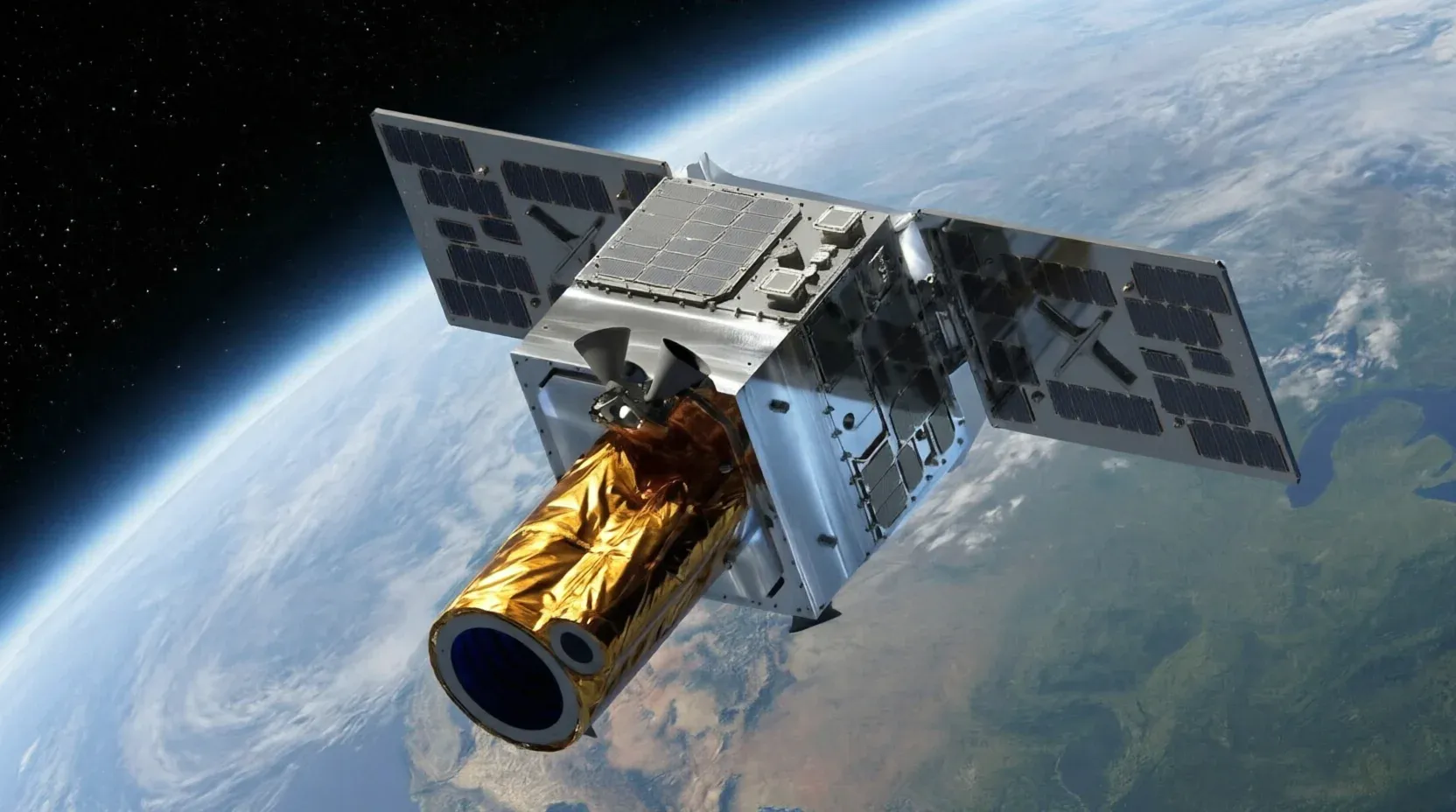
To accommodate a larger, higher-accuracy sensor manufactured by ABB Canada, SFL Missions is moving away from the 15 kg NEMO microsatellite bus used for the 2016 "Claire" Pathfinder mission and subsequent commercial satellites. The new GHGSat-D2 will be built on the expanded DEFIANT-XL bus, with a projected launch mass of just under 100 kg. This increase in scale is intended to support more sophisticated hardware, including two onboard star trackers to assist the Attitude Determination and Control System (ADCS) in maintaining precise pointing.
The GHGSat-D2 is being engineered to detect methane emissions as low as 50 kg/hr, a capability that requires extreme orbital stability. SFL Missions is integrating its latest ADCS version, combining hardware and software to ensure the sensor can accurately target specific ground locations. Furthermore, the satellite will feature deployable solar panels to provide the necessary power for the larger sensor and additional subsystems. To ensure longevity and operational flexibility, the design includes a propulsion system to manage orbital drag caused by solar activity and to facilitate collision avoidance maneuvers.
Enhancing Revisit Rates and Coverage
The GHGSat-D2 mission focuses on increasing the frequency and breadth of data collection through improved satellite agility. SFL Missions is designing the spacecraft with the ability to slew up to 45 degrees both across and along its orbital path. This increased maneuverability is intended to improve the "revisit rate," allowing the satellite to capture data over specific ground locations more frequently. This agility, combined with the new sensor capabilities, is expected to double the daily coverage per satellite to 20,000 km2.
This technological leap builds on GHGSat’s existing operational history, which includes the mitigation of over 21 MT CO2E of methane to date. While SFL Missions continues to build GHGSat-C18 and -C19 on the smaller NEMO bus in Toronto, the D2 demonstrator represents a second-generation constellation approach. By prioritizing both the precision of the sensor and the agility of the platform, the project seeks to bridge the gap between broad atmospheric monitoring and the granular, facility-level detection required by industrial and government customers in the oil, gas, and agricultural sectors.
Key Takeaways
- SFL Missions is developing the GHGSat-D2 demonstration satellite using the DEFIANT-XL bus, which is expected to weigh just under 100 kg at launch.
- The new satellite is designed to detect methane emissions as low as 50 kg/hr and will provide a daily coverage area of 20,000 km2 per satellite.
- The GHGSat-D2 will feature enhanced agility, allowing for slewing of up to 45 degrees to increase the frequency of data capture over specific locations.
EnergyInsyte's Take
In our view, the transition from the 15 kg NEMO bus to the nearly 100 kg DEFIANT-XL bus signals a critical maturation in the commercial methane monitoring market. As regulatory scrutiny and industrial ESG requirements intensify, the demand for "facility-level" data is shifting from general detection to high-precision quantification of small-scale leaks. The ability to detect emissions as low as 50 kg/hr suggests that GHGSat is positioning itself to capture a more granular segment of the market that smaller, lighter satellites may struggle to serve accurately. By investing in increased mass and more complex subsystems—such as propulsion and dual star trackers—GHGSat and SFL Missions are betting that the increased cost and complexity of a larger bus will be offset by the superior data fidelity and increased revisit rates required by high-stakes energy and industrial operators.
Questions & Answers
How does the GHGSat-D2 differ in scale from previous GHGSat missions?
The GHGSat-D2 will utilize the DEFIANT-XL bus with an expected launch mass of just under 100 kg. This is a significant increase from the NEMO microsatellite bus used for the 2016 Pathfinder mission and 11 subsequent commercial satellites, which averaged 15 kg.
What specific technical improvements are being implemented to increase data frequency?
SFL Missions is designing the satellite with the ability to slew up to 45 degrees both across and along its orbit path. This increased agility is intended to improve the "revisit rate," allowing the satellite to capture data over specific ground locations more frequently.
What are the primary performance targets for the new GHGSat-D2 sensor?
The satellite is being designed to detect methane emissions as low as 50 kg/hr from space. Additionally, the mission aims to double the daily coverage per satellite to 20,000 km2.
How will the GHGSat-D2 maintain its operational lifespan and precision?
The satellite will include a propulsion system to manage orbital drag and avoid collisions, as well as two onboard star trackers to support the Attitude Determination and Control System (ADCS) for precise sensor pointing.
Source: SFL Missions