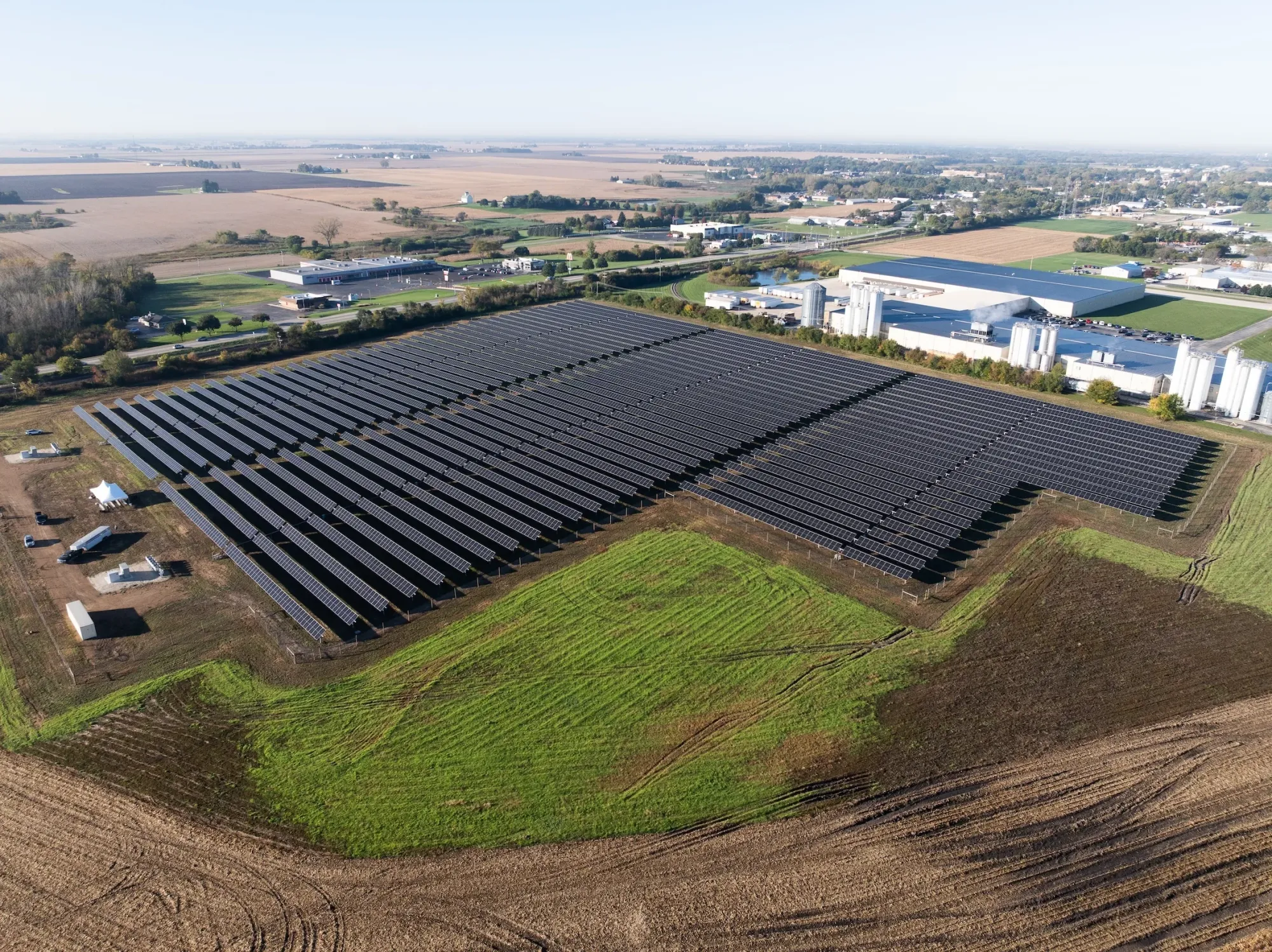
Standard Solar is aggressively expanding its Pacific Northwest footprint by securing two new solar assets in eastern Washington, signaling a strategic shift toward capturing distributed generation opportunities within rural utility markets. The company, a Brookfield portfolio company, has acquired the Palouse Junction and Cunningham projects from OneEnergy Renewables. This transaction introduces a combined 15.79 megawatts (MW) of ground-mounted solar capacity to the region, targeting local utility offtakers. By moving these assets from the development phase into its long-term ownership model, Standard Solar is positioning itself to capitalize on the increasing demand for locally generated renewable energy within community-scale frameworks. The acquisition marks the first collaborative project between Standard Solar and OneEnergy Renewables in the state of Washington.
Standard Solar Secures 15.79 MW Washington Portfolio
The acquisition centers on two distinct ground-mounted solar installations located in Connell and Othello, Washington. The larger of the two, the Palouse Junction project in Connell, carries a capacity of 12.1 MW DC. Standard Solar expects this specific site to produce approximately 22,339 megawatt-hours (MWh) of electricity during its first year of operation. The project is slated for completion in the first quarter of 2027, with Franklin Public Utility District designated as the offtaker for 10 MW AC.
The second asset, the Cunningham project located in Othello, is smaller in scale at 3.69 MW DC. This installation is projected to generate roughly 6,917 MWh of electricity in its initial year of service. Big Bend Electric Cooperative will act as the offtaker for 3 MW AC of the Cunningham site. Both projects are scheduled to reach completion by Q1 2027. Through this deal, Standard Solar expects the combined assets to deliver more than 29,000 MWh of clean electricity in their first year. OneEnergy Renewables, which served as the developer and engineering, procurement, and construction (EPC) provider, is transitioning these assets to Standard Solar’s ownership and operational management.
Rural Utility Integration and Project Timelines
This transaction highlights a growing trend of rural utilities utilizing community-scale solar to bolster local power supplies and support long-term energy planning. By partnering with local entities like Franklin Public Utility District and Big Bend Electric Cooperative, Standard Solar is testing a model where distributed generation meets the specific needs of non-urban grid participants. The company is positioning these acquisitions as a way to bring renewable benefits directly to the communities served by these utilities, rather than relying solely on large-scale, centralized utility projects.
Standard Solar is leveraging its access to safe-harbored solar panels and its established ownership model to facilitate the transition of projects from the development stage to active operation. The company has indicated an active interest in acquiring further solar assets across the Pacific Northwest, suggesting that these Washington projects may serve as a template for future regional expansion. As a developer and operator with more than 500 MW of solar currently owned and operated across the United States, Standard Solar is utilizing this acquisition to deepen its presence in the community solar market, specifically targeting the intersection of rural infrastructure and renewable energy deployment.
Key Takeaways
- Standard Solar acquired the 12.1 MW DC Palouse Junction and 3.69 MW DC Cunningham projects from OneEnergy Renewables.
- The combined assets are expected to generate over 29,000 MWh of electricity in their first year of operation.
- Both Washington-based projects are scheduled for completion in Q1 2027, serving Franklin Public Utility District and Big Bend Electric Cooperative.
EnergyInsyte's Take
In our view, Standard Solar’s acquisition of the Palouse Junction and Cunningham projects is a calculated move to dominate the community-scale solar niche within rural utility markets. By securing offtake agreements with Franklin Public Utility District and Big Bend Electric Cooperative, the company is bypassing the complexities of large-scale grid interconnection in favor of more localized, manageable distributed generation. This strategy suggests that the company sees significant value in the "middle market" of solar—projects that are too large for simple residential use but too small for major transmission-level utility players. Furthermore, the emphasis on "safe-harbored" solar panels indicates a disciplined approach to supply chain risk management, ensuring that the Q1 2027 completion targets remain viable despite ongoing global hardware volatility. This move signals a broader intent to build a repeatable, scalable model for rural renewable integration across the Pacific Northwest.
Questions & Answers
How much total electricity output is expected from the new Washington assets in their first year?
The combined Palouse Junction and Cunningham projects are expected to generate more than 29,000 megawatt-hours (MWh) of electricity during their first year of operation.
Which specific utilities will serve as the offtakers for these solar projects?
Franklin Public Utility District will serve as the offtaker for 10 MW AC from the Palouse Junction project, while Big Bend Electric Cooperative will serve as the offtaker for 3 MW AC from the Cunningham project.
What is the projected timeline for the completion of these solar installations?
Standard Solar expects both the Palouse Junction and Cunningham projects to be completed in the first quarter (Q1) of 2027.
What is the strategic significance of the partnership between Standard Solar and OneEnergy Renewables?
This transaction represents the first projects the two companies have collaborated on in Washington, with OneEnergy Renewables acting as the developer and EPC provider, while Standard Solar takes over ownership and long-term operation.
Source: Standard Solar