


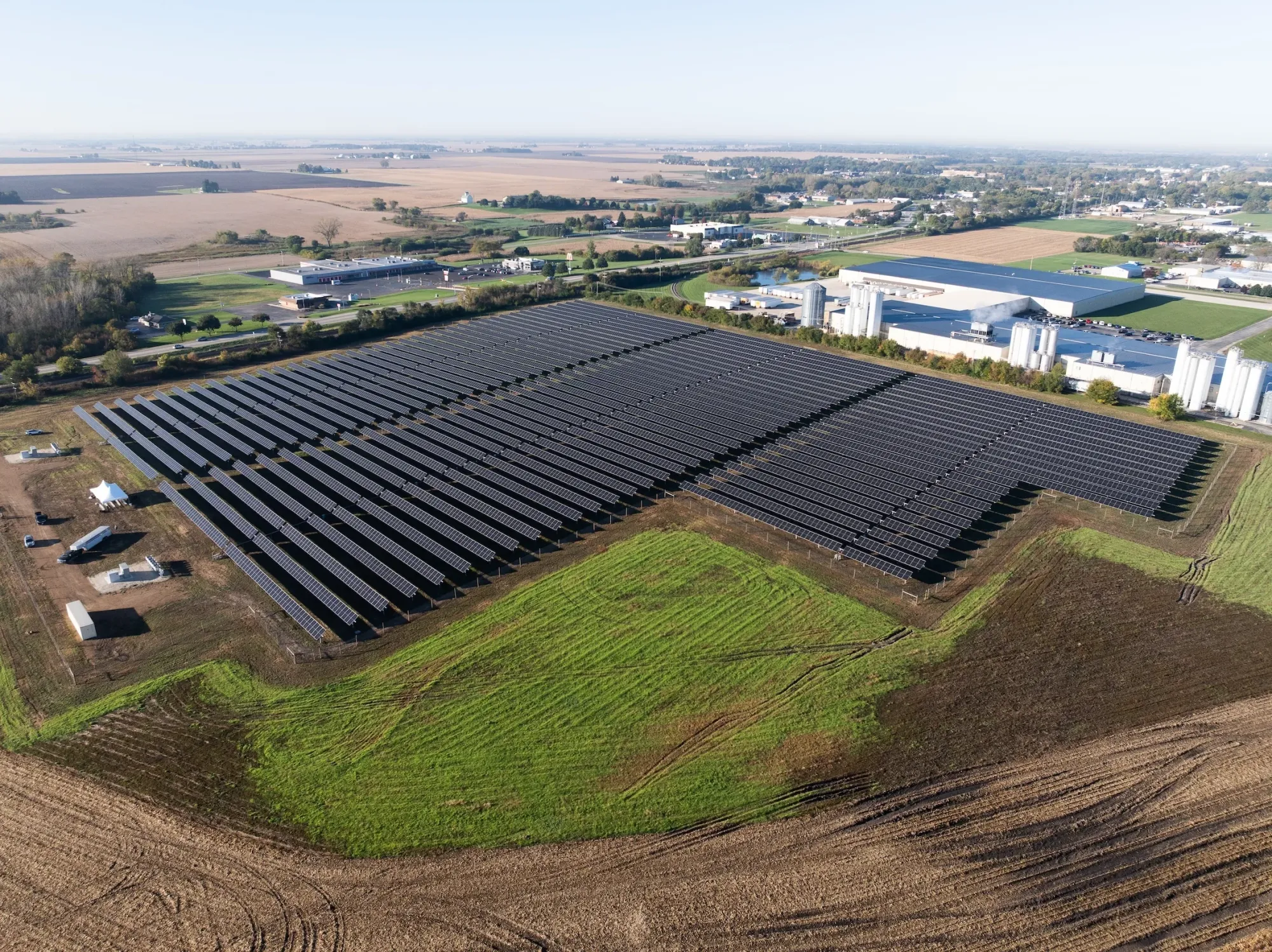
The activation of the 3.5 MWac community solar facility in Sandwich, Illinois, signals a strategic move to deploy distributed energy resources through state-incentivized frameworks. Developed by TurningPoint Energy and financed, built, owned, and operated by Generate Capital, the project utilizes the Illinois Shines program—formerly the Adjustable Block Program—to provide renewable access to local subscribers. This specific installation serves as a foundational component of a larger 34.5 MWac portfolio consisting of eight projects across the state. By targeting residents and small businesses who lack the capacity for onsite solar, the developers are testing the scalability of community-based models to meet Illinois' long-term mandate of transitioning to 100 percent renewable energy by 2050.
Generate Capital and TurningPoint Energy Deploy 3.5 MWac Sandwich Array
The newly commissioned Sandwich facility occupies approximately 23 acres and employs advanced hardware to optimize energy capture. The installation utilizes single-axis tracking technology equipped with backtracking capabilities, alongside bifacial solar modules designed to maximize production from both sides of the panel. According to the companies, the array is expected to generate more than 8 million kilowatt-hours (kWh) of electricity annually, a volume the developers equate to removing more than 1,640 gas-powered vehicles from the road each year.
Construction of the site was finalized in mid-2026, utilizing prevailing-wage labor and qualified workers throughout the build process. The project is currently delivering renewable energy and utility bill savings to 90 local subscribers, comprising both residential users and small businesses. Beyond simple power generation, the developers have integrated agrivoltaic and pollinator-friendly land management strategies. This includes using sheep grazing for natural vegetation maintenance and planting native flowering species to support local biodiversity and soil health. This dual-use approach is positioned by TurningPoint Energy President Salar Naini as a method to create long-term value for host communities and subscribers while maintaining responsible land stewardship during the clean energy transition.
Scaling the 34.5 MWac Illinois Community Solar Portfolio
This Sandwich installation is not an isolated asset but a single entry in a broader 34.5 MWac portfolio currently being brought online across Illinois. This eight-project pipeline represents a significant capital deployment aimed at expanding the state's solar generating capacity and providing localized energy alternatives. The financial implications for the broader portfolio are substantial; Generate Capital and TurningPoint Energy expect the full buildout of these eight projects to deliver nearly $70 million in projected electricity cost savings to Illinois subscribers over the assets' total operating lives.
The project also highlights the evolving role of utilities in distributed generation. ComEd Vice President of Project & Contracts Jie Chu noted that as more renewable resources connect to the electric grid, community solar serves to expand customer choice and strengthen the local clean energy economy. By leveraging the Illinois Shines program, the developers are bypassing the traditional barriers to solar adoption, such as property ownership or structural suitability, by aggregating demand through a centralized community model. This strategy allows for the deployment of critical infrastructure that supports regional economic growth and provides a hedge against rising energy costs for the 90 initial subscribers in Kendall County.
Key Takeaways
- The Sandwich facility is a 3.5 MWac project utilizing single-axis tracking and bifacial modules to generate over 8 million kWh annually.
- The project is part of a larger 34.5 MWac, eight-project portfolio expected to provide nearly $70 million in projected electricity cost savings to Illinois subscribers.
- The site incorporates agrivoltaic practices, including sheep grazing and native plantings, to manage vegetation and support pollinator biodiversity.
EnergyInsyte's Take
In our view, the partnership between Generate Capital and TurningPoint Energy illustrates a sophisticated approach to de-risking distributed energy investments through state-backed incentive programs like Illinois Shines. By bundling this 3.5 MWac asset into a larger 34.5 MWac portfolio, the developers are achieving the economies of scale necessary to make community solar a viable institutional asset class. The integration of agrivoltaic management—specifically sheep grazing—is a strategic move to mitigate long-term O&M costs associated with vegetation control while simultaneously addressing land-use concerns often raised in renewable deployments. This project signals that the path to meeting Illinois' 2050 renewable targets will rely heavily on these mid-scale, multi-asset portfolios that bridge the gap between large-scale utility solar and individual residential installations, providing a scalable blueprint for regional energy transitions.
Questions & Answers
How does the Sandwich project contribute to the broader Illinois energy strategy?
The project serves as a component of an eight-project, 34.5 MWac portfolio designed to expand the state's solar capacity. It aligns with Illinois' long-term objective to replace 100 percent of existing energy sources with renewable energy by the year 2050.
What specific technologies are being used to maximize the output of this 3.5 MWac facility?
The facility utilizes single-axis tracking technology with backtracking capabilities and bifacial solar modules. These technologies are intended to maximize energy production across the 23-acre site, with an expected annual output exceeding 8 million kWh.
What is the projected financial impact of the full 34.5 MWac portfolio on Illinois consumers?
Upon the full buildout of the eight-project portfolio, the developers expect to deliver nearly $70 million in projected electricity cost savings to Illinois subscribers throughout the assets' operating lives.
How is the project addressing land management and environmental impact?
The project employs agrivoltaic and pollinator-friendly practices, including the use of sheep grazing for vegetation maintenance and the planting of native flowering plants to support biodiversity and soil health.
Source: Generate Capital


