TCL Zhonghuan Renewable Energy Technology Co., Ltd. announced the launch of a next‑generation back‑contact (BC) solar module at its Tianjin manufacturing base this month. The module reaches up to 25.2% efficiency and 680 W power output, positioning it for utility‑scale and commercial & industrial (C&I) projects. The rollout marks the company’s shift from advanced development to large‑scale commercial production of BC technology.
Launch of the Next‑Generation BC Module
The new BC module combines TCL Zhonghuan’s proprietary high‑efficiency silicon wafers with an integrated BC architecture. The wafers exhibit minority carrier lifetimes exceeding 1,000 µs, supporting cell‑level conversion efficiencies above 27% and a temperature coefficient of –0.26 %/°C. The module delivers a mass‑production efficiency of up to 25.2% and a maximum power rating of 680 W, matching mainstream BC products in power while offering higher efficiency.
Key technical features include:
- A next‑generation hotspot mitigation design that can lower hotspot temperatures by up to 50 °C versus conventional modules.
- Weak‑light response factor above 95 %, ensuring stable output under low‑irradiance conditions.
- Bifaciality factor of 80 % ± 5 %, enabling significant rear‑side energy capture.
The product carries a 30‑year linear power warranty and a 15‑year product warranty, and it passed certification by internationally recognized testing bodies.
Significance for Utility‑Scale and C&I Solar
The module’s high efficiency and 680 W rating address two core concerns for large‑scale developers: land use and levelized cost of electricity (LCOE). By generating more power per unit area, projects can achieve lower LCOE, especially in regions where site acquisition is constrained. The busbar‑free, all‑black front surface also meets aesthetic requirements for building‑integrated photovoltaics (BIPV) and premium rooftop installations, expanding the addressable market beyond traditional utility farms.
TCL Zhonghuan highlights the module’s resistance to fire risk, partial shading, dust accumulation, and potential-induced degradation (PID). Laboratory testing shows lifecycle power degradation below 1 % under standard stress conditions, suggesting robust long‑term performance for investors and operators focused on asset reliability.
Integrated Supply Chain and Patent Portfolio
The launch underscores TCL Zhonghuan’s vertically integrated approach. The company controls wafer production, cell fabrication, and module assembly, leveraging more than 1,600 BC‑related patents covering crystal growth, cell structures, manufacturing processes, and module packaging. Since its first commercial‑scale production of interdigitated back‑contact (IBC) cells in 2004, the firm has built a comprehensive BC technology platform that supports rapid scale‑up.
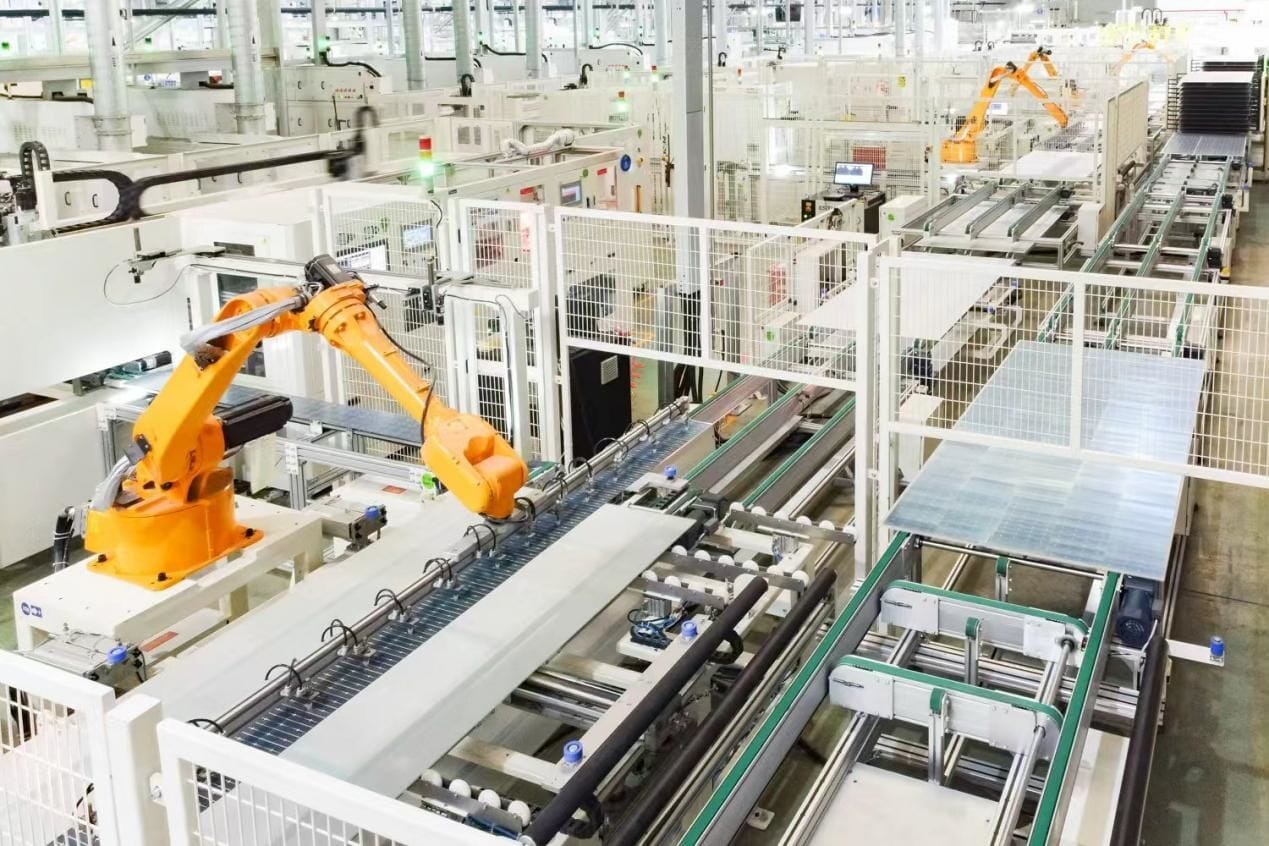
By manufacturing the modules at its Tianjin base, TCL Zhonghuan can align wafer supply with module output, potentially reducing lead times and supply‑chain exposure for customers. The announcement did not disclose specific production capacity or rollout schedule beyond the initial launch.
Key Takeaways
- The newly launched BC module achieves up to 25.2% module efficiency and 680 W power output.
- Hotspot mitigation can lower hotspot temperatures by up to 50 °C, and weak‑light response exceeds 95 %.
- TCL Zhonghuan’s BC platform is backed by more than 1,600 patents and fully integrated wafer‑cell‑module manufacturing.
EnergyInsyte's Take
The Tianjin launch demonstrates TCL Zhonghuan’s ability to move high‑efficiency BC technology into volume production, offering a technically robust option for utility‑scale and C&I developers. Execution risk remains tied to the company’s capacity to scale manufacturing and meet demand forecasts. Buyers should monitor production ramp‑up timelines, warranty claim processes, and any forthcoming performance data from field deployments.
Source: PRNewswire