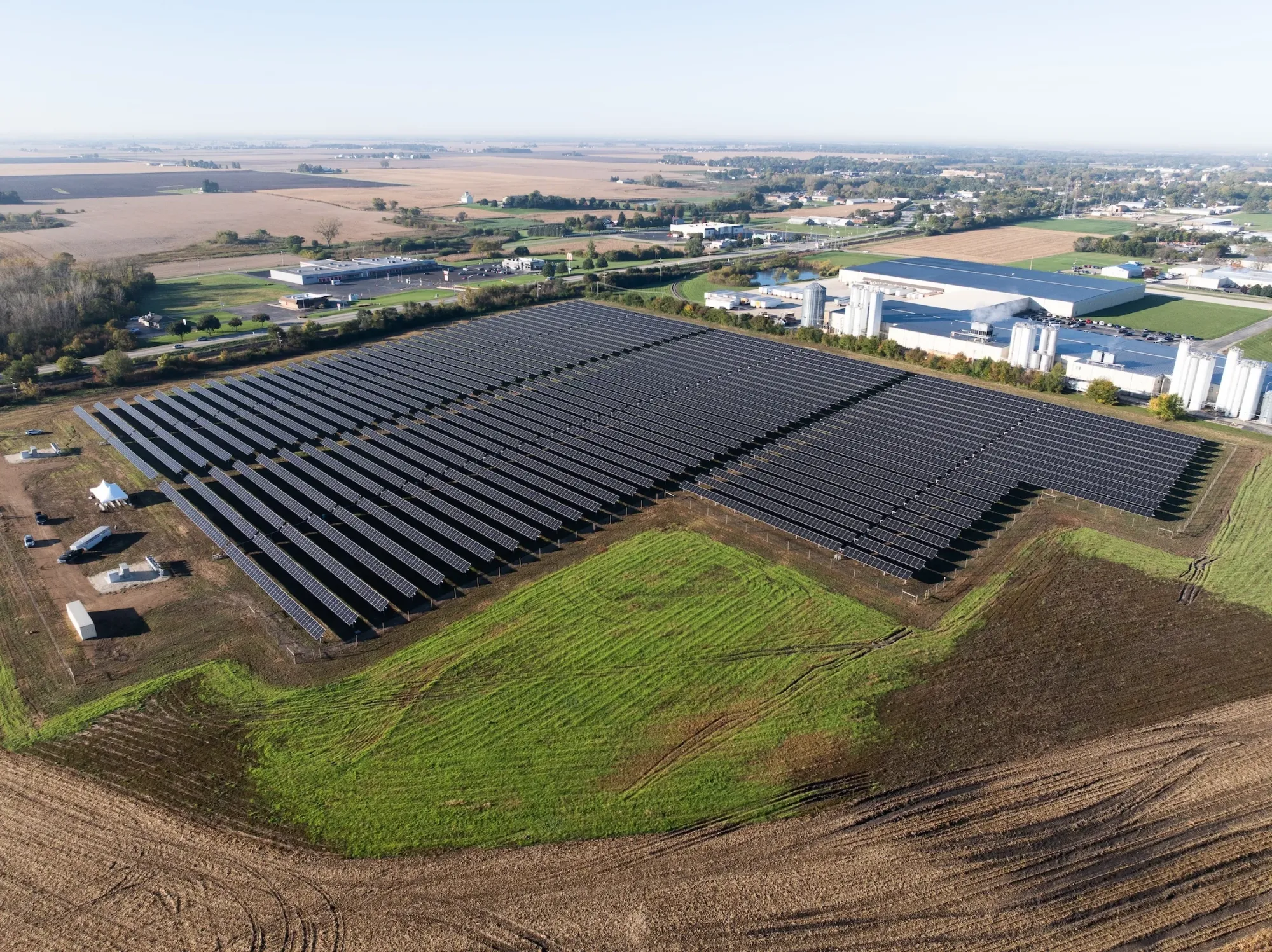
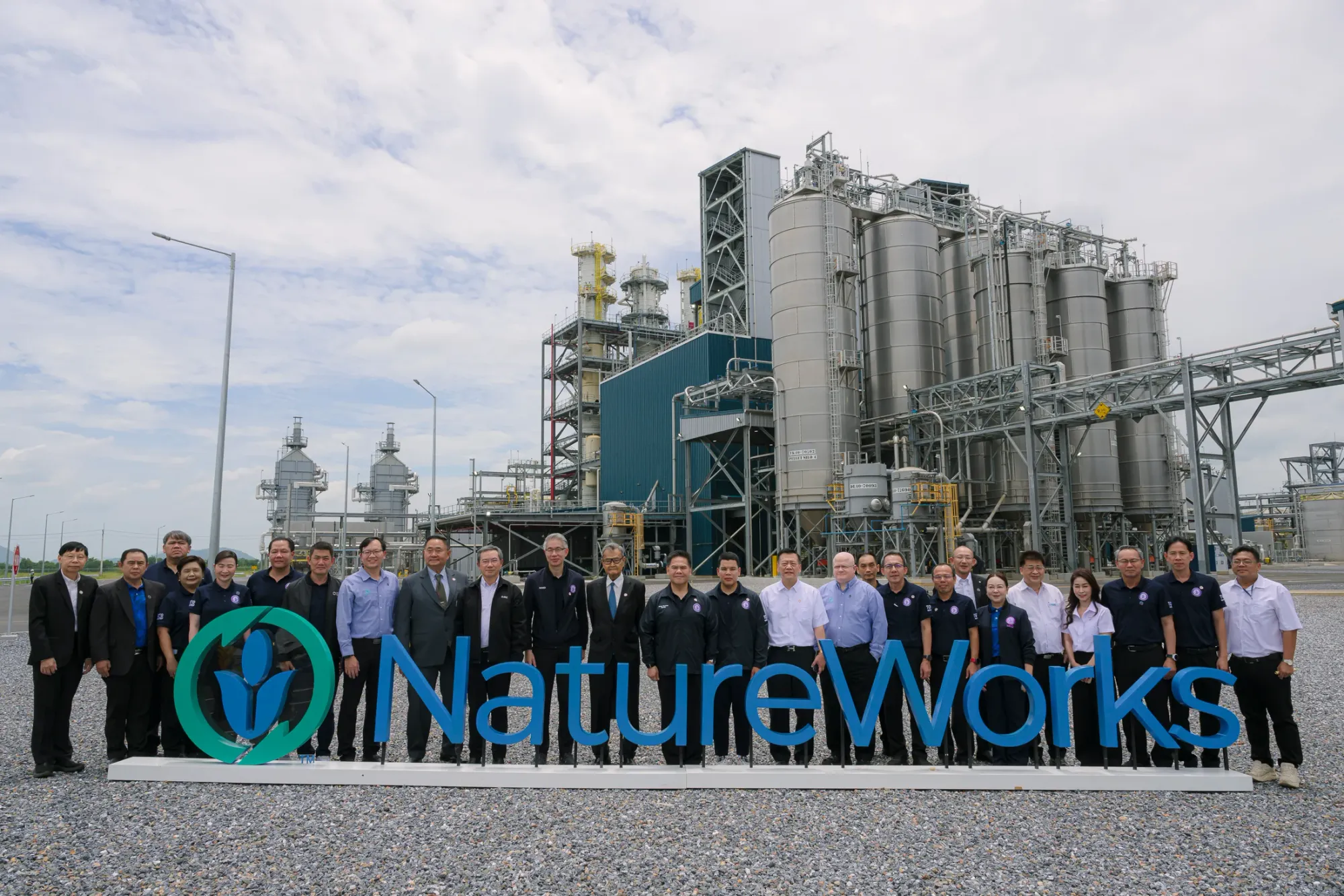
A high-level delegation led by Thailand’s Minister of Industry, Mr. Varawut Silpa-archa, recently visited the NatureWorks manufacturing site at the Nakhon Sawan Biocomplex. This visit follows the facility's inauguration on April 29, 2026. As NatureWorks’ second global manufacturing site, the operation is a strategic investment designed to meet rising demand for sustainable materials across the Asia-Pacific region while strengthening regional supply reliability.
Nakhon Sawan Biocomplex Production Capacity
The Nakhon Sawan facility operates as an integrated, feedstock-to-polymer production site. It boasts a nameplate production capacity of 75,000 metric tons of Ingeo™ polylactic acid (PLA) biopolymers per year. This scale allows the site to serve diverse applications, including rigid and flexible packaging, food serviceware, hygiene products, durable consumer goods, and 3D printing filaments. By establishing this second global manufacturing hub, NatureWorks aims to enhance access to its proprietary biopolymers for customers throughout Asia and beyond. The facility's presence is positioned to strengthen regional supply security and create long-term economic value by transforming local agricultural outputs into high-value, industrially compostable materials that serve as lower-carbon alternatives to conventional fossil-based plastics.
Sugarcane Feedstock and BCG Model Integration
A critical technical achievement at this site is the successful transfer of proprietary manufacturing technology to utilize 100% locally sourced Thai sugarcane. While NatureWorks' original facility in Blair, Nebraska, utilizes corn as its primary feedstock, the Nakhon Sawan operation demonstrates the versatility of renewable agricultural feedstocks. This transition supports Thailand’s Bio-Circular-Green (BCG) Economy Model, which seeks to drive innovation and competitiveness through sustainable growth. The project integrates Thailand’s agricultural strengths with advanced manufacturing expertise, creating value across the entire supply chain—from upstream processing to export markets. This public-private collaboration reinforces Thailand’s position as a regional hub for bio-based manufacturing and sustainable industrial investment.
Key Takeaways
- The facility has a nameplate production capacity of 75,000 metric tons of Ingeo™ PLA biopolymers annually.
- The site successfully utilizes 100% locally sourced Thai sugarcane as a feedstock, differing from the corn-based process in Nebraska.
- The project directly supports Thailand’s Bio-Circular-Green (BCG) Economy Model for sustainable industrial development.
EnergyInsyte's Take
In our view, the successful deployment of NatureWorks' technology using Thai sugarcane is a significant milestone for feedstock flexibility in the biopolymer sector. By decoupling production from specific crops like corn and successfully pivoting to sugarcane, the company mitigates regional feedstock risks. This move signals that the bioeconomy is maturing beyond single-feedstock models. For investors and grid operators, this demonstrates how integrated biocomplexes can effectively link agricultural supply chains with advanced industrial manufacturing to create resilient, localized, and high-value commodity loops.
Source: https://www.businesswire.com/