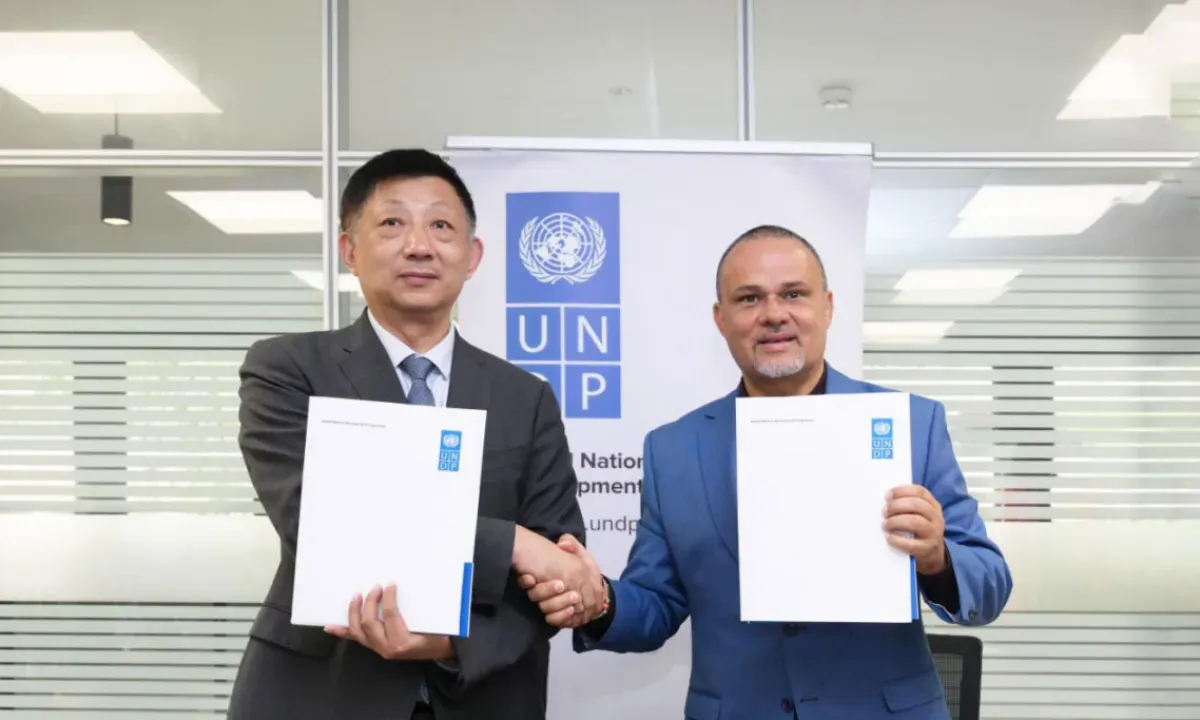
The United Nations Development Programme (UNDP) and TAILG, a leading electric mobility company, officially signed a Memorandum of Understanding (MOU) in Kenya to establish the Green Mobility Centre of Excellence (GM-CoE). This strategic partnership formalizes a comprehensive framework for long-term cooperation, aiming to jointly implement flagship projects for green, low-carbon mobility. Through multidimensional collaboration—including technological innovation, ecosystem development, and industry incubation—the initiative supports regional sustainable development goals while addressing Africa’s growing transportation needs. The GM-CoE will serve as a key foundation for scaling the continent’s low-carbon transportation sector, with TAILG actively participating in operations, governance, and technical exchanges.
UNDP and TAILG Launch Green Mobility Center of Excellence in Kenya
The MOU establishes a clear roadmap for the joint establishment, operation, and large-term development of the GM-CoE. TAILG will play a central role in creating a professional and sustainable platform for Africa’s green technology innovation ecosystem. This includes involvement in project operations, governance structures, innovation systems, and international technical exchanges. The initiative aligns with regional sustainable development goals, though specific project timelines or funding details were not disclosed. By combining UNDP’s global development expertise with TAILG’s industrial capabilities, the partnership seeks to accelerate the adoption of clean energy solutions in emerging markets.
TAILG’s Global Infrastructure Supports International Green Mobility Goals
TAILG operates seven R&D and manufacturing bases worldwide, with an annual production capacity exceeding 15 million units. Its products and services are available in over 70 countries and regions, providing a robust industrial foundation for overseas green projects. The company’s expertise in new energy two-wheelers underpins its role in advancing gasoline-to-electric conversion and carbon reduction efforts in Africa. This global footprint enables TAILG to share China’s low-carbon transportation solutions while supporting localized innovation and sustainable development. The partnership leverages this infrastructure to create scalable models for green mobility in emerging economies.
Partnership Aligns with Sustainable Development Goals and Regional Growth
Michael Yao, President of TAILG, emphasized the partnership’s focus on advancing SDGs through low-carbon transportation solutions. He stated that the collaboration marks an important milestone in TAILG’s high-quality global development, with plans to leverage new energy two-wheeler technologies for green mobility, gasoline-to-electric conversion, and carbon reduction projects in Africa. The initiative aims to share China’s low-carbon transportation solutions, promote regional green economy development, and contribute to global sustainable development through continuous technological innovation. Future collaborations with UN agencies and partners will drive regional green growth and support global carbon reduction goals, though implementation challenges and measurable outcomes remain under development.
Key Takeaways
- UNDP and TAILG signed an MOU in Kenya to establish the Green Mobility Centre of Excellence (GM-CoE) for sustainable development.
- TAILG operates seven global R&D/manufacturing bases with 15 million units annual capacity, serving 70+ countries.
- The partnership targets gasoline-to-electric conversion and carbon reduction projects in Africa, supporting SDGs through technological innovation.
EnergyInsyte's Take
This partnership positions TAILG as a key player in Africa’s green mobility transition, leveraging its industrial scale to support UNDP’s sustainability agenda. While the initiative highlights strategic alignment with global climate goals, the lack of concrete timelines or funding details raises questions about execution speed and scalability. Energy executives should monitor how the GM-CoE integrates with existing grid infrastructure and regulatory frameworks in target regions.
Source: Businesswire